


NASA climate data moved to Swiss supercomputer: 100 petabyte archive
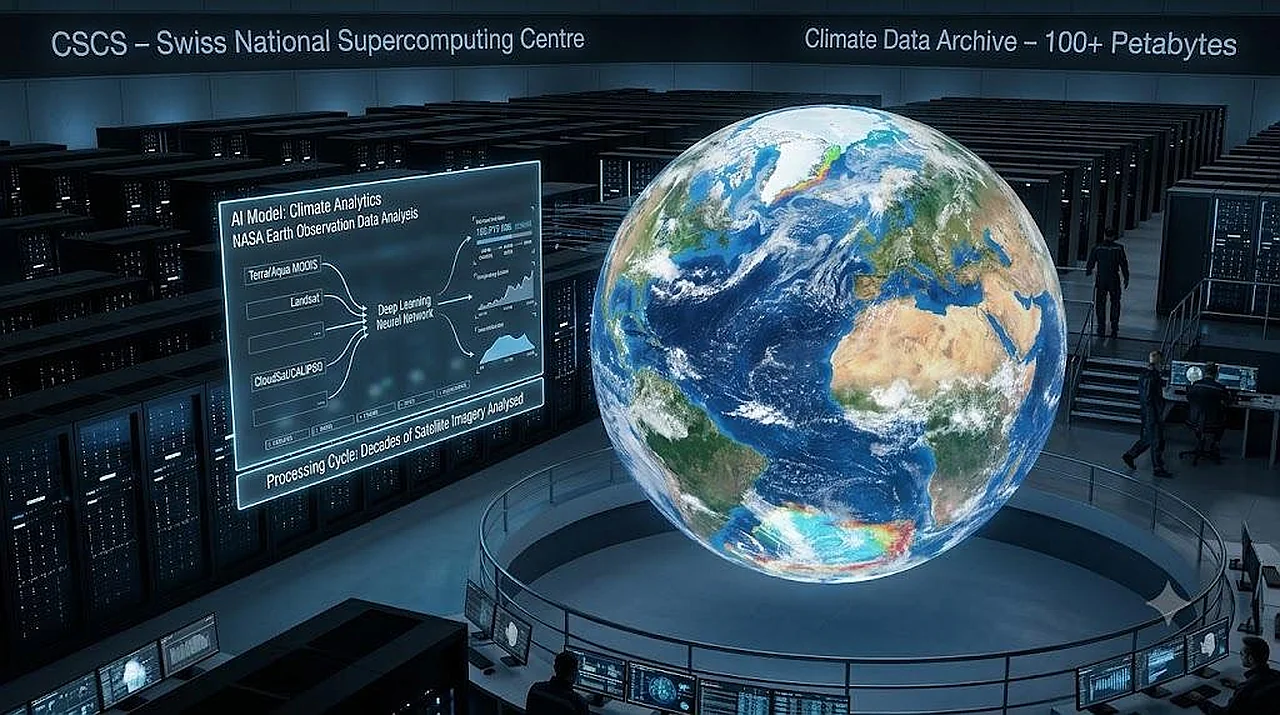
Researchers at ETH Zurich have successfully migrated a massive volume of open data belonging to NASA to the CSCS supercomputing center in Lugano. This archive, totaling approximately 100 petabytes, contains unique data collected over decades of monitoring Earth's climate and atmospheric changes. This step aims not only to preserve valuable scientific heritage but also to advance climate modeling using AI. This is reported by Ixbt.com reports .
The scale of the database is staggering: the archive consists of nearly 6 billion files, which would have been impossible to rewrite from scratch. According to ixbt.com, the process of moving this massive digital array from the US to Switzerland took nearly a year. The collection includes detailed reports on greenhouse gas concentrations, cloud movement, precipitation levels, glacier status, and complex oceanic processes.
AI and climate forecasting
The primary goal of the project organizers is to use this data to train AI models. Currently, traditional weather forecasting systems rely on complex physical equations and spend hours on calculations. New-generation AI models can generate global forecasts for several days in just one minute based on historical data. This will fundamentally improve early warning systems for natural disasters.Researchers emphasize that such speed is vital for the agricultural and energy sectors. For example, receiving earlier warnings about expected floods, storms, or droughts helps reduce economic losses. ETH Zurich scientists plan to copy the large database of the US National Oceanic and Atmospheric Administration (NOAA) to Switzerland in the future.
Political risks and security measures
There are also some concerns behind the data migration. Speculation that climate research funding in the US might be cut has forced scientists to think about the future of scientific infrastructure. Although all data is open and non-confidential, keeping an additional copy in Europe ensures scientific stability. After all, the progress of science often depends on long-term political decisions.Currently, the NASA archive is stored near the Alps system, one of the world's most powerful supercomputers. Scientists hope to combine this computing power with vast observational results to identify patterns in climate change that were previously difficult to detect. Such technological solutions are also important for regions sensitive to climate change, as increased accuracy in global models will positively impact local weather forecasts.


Comments 0
…