


Revolution in Aviation: First Hybrid Aircraft Successfully Tested at 9,000 Meters
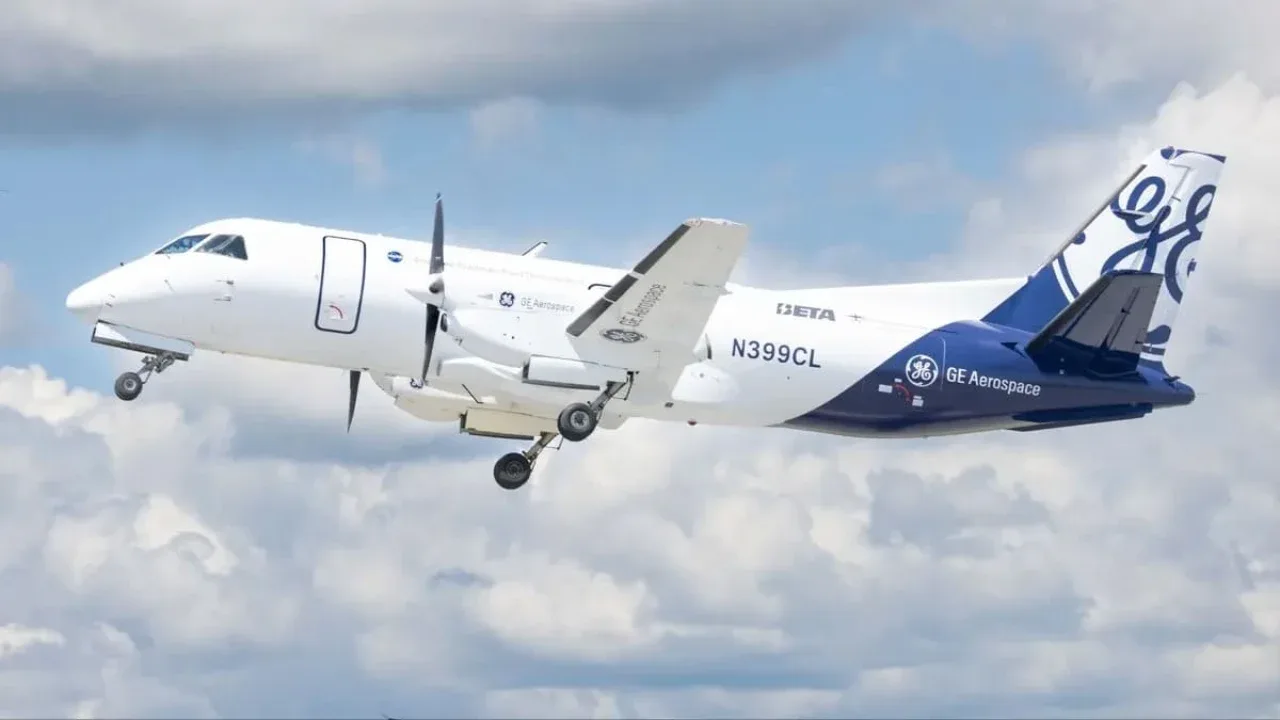
A historic event unprecedented in global commercial aviation has occurred: GE Aerospace, in collaboration with NASA, Boeing, and BETA Technologies, has successfully tested a hybrid-electric propulsion aircraft at typical passenger cruising altitudes for the first time. The aircraft, which crossed the Atlantic Ocean, not only operated flawlessly for over 2 hours in the air but also demonstrated the ability to recharge its batteries during flight.
Zamin.uz presents the details of this revolutionary flight in the aviation sector and the new possibilities for future aircraft.
Two engines in one system: How did the test go?
Ahead of the famous Farnborough International Airshow in the UK, a specially modified Saab 340B turboprop aircraft was used for this test. During the flight, the liner climbed to an altitude of over 9.1 kilometers (9,000 meters) — exactly the cruising altitude of standard passenger aircraft.
Engineers noted:
Unlike small, fully electric aircraft, this hybrid system combines a traditional gas turbine with a high-voltage electric motor. The system automatically distributes the load between the two sources during different phases of flight, significantly reducing fuel consumption.
Standard aircraft vs. hybrid liner: Key differences
Indicator and factors | Traditional passenger aircraft | GE Aerospace hybrid aircraft |
Energy source | Aviation fuel (kerosene) only | Kerosene + Megawatt-class electrical system |
Charging capability | None | Recharges batteries during flight |
Environmental and economic impact | High fuel consumption and emissions | Fuel savings, reduced atmospheric emissions |
Flight altitude | 9,000 – 11,000 meters | 9,100 meters (successfully tested for the first time) |
Transatlantic flight over the Atlantic Ocean
Following initial tests in the USA, this experimental aircraft flew across the Atlantic Ocean to the United Kingdomin hybrid mode. During the flight, the batteries supplied by BAE Systems and the special motor nacelle system developed by Boeing's Aurora Flight Sciences showed excellent results.
Dual function of the electric motor: It not only drove the propeller to propel the aircraft forward but also acted as a generator during flight, recharging the batteries.
Cooling system: Special heat exchangers were installed for high-power electrical equipment and inverters to prevent overheating.
Will an era of cheap, emission-free flights begin in the future?
Experts believe that this test will serve to completely rethink passenger aviation in the coming years and lower ticket prices due to fuel efficiency.
Share this technological revolution and aviation news with your friends and family! Send the article to your Telegram chat immediately.
Do you think hybrid and electric aircraft will fully replace standard liners within the next 10 years? Leave your opinion in the comments!



Comments 0
…