


Firefly to Send Mini-Heater Against the Moon’s -170-Degree Cold Nights
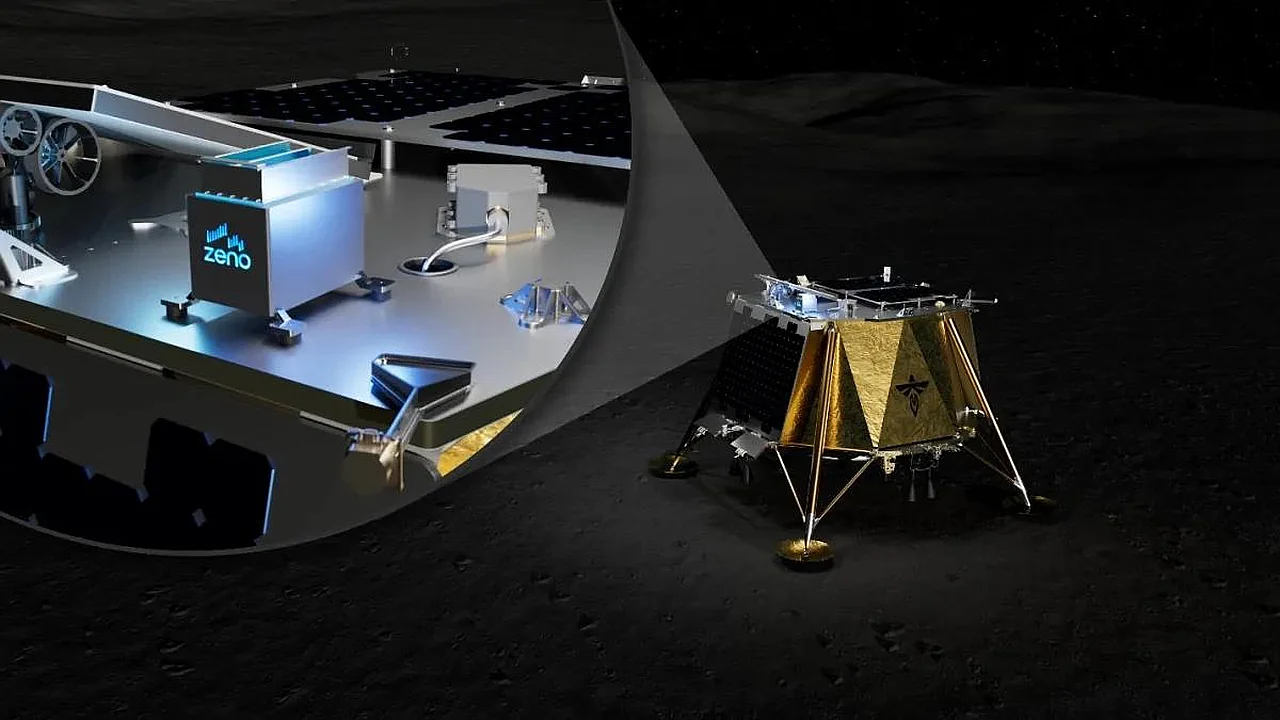
Firefly Aerospace plans to send a mini radioisotope heat source to the Moon aboard a future lander, helping it survive the extremely cold lunar nights. According to ixbt.com, the experimental system developed by Zeno Power will be launched into space aboard one of the Blue Ghost landers, expected to fly in 2028. This was reported by Ixbt.com reports .
The system, called Survive-the-Night, will feature an americium-241-based radioisotope heating element. Its heat output of just 5 watts is considered sufficient to keep the experimental module’s electronics, communications systems, and power supply at an acceptable temperature. Such technologies are critically important because of the extremely harsh conditions on the lunar surface.
The Moon’s Extreme Environment and the Test Mission
A lunar night is known to last approximately 14 Earth days, during which temperatures in some regions can fall to -170 degrees Celsius. Without an additional heat source, the sensitive electronics and batteries aboard the lander would be unable to withstand such a prolonged cooling period. The experiment’s primary objective is therefore straightforward: five days after lunar sunset, the module must contact Earth and transmit a signal confirming that it is still operational.According to Zeno Power CEO Tyler Bernstein, the device is extremely compact, with dimensions roughly comparable to a silver dollar. However, the mass and precise dimensions of the entire experimental system have not yet been disclosed. The test is closely linked to NASA’s Commercial Lunar Payload Services (CLPS) program, through which the agency has been actively encouraging commercial lunar lander manufacturers to develop technologies capable of operating not only during the day but also at night.
Future Bases and Other Participants
Innovations of this kind are particularly relevant to plans for long-term lunar infrastructure and future bases. In addition to being the first spaceflight for Zeno Power equipment, this mission represents one of the first attempts to use a commercial radioisotope source of its class. Alongside testing the technology, the company also aims to develop practical procedures for certifying, transporting, integrating, and launching nuclear equipment on a commercial rocket.Zeno Power is already preparing to mass-produce similar devices. Demand for hundreds of these compact heaters is expected in the future. At the same time, more powerful systems are being developed in parallel to convert heat generated by isotope decay into electricity using Stirling generators. Notably, Intuitive Machines plans to conduct a similar experiment in 2028, while NASA has announced a $15 million prize for a successful demonstration of the technology.


Comments 0
…