


TSMC and US scientists create SOT-MRAM memory for AI
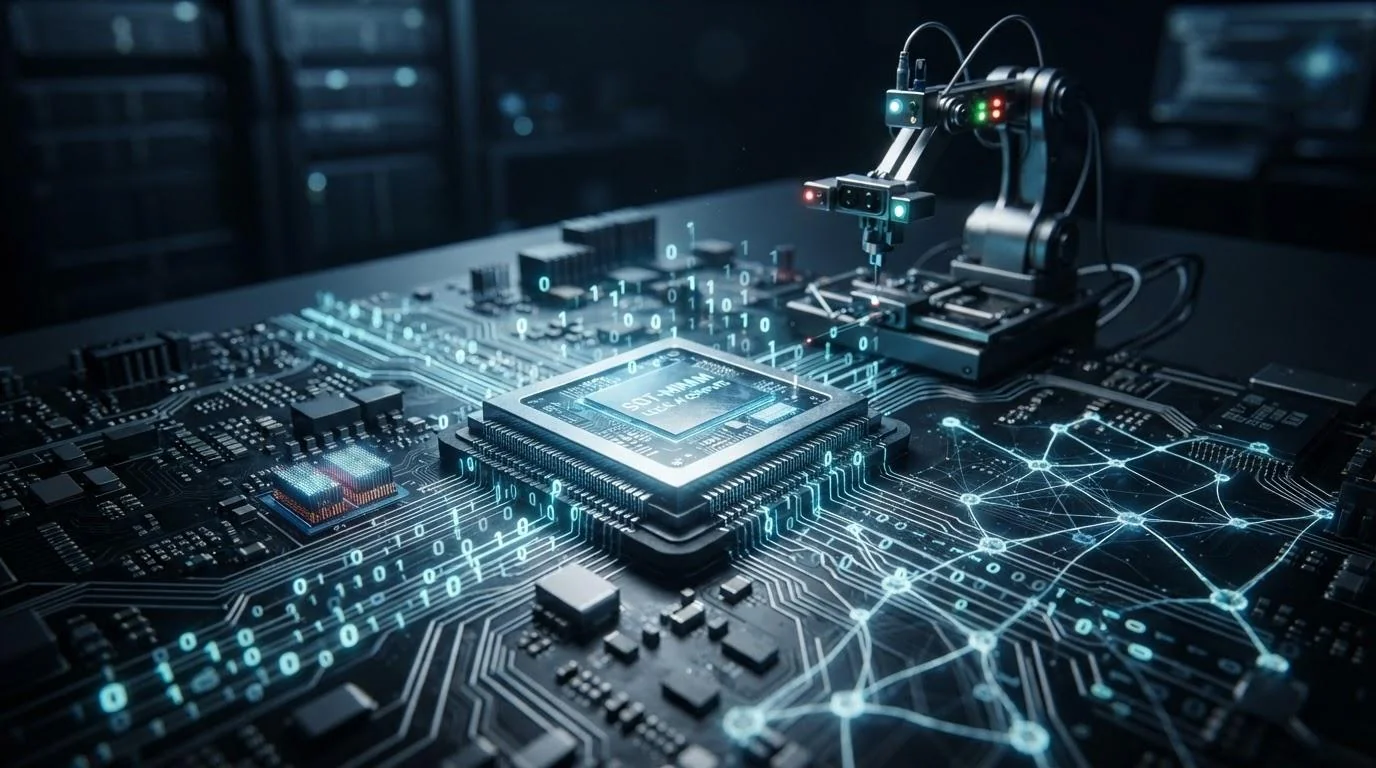
Engineers at the University of Texas, in collaboration with TSMC, have developed and tested an ultra-efficient magnetic memory chip called SOT-MRAM, tailored for AI tasks. According to ixbt.com, this new technology combines high speed, low power consumption, and the ability to retain data even when power is cut, which could significantly expand device capabilities in the future. This is reported by Ixbt.com reports .
During tests, the experimental chips showed high efficiency. Specifically, switching a single bit in a memory cell between 0 and 1 states took just 2 nanoseconds and required approximately 2 picojoules of energy. Researchers noted that some alternative memory technologies can consume hundreds of picojoules for a single operation and operate several times or even dozens of times slower.
Specific features of the technology
The main feature of SOT-MRAM memory has long been considered its drawback: each cell can only store two states — 0 or 1. However, since neural networks typically work with more complex forms of data, this was insufficient for AI tasks. Therefore, scientists had to adapt existing algorithms to a binary format while maintaining optimal computational accuracy.The new experimental chips were tested in several complex tasks simultaneously, including neural network inference, training binary neural networks, and modeling probabilistic graphs. The results showed that SOT-MRAM technology could be extremely interesting for edge AI systems, where calculations are performed directly on the end device rather than on a central server.
Practical significance and prospects
The implementation of this technology will create great conveniences for smart devices operating in real-time. For example, a robotic arm can process data from sensors itself and react almost immediately to a sharp temperature rise without sending data to cloud servers. This reduces the time spent on data transmission and remote processing, significantly lowering energy consumption.Nevertheless, such systems cannot fully abandon cloud computing. For complex tasks requiring high precision or significant computing power, devices will continue to send data to servers equipped with GPUs. In the future, specialized accelerators based on SOT-MRAM could take over a portion of the local AI calculations currently performed by the CPU.
However, it will be some time before the technology is implemented in practice. Experts face tasks such as increasing chip stability and reducing parameter variations between individual cells, as these factors could currently negatively affect the accuracy of neural network operations.


Comments 0
…