


US Air Force funds chip that generates power from quantum vacuum
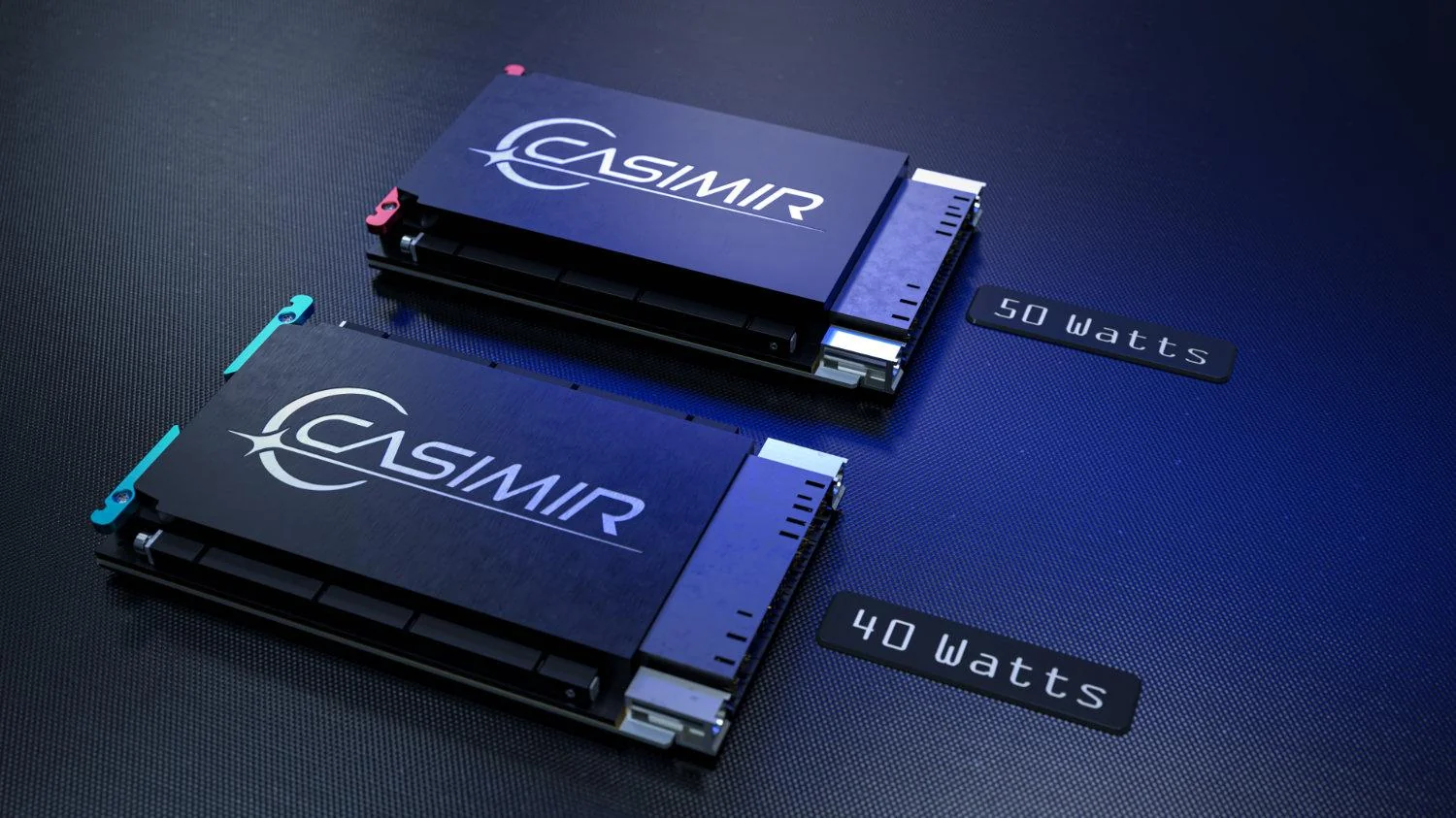
The SpaceWERX division of the US Space Force, which supports small businesses, has allocated funding to the startup Casimir for a new project. According to ixbt.com, the Phase I contract will verify the technical feasibility of microchips called MicroSparc, a device claimed to generate continuous electric current from quantum vacuum energy. This is reported by news source.
At the current stage, the company must test how well the autonomous solid-state generator design meets the requirements of the US Air Force. These systems are intended for use in remote and hard-to-reach areas. Although Casimir has not disclosed the amount or exact terms of the funding, such STTR Phase I contracts typically range from $75,000 to $180,000 and are designed for a period of 3 to 12 months.
Quantum physics and Casimir technology
The operating principle of MicroSparc is based on the Casimir effect, a quantum phenomenon confirmed by experiments. In 1948, Hendrik Casimir predicted that an attractive force would arise between two conducting surfaces separated by a nanometer distance. In this case, electromagnetic oscillations with a wavelength greater than the distance between the surfaces cannot exist, and as a result, the vacuum energy inside is lower than outside.In 1997, Steven Lamoreaux succeeded in measuring the Casimir force for the first time. However, the standard design provides only a short-term energy pulse because the plates move toward each other. Casimir is attempting to turn this effect into a continuous energy source by mounting the plates on a silicon base and adding electrically connected nanopillars between them.
Scientific debates and future plans
According to the company's description, the outer area of such a structure is subject to quantum vacuum fluctuations, while fluctuations in the inner nanocavity are weaker. In some cases, an electron moves from the outer plate to the central pillar, and due to the low probability of a return transition, a directed flow of electrons occurs. Millions of such nanocavities are combined on a single chip, and the circuit is closed via an electrical loop.Casimir states that the initial versions of MicroSparc are equivalent in power to a small ceramic battery or a small solar panel. Multi-layer architecture and 3D crystal placement are expected to increase power by up to 100 times. Nevertheless, the device's ability to extract direct, continuous, useful electrical power from the quantum vacuum remains controversial as it has not yet been independently demonstrated, with some scientists calling it a type of perpetual motion machine.
Harold G. White, one of the founders of Casimir and a former NASA Eagleworks employee, emphasizes that the Casimir effect itself is part of established quantum mechanics, and the controversial issue lies only in the method of its practical application in MicroSparc. The company states that the current contract will allow the technology to be verified against the real requirements of the US Air Force and plans to bring MicroSparc to the commercial market in 2028.


Comments 0
…