


Robot Soldiers Could Appear in the Chinese Army (Video)
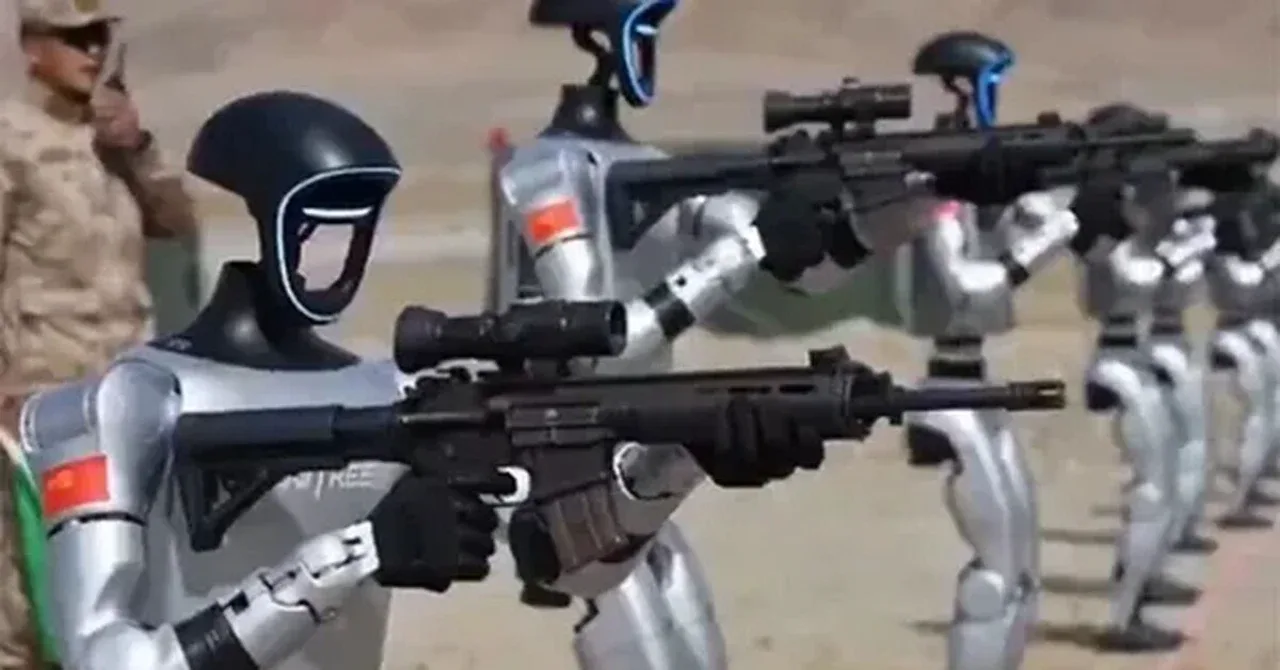
Is the era approaching where robots replace humans on the battlefield? China's defense industry is exploring the potential for using humanoid robots in the military sector. It is reported that work is underway in Beijing to test such technologies across various applications.
According to Reuters, China is working on integrating humanoid robots into the defense sector.
There is no talk yet of these technologies being deployed on the battlefield on a mass scale. However, experiments with the military use of robots raise serious questions about what armed forces might look like in the future.
1. What is China working on?
Humanoid robots are typically designed with a structure similar to the human body. Their main advantage is the ability to move and perform various tasks in environments designed for humans.
China is exploring the possibilities of using these technologies in the military sphere.
Such robots could theoretically be used for:
navigating complex terrain;
performing tasks dangerous to humans;
logistics and transport;
reconnaissance and surveillance;
performing support tasks at military facilities
and similar areas.
2. Why humanoid robots specifically?
The core idea behind humanoid robots is to adapt to environments used by humans.
In places with stairs, doors, narrow corridors, or various obstacles, a humanoid construction can give a robot a distinct advantage.
Therefore, for the military, studying the capabilities of such machines is seen as a new stage in the technology race.
In the future, the main competition in military technology may take place not only between weapons but also between the AI and robotic systems that control them.
3. Will robots replace soldiers?
It is too early to draw such a conclusion.
Testing humanoid robots for military purposes does not mean they will fully replace military personnel.
The technology still faces many challenges:
reliability of autonomous movement;
battery capacity and operating time;
decision-making in complex conditions;
control during communication loss;
safety and human oversight;
high costs.
Therefore, in the near future, it is more realistic to view robots as auxiliary technology rather than as a complete replacement for human soldiers.
4. The biggest change is related to AI
It is not the appearance of the humanoid robot, but its decision-making capability that will be one of the most important issues in the military sector.
If a robot can analyze its environment based on AI, distinguish objects, and move in complex conditions, its practical value increases significantly.
At the same time, any autonomous military system raises serious questions regarding human oversight, safety, and international humanitarian law.
5. Will armed robots actually appear on the field?
This question may become one of the biggest debates of the future.
The experiments on using humanoid robots for military purposes do not in themselves mean they will participate in combat while armed.
However, as technology advances, it is natural that such a scenario will be discussed theoretically.
If robots are widely used in armed forces in the future, it could change not only military tactics but also the balance of power between states.
6. Is China taking another step in the technology race?
China has been paying great attention to robotics and AI in recent years. Studying the capabilities of humanoid robots in the military sector shows that the scope of these technologies is constantly expanding.
However, the most accurate conclusion at this stage is not China has deployed robot soldiers to the battlefield.
On the contrary, Beijing is exploring what role humanoid robots might play in future military technologies.
Conclusion: Will the human role on the battlefield change?
China's interest in testing humanoid robots in the military sector could change perceptions of what future wars will look like.
While robots are currently in the experimental and testing phase, it is not unlikely that they will be used more broadly in logistics, reconnaissance, or other military tasks tomorrow.
Armed robot soldiers are still a future scenario. But China's work in this direction makes one question increasingly relevant: when will the boundary between human and machine on the battlefield change?



Comments 0
…