


MIPT scientists bring the creation of neuromorphic processors closer
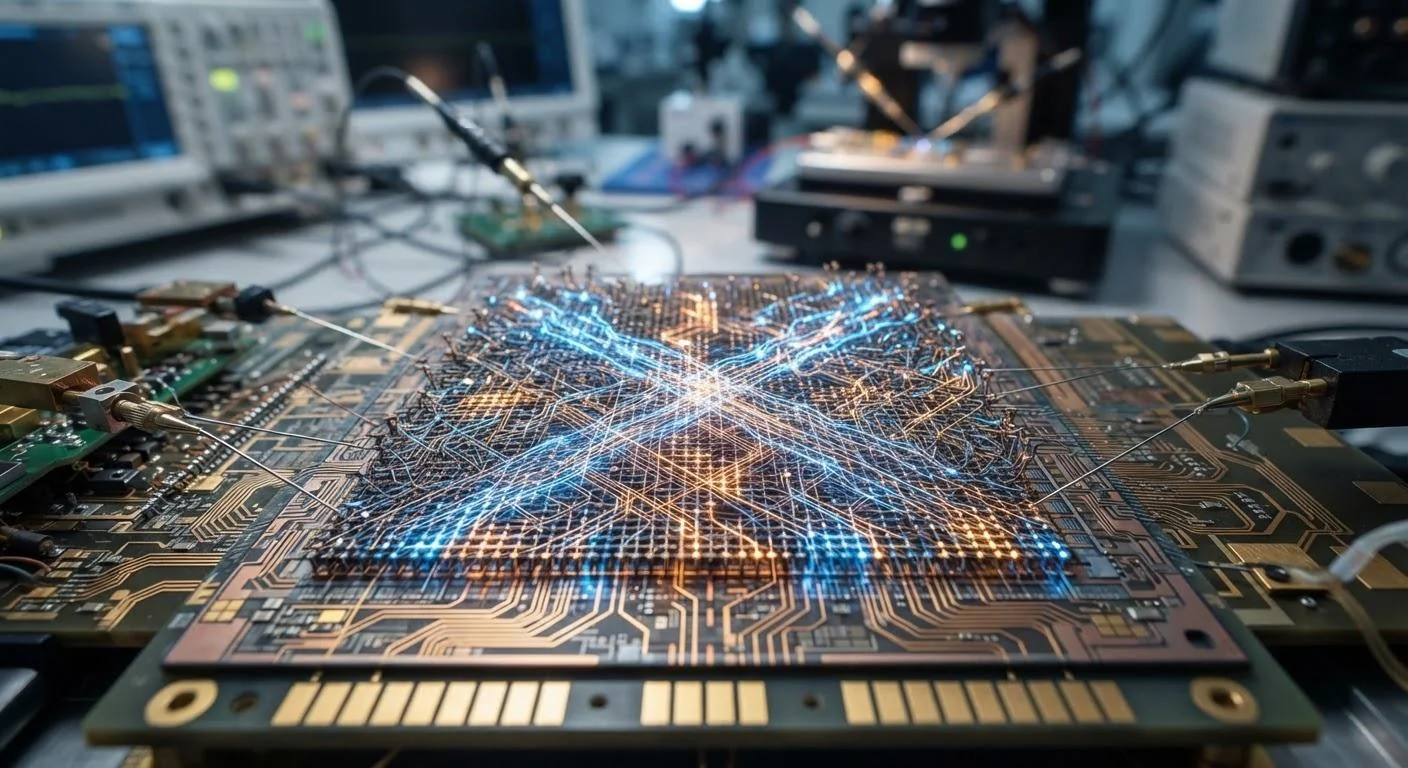
Scientists at the Moscow Institute of Physics and Technology (MIPT) have developed a new design for a memristor, a key element of future neuromorphic processors. According to ixbt.com, this electronic component not only successfully mimics the function of biological synapses but also has the ability to store recorded data for a significantly longer time. This is reported by Ixbt.com news.
It is known that memristors are elements capable of changing their resistance depending on past electrical influence. Because of this, they can simultaneously perform calculations and store data. This makes them a promising direction for architectures operating on the principles of the human brain.
Technological barriers and their solution
However, a significant problem persisted in similar devices: researchers were always forced to compromise between reading speed and data retention duration. Although previous MIPT developments could replicate synaptic behavior, the recorded state lasted only a few seconds.The scientists explain that this limitation was caused by defects at the interface between the memristor and the semiconductor. The electric fields generated there forced the material to return to its initial state, causing the device to 'forget' the recorded data.
Two modes and improved performance
In the new design, researchers replaced metal electrodes with semiconductor ones and selected the optimal thickness for a hafnium and zirconium-based film. As a result, it was possible to switch the memristor into two conditional modes: 'learning' and 'archiving'.In the first mode, the device mimics the synapse learning process, changing its state quickly, while in the second, it can store the acquired data for a long time. Data retention duration was increased from a few seconds to nearly 12 days.
Additionally, the device's rewrite cycle resource increased by approximately 20 times. The developers believe that such memristors could lay the foundation for more efficient neuromorphic processors for AI systems.
In such systems, data storage and computing processes are performed directly within the same elements. This, in turn, allows for reduced energy consumption and increased data processing speeds.
In the future, this architecture is expected to bring computing systems even closer to certain operating principles of the human brain, as in a living organism, data processing and storage occur within a single neural network.


Comments 0
…