


Strategic Partnership Between Uzbekistan and South Korea in Figures — Relations at a New Stage!
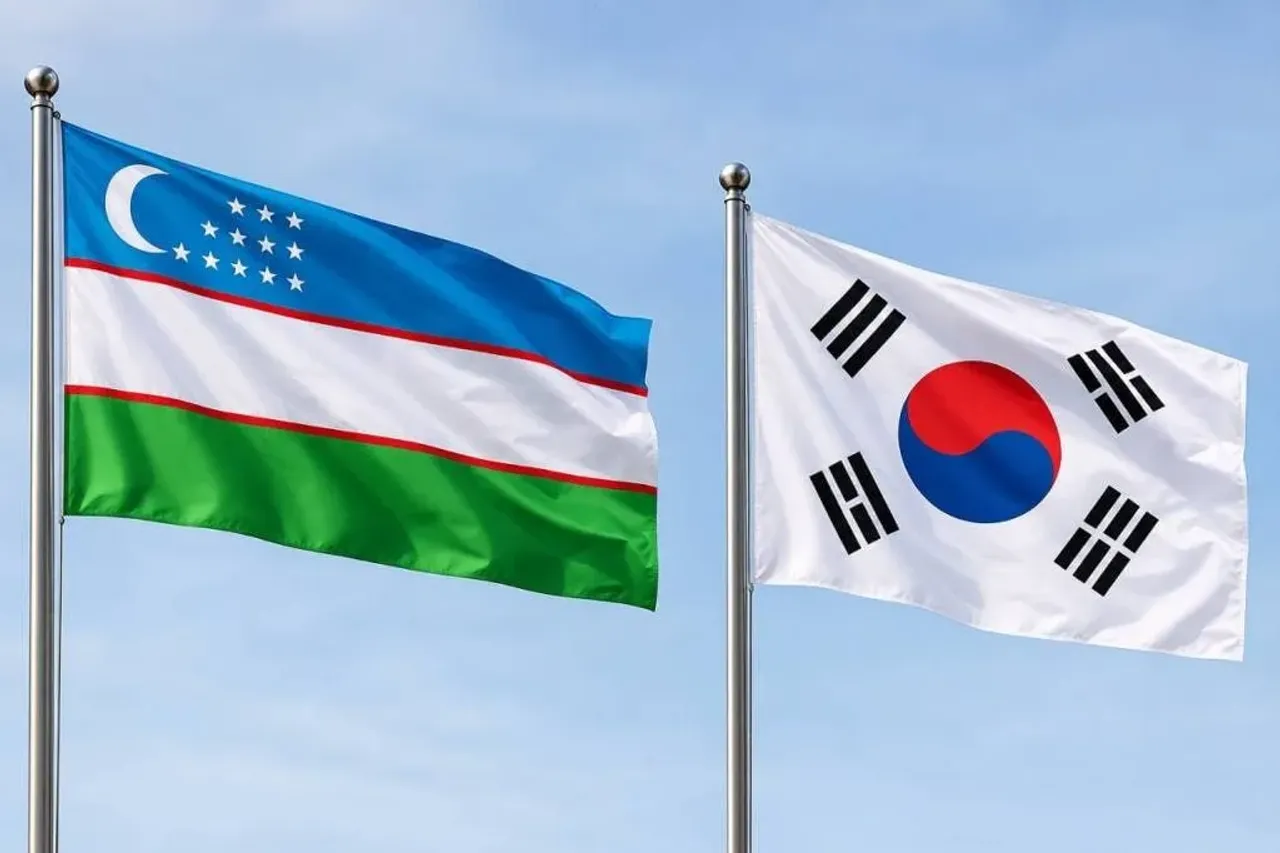
The comprehensive strategic partnership between Uzbekistan, the heart of Central Asia, and South Korea, the technological giant of East Asia, is developing at an even more accelerated pace in 2026. According to official data published by the National Statistics Agency, in the first 7 months of the current year (January–July), the mutual foreign trade turnover between the two countries amounted to 1.1 billion US dollars. Within the structure of economic indicators, the volume of imports based on high-tech equipment, auto parts, and industrial products reached $1,037 million, while Uzbekistan's exports amounted to $37.5 million.
Bilateral relations are not limited to trade alone, demonstrating unprecedented activity in investment and humanitarian fronts as well: in the first half of the year, $216.4 million in investments and credits from Korea were absorbed into fixed capital, while the number of enterprises operating in our country with the participation of Korean capital reached 730. In addition, trips in the fields of tourism and higher education are connecting the two peoples closer than ever before.
So, what peak might this massive trade volume of 1.1 billion reach by the end of the year, which sectors are Korean investments developing, and why are Uzbek youth choosing Seoul universities?
"The Weight of Trade and Investment": Economic Relations Between Uzbekistan and South Korea in Figures
Key economic indicators disclosed by the National Statistics Agency:
$1.1 billion turnover: In January–July 2026, the total foreign trade turnover between the two countries conquered a significant milestone;
Import volume — $1,037 million: Modern industrial equipment, automotive components, chemical, and high-precision technological products are mainly being brought into our country from South Korea;
Uzbekistan's exports — $37.5 million: Our national products, including chemicals, textiles, and non-ferrous metals, were delivered to the Korean market;
$216.4 million in investments: The volume of direct investments and loans directed to fixed capital from the Republic of Korea in January–June reached this level;
730 joint ventures: As of August 1, 2026, the network of successfully operating enterprises with the participation of Korean capital expanded in our country.
"Tourist and Student Exchange": How is the Humanitarian Bridge Working?
Official analysis on mutual visits by citizens of the two countries:
26,512 Korean tourists: Tourists who visited Uzbekistan from South Korea over 7 months showed high interest in cultural monuments and the touristic potential of Samarkand, Bukhara, and Tashkent;
20,073 Uzbek travelers: Our compatriots are also widely utilizing the historical, technological, and medical tourism opportunities of Korea;
1,394 students headed to Seoul: Seoul remains one of the most sought-after destinations in terms of the number of students sent from Uzbekistan to South Korean universities for higher education purposes;
591 Korean students in Uzbekistan: The number of young people who came from South Korea to our country's higher education institutions for language learning, regional studies, and educational programs has also formed at a significant level.
Strategic Analysis: Trade Imbalance and Future Prospects
Conclusions of economists and international experts on this report:
Technological content of imports: The dominance of Korean imports in the trade turnover is not due to consumer goods, but rather to capital goods and factory equipment that modernize Uzbekistan's industry and production;
Need to increase export potential: New opportunities are opening up for our national exporters to bring more ready-made food, agricultural, and textile products into South Korea's high-income market;
IT and green energy projects: Beyond the 730 enterprises, new major investment projects are expected ahead in the fields of renewable energy, electric vehicle infrastructure, and digital programming.
These historical figures of cooperation between Uzbekistan and South Korea clearly demonstrate that the two countries are not only reliable trade partners, but also the most solid strategic partners in the Asian region that complement each other's economies.
In your opinion, which products should our local manufacturers focus on more in order to sharply increase Uzbekistan's exports in trade turnover with South Korea? What do you think is the main factor behind the great popularity of Korean universities among Uzbek youth? Leave your analytical thoughts in the comments and share this analysis of key indicators of bilateral cooperation with all entrepreneurs, students, and your friends!



Comments 0
…