


300-Year-Old Treasure-Filled Ship Discovered in the Norwegian Sea
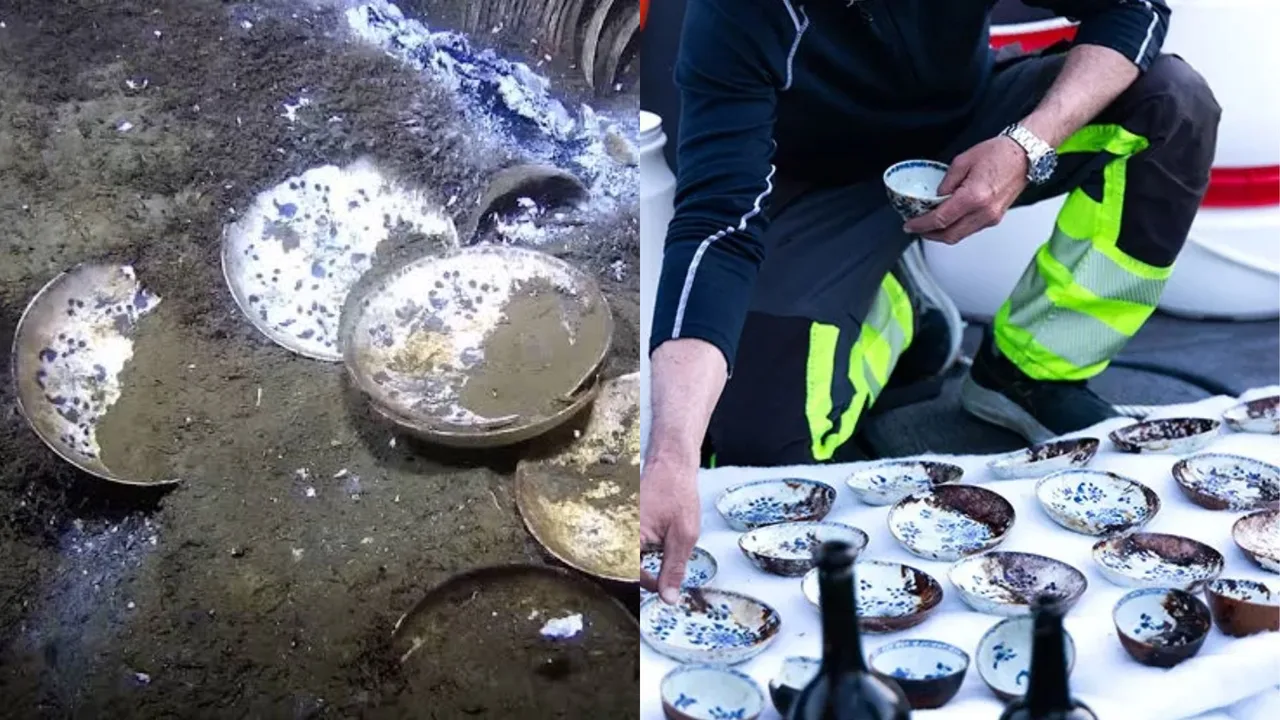
Near the coast of Norway, archaeologists have discovered the remains of a unique 18th-century ship. Experts consider this find to be one of the best-preserved cargo ships ever encountered in Northern Europe. The fact that the cargo inside the ship has remained almost intact has sparked great interest among scientists.
Hanna Geiran, Director of the Norwegian Directorate for Cultural Heritage, noted that the cargo on this ship is preserved in a condition never before seen in Northern Europe. According to her, such a find has the potential to provide new information about the history of 18th-century merchant ships and the international trade of that era.
The organization officially announced the discovery in June of this year. The wreckage was identified by Espen Sostad, head of a small research company that works with ROVs (remotely operated underwater vehicles).
It is reported that the ship lies in the Skagerrak Strait off the southeastern coast of Norway, at a depth of approximately 600 meters (1,970 feet). Underwater images show that stacked porcelain dishes and other valuable items among the wreckage have remained almost entirely intact.
Hanna Geiran stated that it is very rare to find such well-preserved cargo from 18th-century ships. So far, a large quantity of undamaged Chinese porcelain, as well as chandelier parts, goblets, glass bottles, and barrels filled with grain, have been identified.
In addition, archaeologists have found several crates arranged in rows. However, they have not yet been opened for study. One expert speculates that one of them might contain textiles. Another crate likely holds organic products such as tea, medicinal herbs, and various medicines.
Researchers emphasize that it is astonishing that the cargo has remained in such good condition for nearly three centuries. However, it was also noted that modern fishing trawls have damaged some parts of the wreckage.
So far, scientists have not been able to determine where the ship departed from or where it was headed. But some of the items found may help solve this mystery.
Experts believe that, in addition to Chinese porcelain, other valuable goods may have been brought from England or Germany. One of the most interesting finds is a brick used in the ship's galley, which bears the stamp of the Lübecker Ratsziegelei brick manufacturing company that operated in the German city of Lübeck from the 15th century until 1772.
Archaeologists have not calculated the exact value of the cargo at that time. However, they note that in the mid-18th century, Chinese porcelain was considered one of the most expensive and prestigious goods in Europe. Later, it became relatively popular even among the middle class.
Today, the greatest value of these ship remains is not material, but historical and cultural. It is officially considered a protected cultural heritage site.
According to Hanna Geiran, scientists have high hopes for future research. They plan to determine how many more unique items remain inside the ship. Underwater images even revealed a magnificent porcelain lotus flower figurine, which has further increased the researchers' interest.


Comments 0
…