


Hundreds of Whales Appear in Greenland as Ice Melts
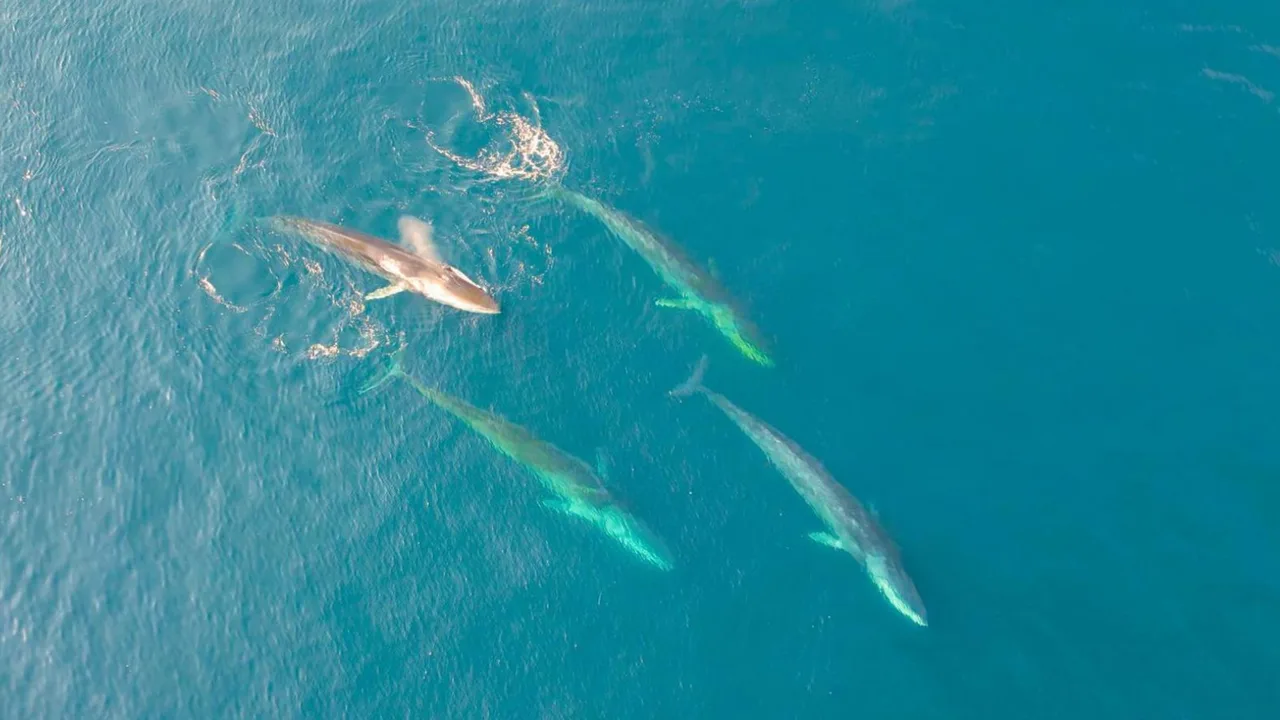
The ongoing loss of sea ice along Greenland’s eastern coast is enabling huge whales to move into areas that were previously inaccessible. This conclusion is based on the results of research conducted over several decades. During this period, scientists observed and photographed hundreds of individuals from some of the world’s largest whale species.
The study recorded large marine mammals such as humpback whales, minke whales and fin whales feeding in ice-free waters near Greenland’s coast during the summer months.
In fact, these marine mammals have not historically been found in this area because the ice cover prevented them from entering waters close to the coast. However, as climate change has raised sea temperatures and caused the ice to melt, the whales have begun adapting to the new conditions.
Scientists describe this phenomenon as a seasonal “feeding boom” in the Arctic. Experts say it is part of major changes taking place in the ocean environment of eastern Greenland.
Professor Heide-Jørgensen of Greenland’s Institute of Natural Resources told BBC News that the changes in the region are “among the most dramatic changes that can be observed anywhere in the sub-Arctic”.
Whales are feeding on fish that have moved into warmer waters
Scientists say that rising sea temperatures and an increase in food supplies are among the main causes of this change. The whales may be feeding on fish that have moved into Greenland’s increasingly warm waters.
Researchers estimate that the three whale species could consume at least 800,000 tonnes of fish and krill during the summer feeding season.
At the same time, the study did not clarify whether this change indicates an overall increase in whale numbers or is the result of whales migrating from other areas.
Other experts who spoke to the BBC expressed concern that the findings could indicate an increased influx of whales from western Greenland. This is a sensitive issue for Greenland, where some whale species are hunted.
Nevertheless, scientists stress that the findings show that these “opportunistic” whales are adapting to a changing environment and may even be benefiting from the new conditions.
Some Arctic animals are losing their range
However, climate change is not producing equally positive results for all Arctic creatures.
According to Professor Heide-Jørgensen, narwhals and belugas are among the species now “in a difficult situation”. They are being forced to share the same habitat with other whales entering new areas or are even being pushed out of their own ranges.
“For some species, climate change is certainly not a problem—it opens up new opportunities. But other species are losing their habitat,” Professor Heide-Jørgensen said.


Comments 0
…