


“Devil's Flower” discovered growing underground in Thai forests
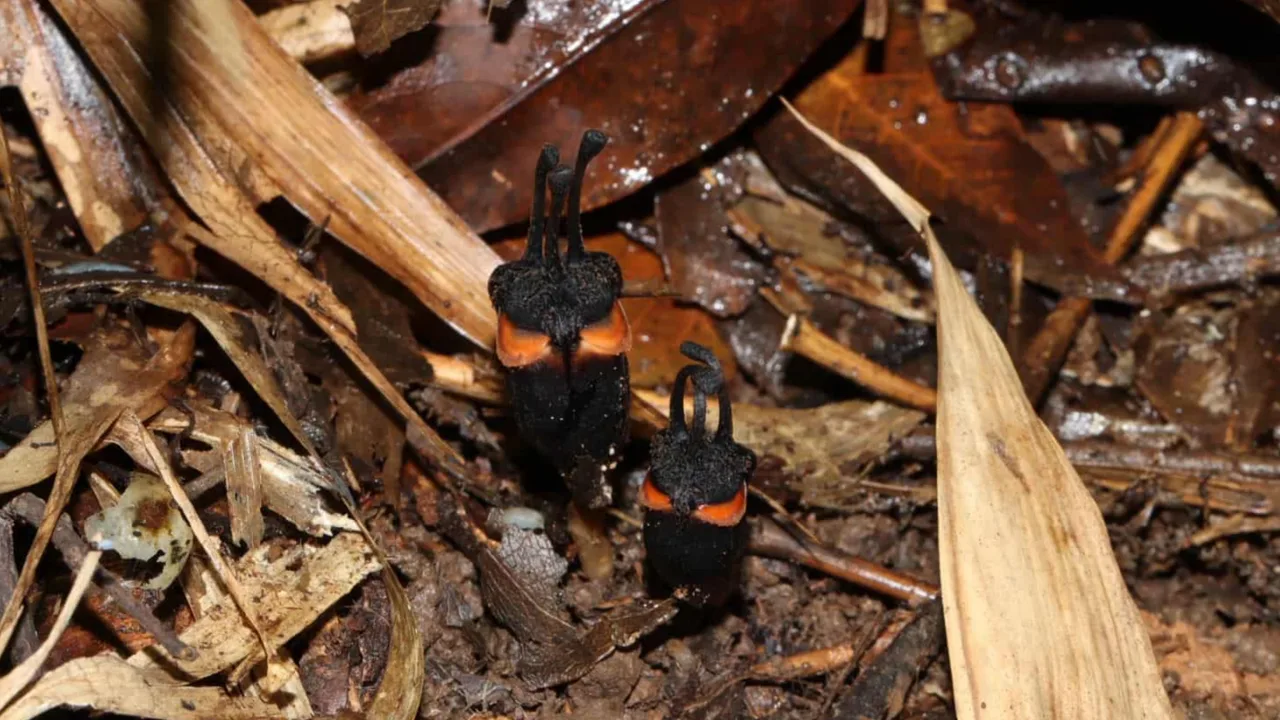
Scientists have discovered a new plant species in Thailand that lacks leaves and stands out from other plants due to its appearance and unique structure. Its unusual look immediately caught the attention of researchers. For this reason, the new species was given the Thismia daemona name, which can be conditionally translated as “Devil's Flower” . This was reported by the Lifehacker publication.
This plant Thismia belongs to the genus. Currently, there are fewer than 50 species of this genus known to science, mostly found in tropical forests. One of the most important characteristics of these plants is that they do not undergo photosynthesis. They also lack leaves and spend most of their lives underground or beneath a layer of leaf litter.
Interestingly, these plants do not obtain the nutrients necessary for survival through typical photosynthesis, but rather through underground fungi . That is, instead of producing their own food, they establish a unique connection with fungi beneath the soil to obtain the necessary substances.
The newly discovered Thismia daemona also fully fits the characteristics of this unusual group. Its appearance consists of a dark black flowerwith horn-like protrusions. The surface of the flower has reddish-orange spots, and it is this unique appearance that played an important role in its naming.
The new species was discovered at an altitude of approximately 1,000 meters above sea level. Usually, such plant species are known to grow in lowlands where constant humidity is maintained. Therefore, finding them at a higher altitude was a unique and unexpected event for scientists.
This finding has further broadened researchers' understanding of plants in the Thismia genus. Because Thismia daemona was recorded for the first time in a northern region unexpected for this group. This indicates the need for a deeper study of the genus and its distribution areas.
However, the future of the newly discovered species is also a source of serious concern for scientists. So far, they have Thismia daemonaidentified only one group of. In this small area, there are fewer than 50 plants and it has been reported that its area is smaller than a football field.
For this reason, the new plant species may be added to the list of endangered plants. The situation is further complicated by the fact that the location where the plant was discovered is within a national park, which has a high influx of tourists.
One of the main tasks for scientists now is to preserve the natural habitat of this unique plant and prevent its extinction. Thismia daemonaThe fact that only one group of is known shows how rare it is.


Comments 0
…