


Flooding in Bangkok: Food market is floating, $327 million in damages (video)
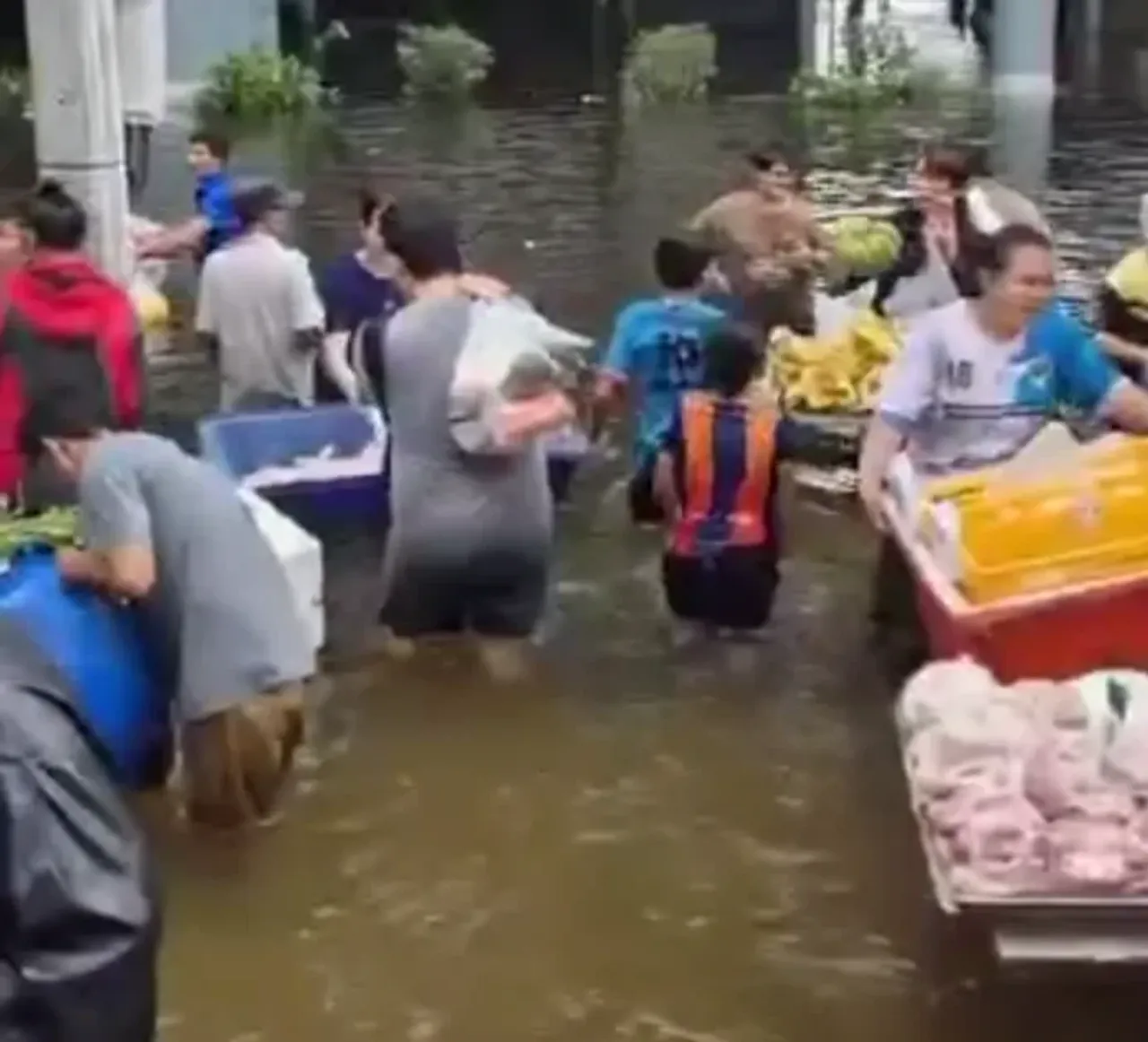
The capital of Thailand, Bangkok, has been struck by unprecedented flooding caused by heavy seasonal rains and rising river levels. Although several meters of water have covered the city streets, local residents and entrepreneurs have not stopped making a living: food stalls, vegetables, and meat products are placed in plastic tubs and special floating platforms, being sold directly in the water.
Footage circulated on social networks shows customers wading waist-deep in water to conduct transactions, while vendors drag floating containers loaded with food along the water current. According to official estimates, this natural disaster has already caused at least $327 million in heavy financial damage to Thailand's national economy.
"Markets in the water, waist-deep currents, and $327 million in losses": 5 key points of the tragedy
The most important facts regarding the emergency flooding in Bangkok and its consequences:
Streets turned into "floating markets": Due to the flood, central food stalls in the capital were completely submerged, and vendors moved their goods to floating containers;
A massive economic loss of $327 million: The natural disaster dealt a blow of over a quarter of a billion dollars to retail infrastructure, logistics, and small businesses;
Trading process inside the water: Despite difficult conditions, buyers and sellers continue to exchange goods using boats and floating tubs;
Threat to food security: Leaving vegetables, meat, and fish products in a contaminated water environment is causing a sanitation crisis in the city;
Infrastructure and transport collapse: Pedestrian and vehicular traffic in many districts of the capital has been completely paralyzed, and emergency services have been mobilized.
Classification of Bangkok flooding and damage indicators
Analysis of the situation based on official Thai sources and distributed video footage:
Important criteria and areas | Indicators recorded in the emergency |
Geography of the incident | Thailand's capital — Bangkok city and adjacent commercial neighborhoods |
Financial damage inflicted | $327,000,000 USD (preliminary official estimate) |
Trading format and adaptation | Plastic tubs, boats, and wooden platforms floating on the water's surface |
Movement of population and buyers | Wading through waist-deep water |
Main risks | Sanitary-epidemiological hazard, logistical disruptions, and price increases |
Condition of utility services | Operation of water pumps and emergency relief brigades |
Economic and ecological expertise: Why is Bangkok flooding so easily?
Conclusions of hydrologists, economists, and infrastructure analysts:
"Geographical location and sinking of the city": Bangkok is located just 1.5 meters above sea level and is sinking by several centimeters annually due to years of groundwater extraction and the pressure of heavy buildings; when heavy monsoon rains occur, the Chao Phraya River overflows its banks, instantly turning streets into lakes;
Sanitation and food risks: As seen in the videos, meat and fish products are stored above unsanitary waters; such a situation in a hot climate can cause a mass spread of acute intestinal diseases and bacterial infections;
The $327 million lesson: The disruption of food chains and markets demonstrates the urgent need to modernize the Thai capital's drainage and dam systems, otherwise annual seasonal floods could cost the country's GDP billions of dollars.
Do you think that residents continuing to make a living through such floating markets while city streets are flooded is a sign of hard work or a necessity posing a severe sanitary hazard? How do you think urban planning and drainage systems should be developed in the fight against natural disasters? Leave your personal thoughts in the comments and share this analysis of underwater life in Bangkok with all your loved ones!



Comments 0
…