


Teenager in China temporarily loses hearing due to cicada noise
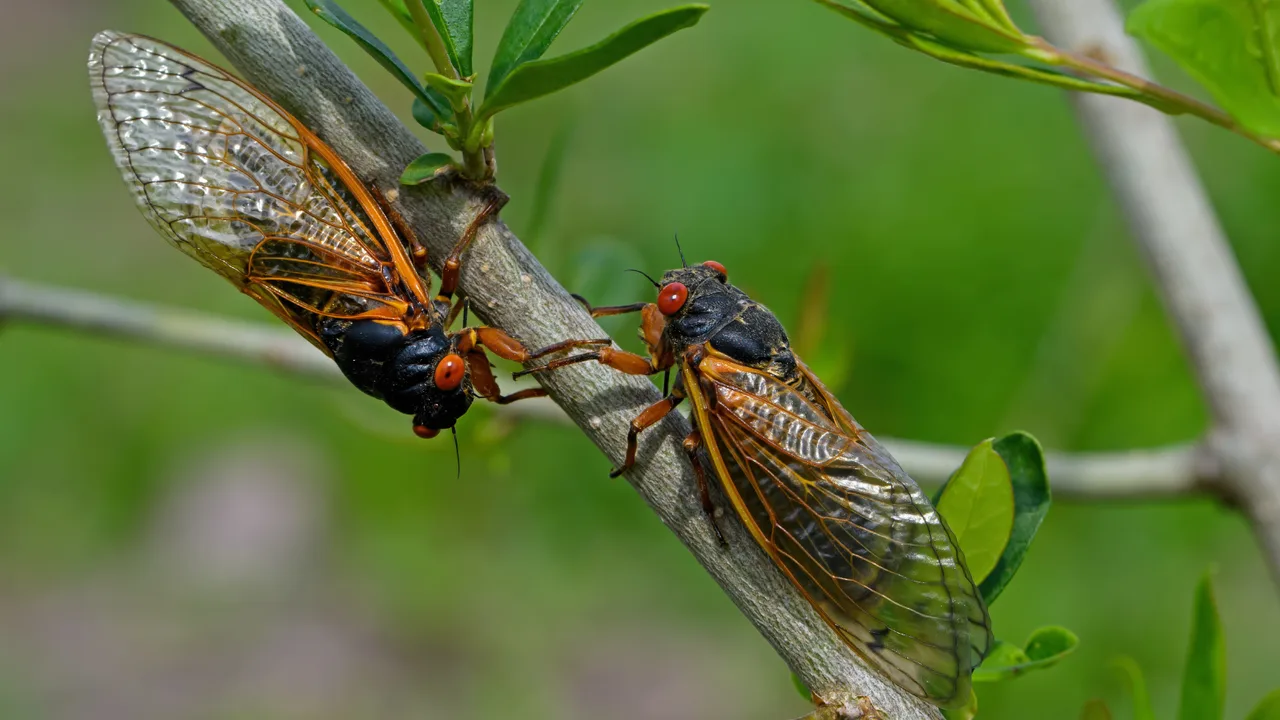
In China, an 18-year-old man temporarily lost his hearing after being exposed to the loud noise of cicadas in a forest for more than four hours, forcing him to seek medical attention. Doctors recommended treatment and emphasized the need to stay away from loud noises for at least 14 days.
Many people believe that sounds in nature are harmless to human health. However, this recent incident showed that there are exceptions. An 18-year-old man surnamed Wang, living in Ningbo, Zhejiang Province, China, went to the forest to relax, set up a tent, and spend the night. There, he remained for several hours under the loud and uniquely resonant sound of hundreds of cicadas. This had a negative impact on his hearing.
It is reported that Wang noticed the cicadas' noise significantly intensified during the afternoon. Despite this, he continued to stay in the forest until evening. However, later, a ringing sound appeared in his ears, and he felt as if his ears were blocked.
When the cicadas' noise gradually subsided and they began to fall silent, the young man realized he could not hear the chirping of birds or even the notification sounds from his phone.
Fearing a total loss of hearing, Wang immediately went to the hospital. During a rapid medical examination, it was discovered that there was swelling in both of his ears. Doctors prescribed medication to reduce the swelling and recommended avoiding loud noises for at least 14 days.
Fortunately, after two weeks of treatment and rest, the teenager's hearing was fully restored.
How does the loud noise of cicadas affect hearing?
Li Zi, a senior doctor in the otorhinolaryngology (ear, nose, and throat diseases) department at the First Affiliated Hospital of Ningbo University, noted that many people mistakenly believe nature sounds are completely harmless to the ears.
Cicadas are known as the loudest sound-producing insects in the world. However, the sound of a single cicada usually does not exceed 70 decibels and does not cause serious damage to hearing on its own.
The main problem is when hundreds of cicadas make noise at the same time. Their collective resonance can reach levels above 85 decibels. This figure is considered the threshold at which the risk of hearing damage arises.
Dr. Li Zi explained that even under the influence of loud sounds for a relatively short time, the sensitive hair cells in the cochlea located in the inner ear can swell. In such a case, the cells usually recover by moving away from the noisy environment and giving the ears a rest for 1–2 weeks.
However, if these sensitive cells undergo necrosis, meaning they die, they do not regenerate. This can lead to permanent and irreversible hearing impairment. In such a case, patients are forced to use special hearing aids to support their hearing.
Experts emphasize that nature sounds can also affect human health under certain conditions. Therefore, it is important to follow precautions when being in an environment with loud and continuous noise for a long time.


Comments 0
…