


Artificial intelligence finds a rare artwork stolen 20 years ago
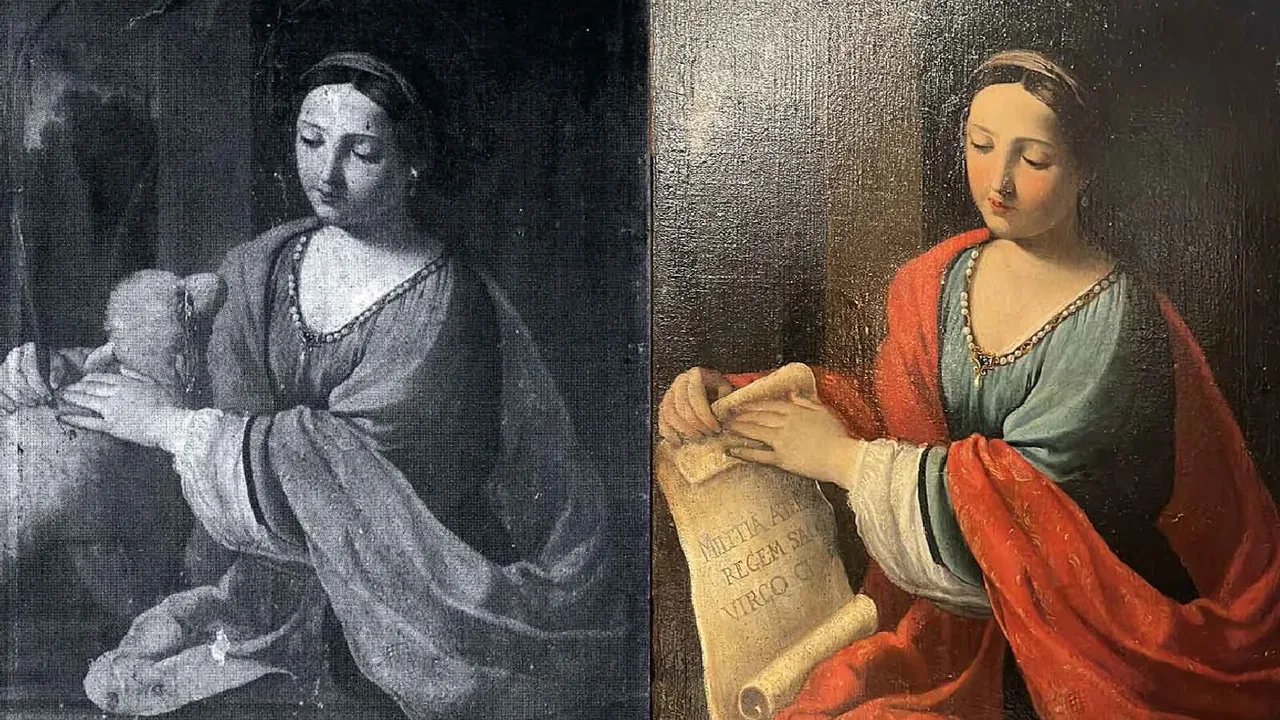
Italian police have managed to locate a rare 17th-century painting stolen from a church in 2004 with the help of artificial intelligence. Notably, although the thieves had altered the work to hide its original appearance, a specialized AI system was able to identify the painting's initial state.
The painting was stolen on August 11, 2004, from the Virgo Potens church in the city of Sulmona, near Naples. Later, the image was modified to conceal its true identity. Specifically, religious symbols were removed or altered, making the work look like a portrait of an ordinary young woman.
Nevertheless, the AI system detected similarities between the colors, patterns, and composition of the painting. Despite the fact that key details representing the work's original religious content—such as a white lamb, a halo symbolizing holiness, and a palm branch—had been altered or completely erased, the system succeeded in finding signs of its original appearance.
The significant result was achieved in October 2024 during a traditional antique fair held in Parma, Italy. At that time, police officers were photographing various works of art and entering them into a special database. A few hours later, the AI system identified a suspicious painting depicting a young woman holding a sheet of paper.
Subsequent investigations revealed that this work was, in fact, an image of Saint Agnes that had been stolen from the church 20 years earlier. The thieves had deliberately altered the image to hide the painting's religious content and obscure its true origin.
Italian police began developing the AI system aimed at identifying stolen works of art in 2020. This system, called the Stolen Works of Art Detection System, was officially launched in November 2023.
Since the system began operating, it has helped locate more than 300 major stolen works of art and sculptures, as well as over 165,000 other types of items. These include coins, medals, letters, manuscripts, religious items, stamps, and various postcards.
According to official data, the total value of all identified and recovered items exceeds 203 million euros. Furthermore, the system regularly analyzes images posted on open internet sources, online auctions, and commercial websites. This creates the opportunity to identify items that may have been stolen and track them down.
Experts emphasize that artificial intelligence has become an effective tool in searching for and identifying stolen works of art. However, they believe that this technology cannot fully replace human-led investigative processes and legal cooperation between countries. Additionally, identifying low-quality images, copies of works, and three-dimensional objects still poses a challenge for the technology.
Because more than 20 years have passed, it is no longer possible to initiate legal proceedings regarding the theft of this painting. Nevertheless, the work was returned to the church on May 20, 2025. It is now expected that restoration work will be carried out, after which the painting will be returned to its original place and put on display again.


Comments 0
…