


4.1-billion-year-old meteorite found in the Sahara Desert reveals secrets of the Red Planet
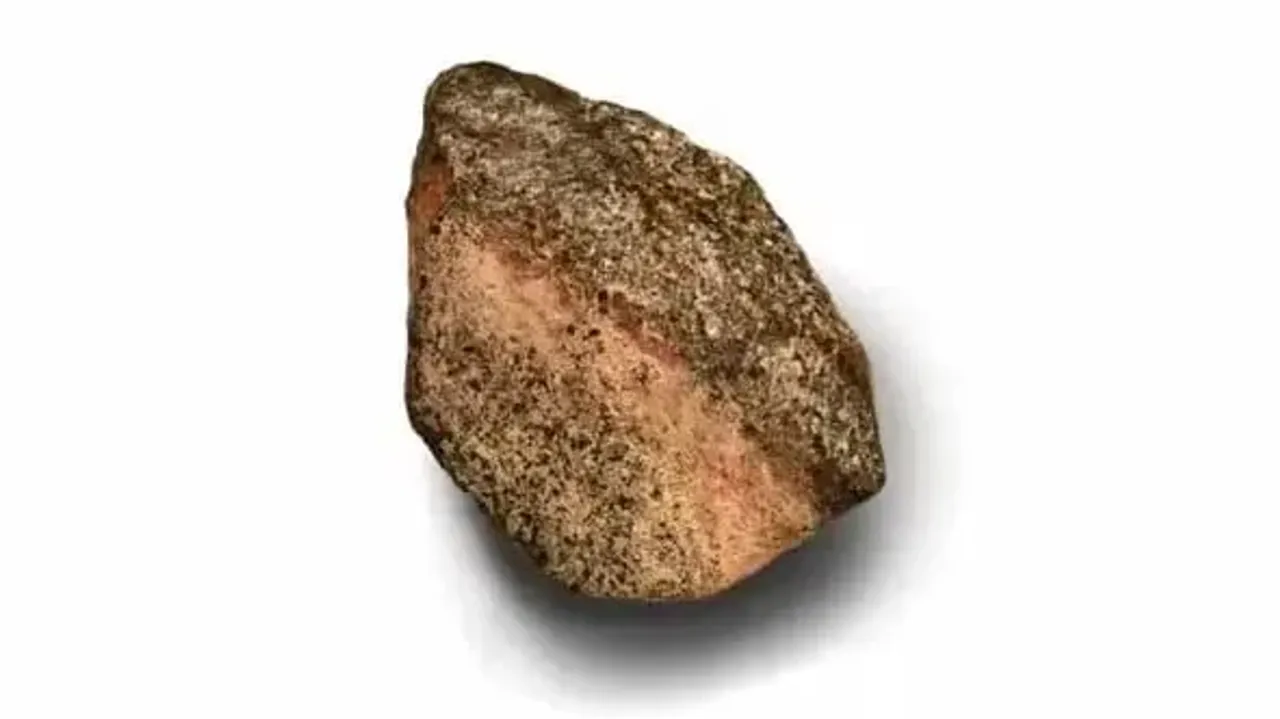
A Martian rock discovered in the depths of Africa's Sahara Desert has fundamentally changed our understanding of the universe and the history of the Red Planet. As a result of in-depth analysis conducted by scientists, it has been scientifically proven that this unique meteorite, named Teghaza 001, is approximately 4.1 billion years old.
International researchers and astrobiologists are calling this find the most unique source for studying the formation and evolution of Mars — the "Rosetta Stone" of the Red Planet.
What is known about the find? (Facts and composition)
Important aspects regarding the meteorite and its scientific classification include the following:
Where and when it was found: Collected in 2022 from the Sahara Desert, in the territory corresponding to the state of Mali;
Structure and size: The meteorite consists of eight separate fragments, the largest of which is the size of a human fist;
How was its age determined?: Scientists conducted a radiological examination of uranium and lead isotopes preserved in zircon crystals within the rock, determining its age to be 4.1 billion years;
Mineral wealth: The rock consists mineralogically of volcanic rocks and crystalline compounds, which means it separated from the deepest layers of the planet.
Conclusions of scientists and NASA: What happened on ancient Mars?
The research results put forward revolutionary conclusions regarding the geology and biosphere of Mars:
Impact of liquid water: Laboratory analyses clearly showed that 4.1 billion years ago, the rock underwent deep chemical changes directly due to the influence of liquid water;
Potential conditions for life: NASA representatives stated that this fact significantly strengthens scientific hypotheses that there was active water circulation and a potential environment suitable for microorganisms on ancient Mars;
However, not direct proof of life: Experts emphasized that while this discovery proves the existence of a water environment on Mars, it is not direct final evidence that specific biotic life existed there, but it does take research to a fundamentally new level.



Comments 0
…