


NASA to Send Three New Skyfall Helicopters to Mars
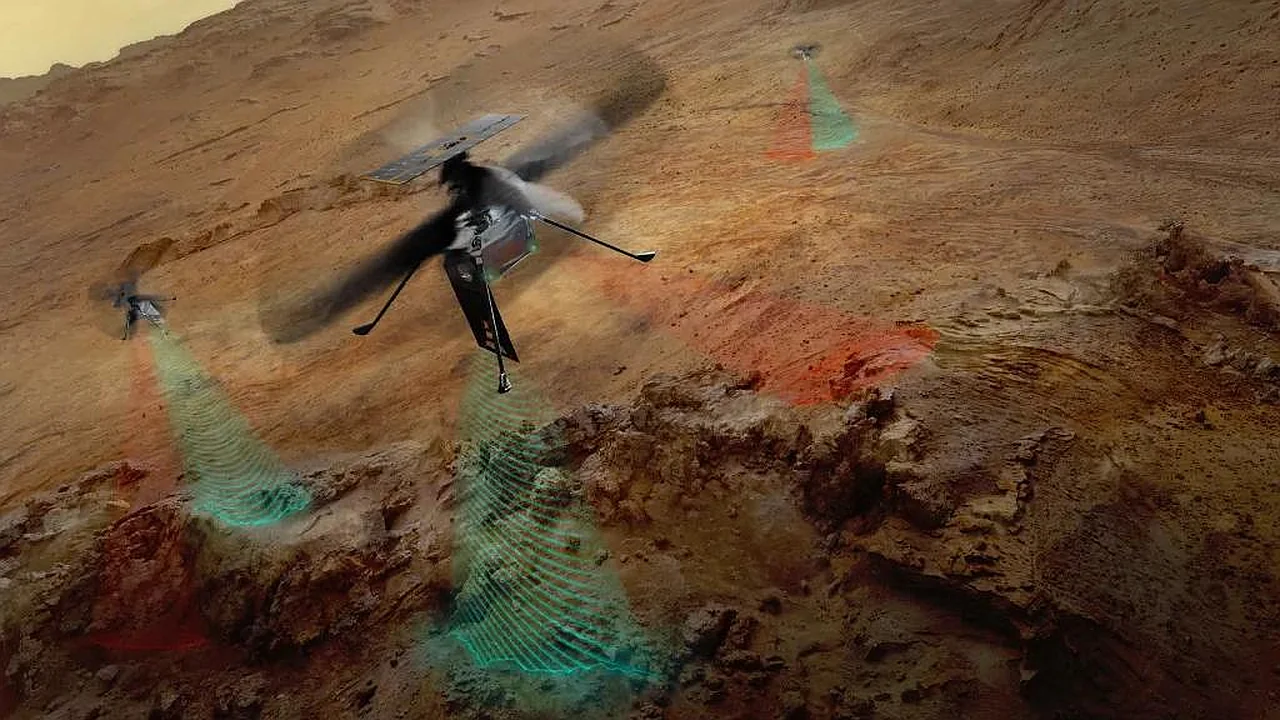
NASA and the American company AeroVironment have begun development of three new helicopters named Skyfall, scheduled for launch to the Red Planet. According to ixbt.com, these devices are a logical evolution of the legendary Ingenuity apparatus's technologies, designed to search for ice deposits on the planet's surface and take scientific research to a new level. This is reported by news source.
The contract for the design and production of the new spacecraft was signed by NASA's Jet Propulsion Laboratory (JPL), though the financial value of the deal has not yet been disclosed. Experts note that the Skyfall helicopters will be slightly larger than their predecessor and will be equipped with expanded rotors to lift heavier scientific equipment in the extremely thin atmosphere of Mars.
Technical Capabilities and New Scientific Instruments
Each Skyfall unit will weigh approximately 2.5–2.7 kg; for comparison, Ingenuity weighed about 1.8 kg. A ground-penetrating radar with a flexible antenna has been chosen as the primary scientific tool for the new helicopters, allowing for the inspection of soil structure at depths of 12 to 60 cm. This will enable scientists to successfully locate and study surface ice layers.The devices are also expected to be equipped with high-resolution cameras, dosimeters, and temperature sensors. An expanded solar panel will serve to provide continuous power to the new high-performance electronics and scientific equipment. Unlike Ingenuity, each Skyfall will have a direct communication system with spacecraft in Mars orbit, ensuring their autonomous operation.
Independent Delivery and Future Missions
While the first Mars helicopter arrived attached to the underside of the Perseverance rover, the Skyfall units will be sent independently without a heavy rover. Therefore, NASA will need to develop a separate process for the delivery, deployment, and initial testing of these devices. The three helicopters will jointly explore different regions of Mars, used to collect data on complex terrain and surface structures more quickly.This mission is planned for launch in late 2028 using a rocket equipped with a nuclear-electric propulsion system. The project is expected to demonstrate the scientific reconnaissance capabilities of a fleet of small autonomous aerial vehicles and become the next important milestone for the technologies tested by Ingenuity.


Comments 0
…