


Why specifically the Arabs? Why did Islam not begin in the Roman, Chinese, or other empires?
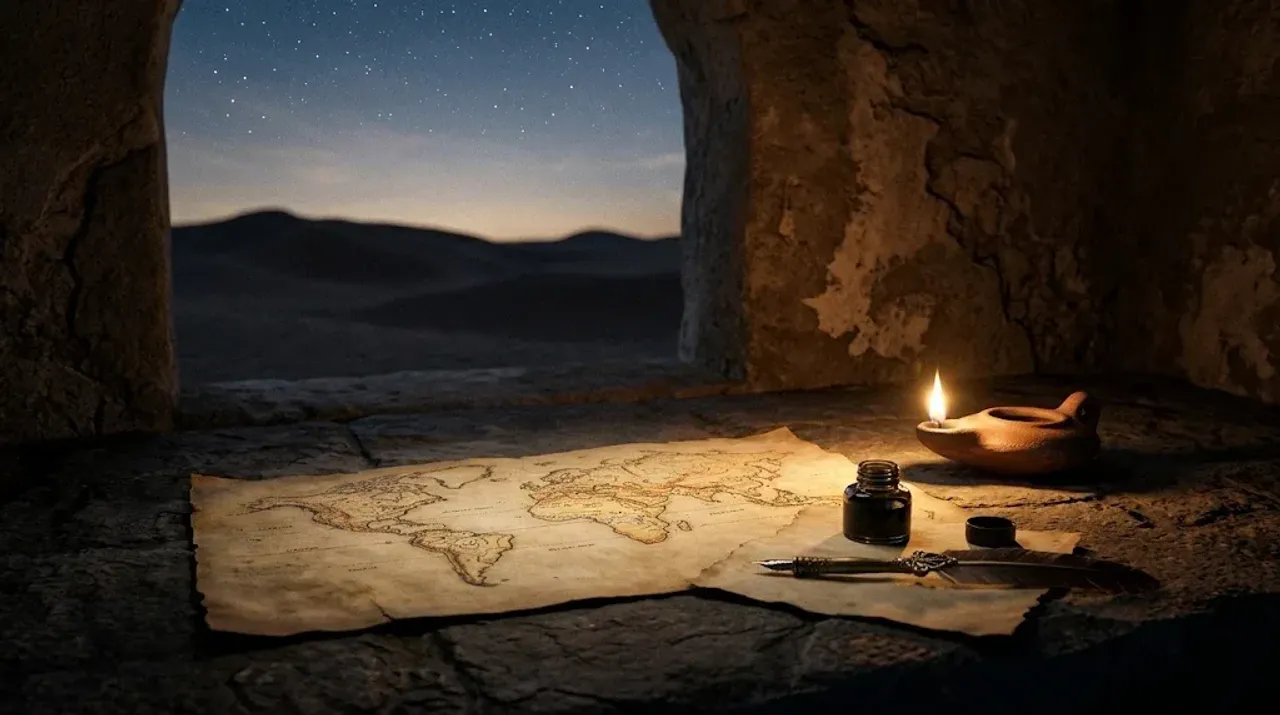
Many people interested in Islamic history are always troubled by one question: Why was the final Prophet Muhammad (pbuh) sent specifically to the Arabs? Why not to the Turks, the powerful Roman Empire of that time, or China, which was a leader in science?
Some might think, "Did this happen because Allah loved the Arabs more?" But the Holy Quran gives a firm rebuttal to this: "Indeed, the most noble of you in the sight of Allah is the most righteous of you" (Al-Hujurat, 13). Our Prophet (pbuh) also emphasized in his Farewell Sermon: "An Arab has no superiority over a non-Arab except by piety."
Then why did the final divine teaching sent to all of humanity begin in a city in the heart of the desert?
The world map of 610: What was the state of the planet?
To understand this mystery, it is enough to look at the political and spiritual landscape of the world in 610 AD:
Byzantine and Persian Empires: The two major superpowers of that era had completely exhausted each other due to bloody wars that had been going on for decades. Byzantine theologians were caught in a vortex of philosophical debates and conflicts regarding the nature of Jesus (pbuh);
Europe: There was no unified statehood; mutual wars and tribal fragmentation were rampant. Currently developed countries like Norway were divided into dozens of small and wild kingdoms at that time;
Chinese Empire: The Emperor, considered the "Son of Heaven," had led a million-strong army into Korea. According to legends, only 2,700 people returned alive from the 300,000-strong army;
American continent: Mayan rulers declared themselves sacred gods, and cities were busy plundering each other;
The world's common ailment: No matter which corner of the Earth you looked at, someone had artificially inserted themselves between man and the Creator — a king, a priest, a special class of clergy, or idols.
In such an era, the answer came from a desert city that had neither a royal palace, nor a professional army, nor a ruling class of clergy: "Say, He is Allah, [who is] One" — a direct connection to the Creator without any intermediaries.
4 main reasons cited by historians and scholars
There is immense wisdom behind the beginning of the Islamic mission in the Arabian Peninsula:
An illiterate people and the absence of doubts:
The Arabs of that time did not have schools, complex philosophical schools, or ancient written sources. This completely protected the revelations received by the Prophet (pbuh) from claims that they were "copied from previous philosophies." As the Quran states: "And you did not recite before it any scripture, nor did you inscribe one with your right hand. Otherwise the falsifiers would have had cause for doubt" (Al-Ankabut, 48);
The prayer of Abraham and Ishmael (pbuh) from centuries ago:
While building the walls of the Kaaba, Abraham and Ishmael (pbuh) prayed to the Creator: "Our Lord, send among them a messenger from themselves." Centuries later, Allah Almighty revealed the answer to this prayer with these very words: "It is He who has sent among the unlettered a Messenger from themselves."
The incomparable power of the Arabic language:
The Arabs were a people infinitely devoted to the art of words, poetry, and oratory, and they took pride in their poetry. The Quran addressed them through the very field where they were strongest — language — and demonstrated the miracle of eloquence. For comparison: today, an English reader cannot understand a poem written in their own language 1,400 years ago without a translator, but thanks to the Quran, the Arabic language has been perfectly preserved without losing its form for 14 centuries;
The geopolitical and strategic location of Mecca:
Mecca had long been the central trade and pilgrimage crossroads of all Arabia. Every year during the Hajj season, all tribes would gather here. The Messenger of Allah (pbuh) used this very opportunity to visit the tribes one by one. Thanks to this strategic center, within less than a century, this teaching spread rapidly from the borders of Spain to the borders of China.
Wisdom: Light spreads furthest in darkness
Allah Almighty is the One who knows best to whom to entrust His mission. He did not ignite His divine light in the most luxurious royal palaces on Earth, but in the darkest and most remote desert. After all, light shining in absolute darkness is visible from the greatest distances.



Comments 0
…