The origin of the Moon's massive impact craters has been determined
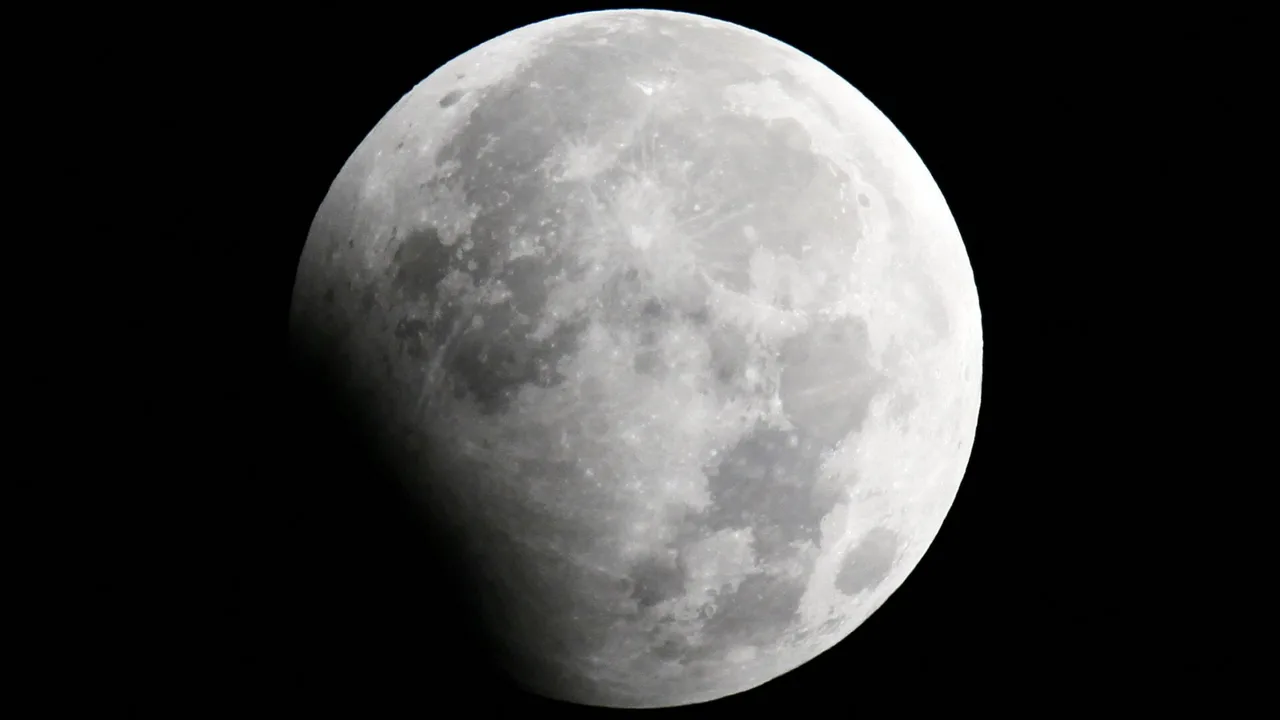
Chinese scientists have managed to reconstruct the formation history of a massive impact basin located on the far side of the Moon. Soil and rock samples brought back to Earth by the country's Chang'e-6 space mission played a crucial role in this. They helped determine how one of the largest cosmic collisions in lunar history occurred. This was reported by Naked Science.
Researchers studied the origin and formation stages of the South Pole-Aitken basin. This giant basin is located on the far side of the Moon, invisible from Earth, with a diameter of approximately 2,050–2,400 kilometers and a depth reaching up to 12 kilometers. It is considered one of the largest impact basins in the solar system. Scientists hypothesize that this region was created billions of years ago as a result of a massive cosmic object striking the lunar surface.
What did the samples brought from the far side of the Moon reveal?
In 2024, China's Chang'e-6 mission brought nearly 1.9 kilograms of soil and rock samples from the Apollo crater in this basin region back to Earth. This is the first mission in history to bring material samples from the far side of the Moon.
An international team of scientists led by Yuqi Qian and Guochun Zhao from the University of Hong Kong studied the composition of the returned samples in detail. They compared the obtained results with data from the Chang'e-4 mission and observations made from lunar orbit.
The analysis revealed that the soil in the studied area consists of a mixture of solidified lava and rocks created by ancient cosmic collisions. According to calculations, rocks unrelated to local lava make up 40–50 percent of the total composition. The majority of these are associated with the large impact that caused the formation of the Chaffee S crater.
Three major collisions in lunar history identified
Based on the data obtained, scientists highlighted three significant cosmic events that occurred several billion years ago.
The first major event took place approximately 4.34 billion years ago. During that period, a massive cosmic object struck the lunar surface, forming the South Pole-Aitken basin.
Later, approximately 4.2 billion years ago, another major collision occurred within this giant basin. As a result, the Apollo impact basin was formed.
The third important event occurred approximately 3.87 billion years ago. This cosmic collision resulted in the appearance of the Orientale basin. As a result of this impact, the studied area may have been covered with tens of meters of rock and other debris.
The researchers note that this data allows for a better understanding of the formation history of one of the Moon's largest impact basins and how it has changed over various periods.
At the same time, scientists emphasize that the reconstructed history is currently based on soil samples, satellite observations, and scientific calculations. Therefore, new samples obtained from other parts of the basin in the future may help to further refine existing conclusions.

No ads with a subscription
Zamin Premium — 4 900 UZS a month


Related news


Comments0
…