


Interstellar Comets May Account for Half the Milky Way's Mass
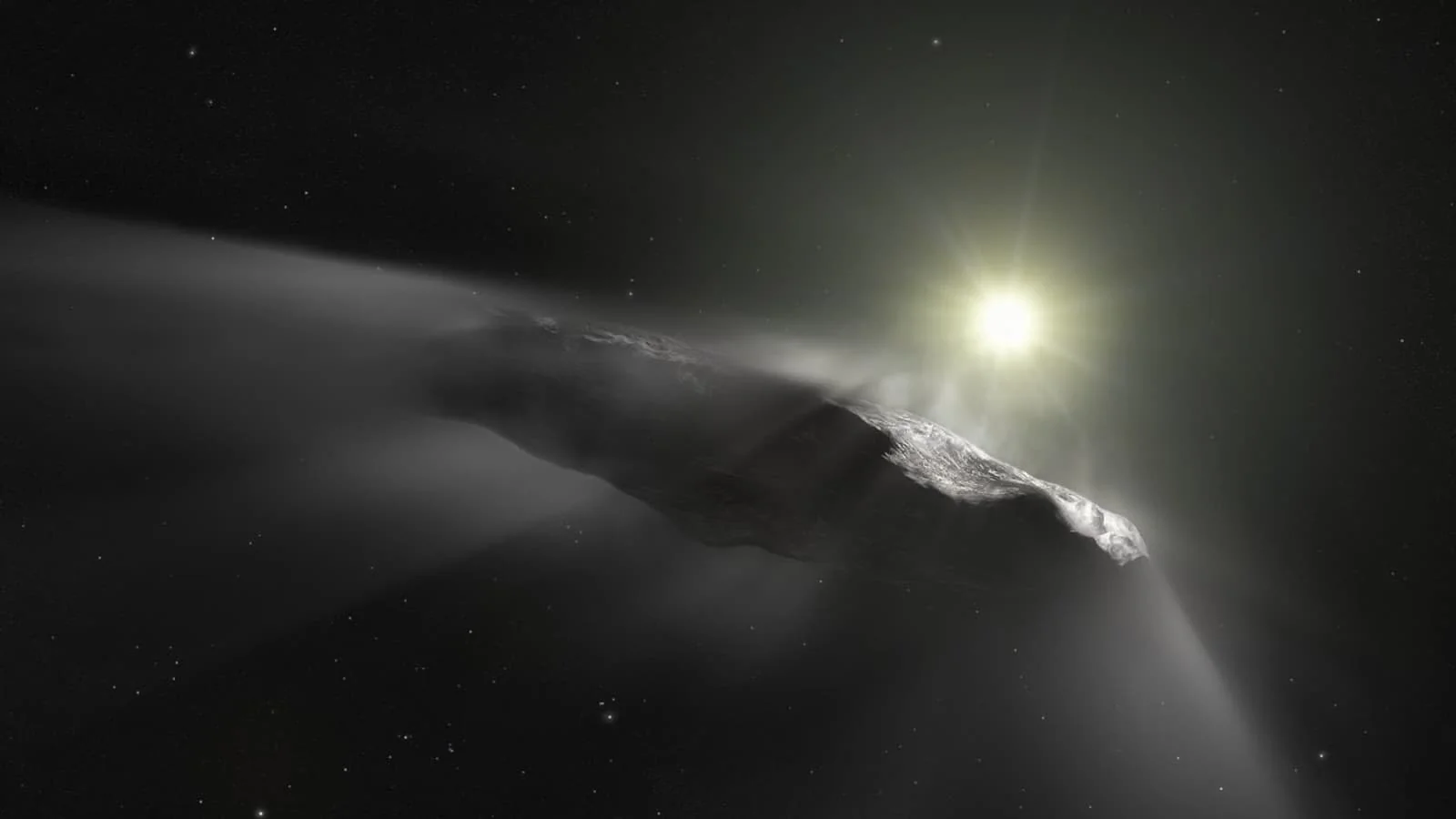
An international team of researchers has proposed the hypothesis that a significant portion of the Milky Way's "missing mass" may be linked not to dark matter, but to objects freely moving through interstellar space—comets and asteroids. Published on the arXiv portal, this study offers an alternative approach to the traditional dark matter theory. Ixbt.com reports .
Typically, the existence of dark matter in the Galaxy is inferred from the analysis of stellar rotation speeds. Observations show that stars at the edge of the Galaxy rotate faster than expected based on visible mass (stars and gas). This discrepancy is explained by invisible mass that does not interact via electromagnetic radiation but manifests through gravity.
The new study examined the total contribution of interstellar objects (ISOs). Examples include rare visitors from other star systems, such as the previously recorded 1I/ʻOumuamua, 2I/Borisov, and 3I/ATLAS. Researchers suggest that while the mass of each individual object is small, their total number in the Galaxy could be unimaginably vast.
Calculations using a statistical model based on the Poisson distribution showed that the total mass of interstellar objects could account for 13% to 45% of the "missing mass" attributed to dark matter. This implies that the role of such objects in gravitational dynamics could be significant.
However, the authors note that these calculations are based on a very small sample size (primarily the 3I/ATLAS object). New sky survey projects are expected to detect more interstellar objects in the coming years. This data will help determine whether comets can truly solve the Galactic mass problem or if their role is secondary.


Comments 0
…