


Revolutionary Technology in China: 51 Tbit/s Speed Recorded in Hollow-Core Fiber
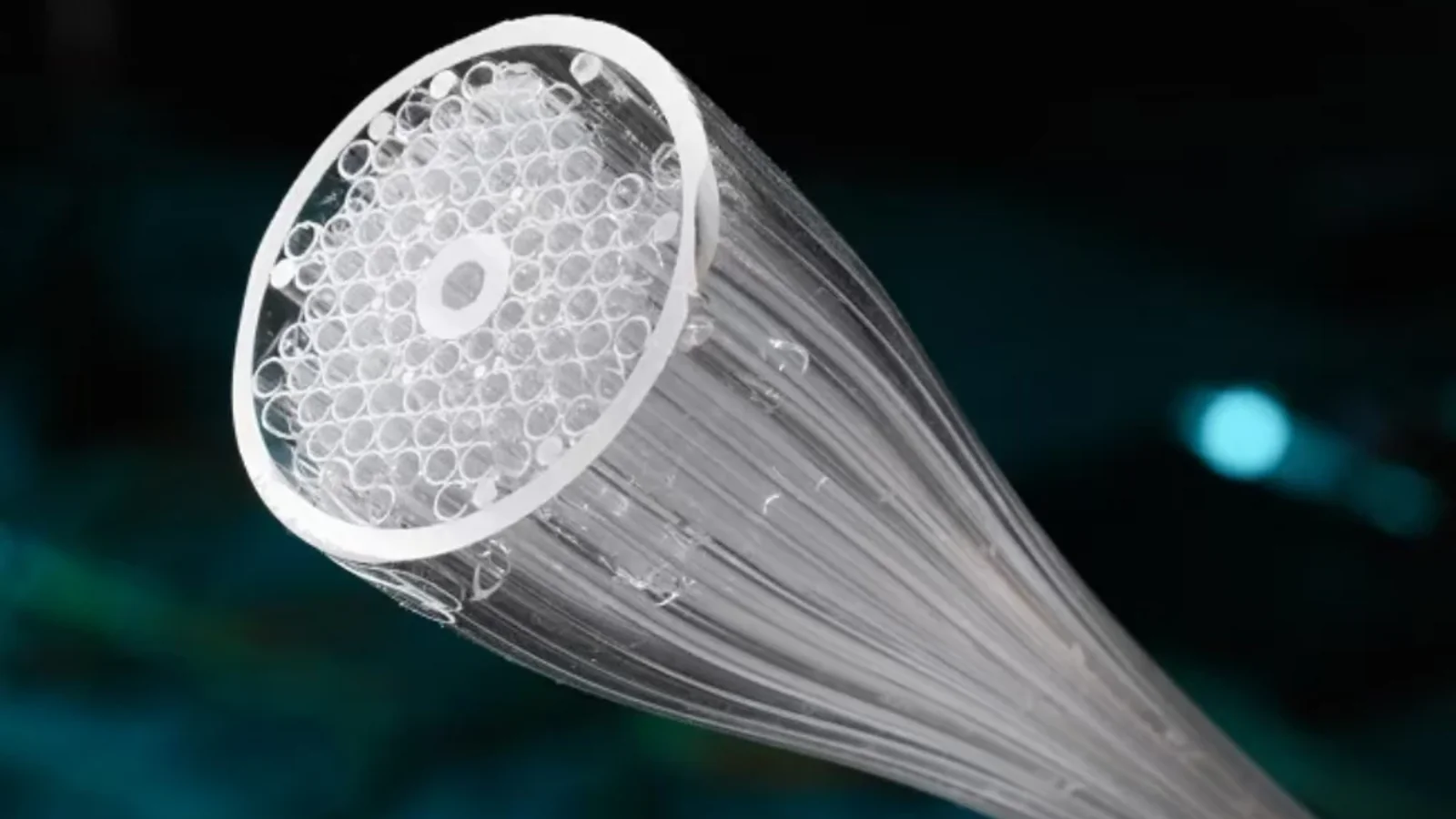
Leading telecommunications companies in China have, for the first time in the world, successfully conducted field tests of a hollow-core (air-filled) fiber optic communication system. This technological achievement is expected to take data transmission speed and quality to a new level. In a project implemented in cooperation with China Telecom, YOFC, and Dekoli, a data transmission rate of 51.3 terabits per second was achieved. According to Ixbt.com, report states.
The most important aspect of the research is that such a massive volume of data was sent over a distance of nearly 206 kilometers without any intermediate signal amplifiers. This figure is significantly higher than the capabilities of traditional fiber optic networks existing today. According to ixbt.com, the experiment was conducted on the world's largest commercial cross-border hollow-core fiber communication line.
Advantages of the New Technology
In traditional fiber optic cables, the light signal travels through glass fiber. In a hollow-core construction, the signal propagates along an air channel. This method increases the speed of light propagation and minimizes latency. Since light moves 30 percent faster in air than in glass, data exchange occurs almost instantaneously.To achieve this result, engineers implemented a flexible transmission rate management system for each wavelength. Additionally, dynamic power distribution technology between channels was used. This allowed for the optimization of the entire communication line in real time, moving away from strictly fixed parameters.
Security and Future Prospects
The new system is improved not only in speed but also in security. As part of the project, emergency shutdown functions and fault warning mechanisms were developed for the safe operation of high-power optical lines. This helps prevent unexpected outages in backbone networks.Experts believe that hollow-core fibers will become the primary solution for large Data centers and intercontinental backbone networks in the future. These tests conducted in China proved the possibility of implementing next-generation networks in practice. For countries developing a digital economy, such as Uzbekistan, such technologies could be of great importance in fundamentally improving internet quality in the future.


Comments 0
…