


AMD Threadripper Heat Powers a 19th-Century Stirling Engine
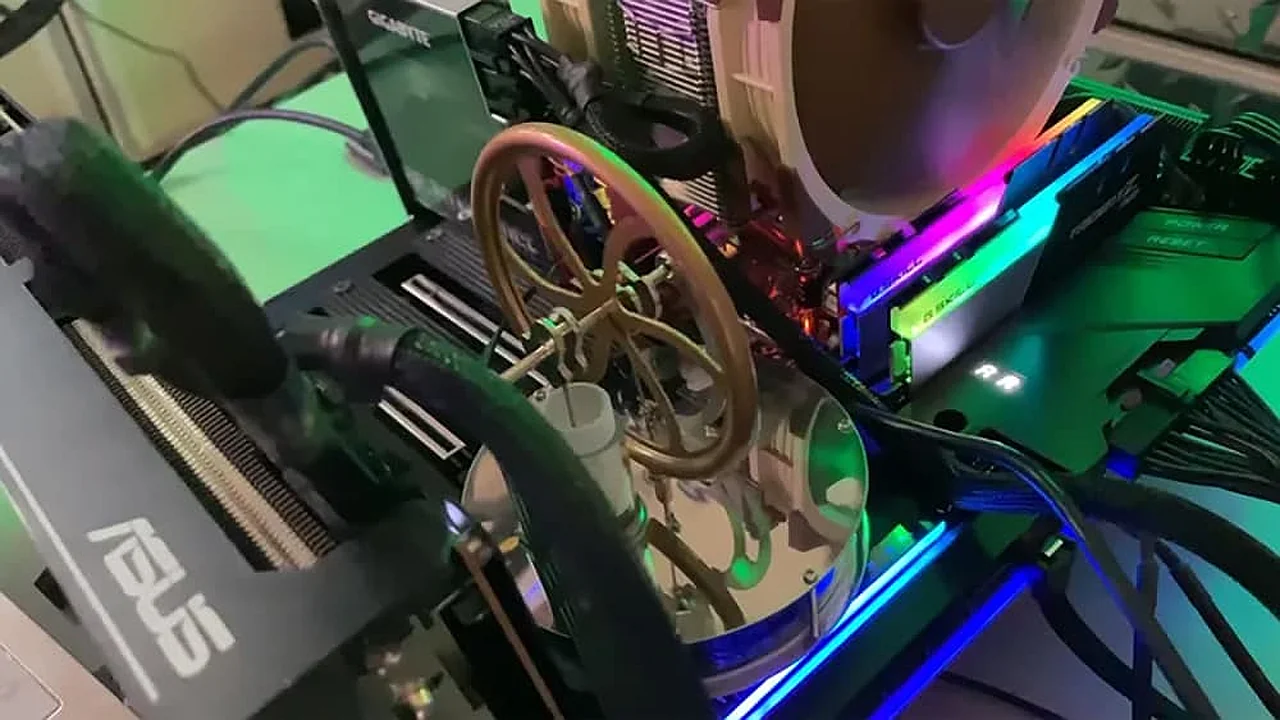
Modern high-performance processors are known not only for performing complex calculations but also for generating significant amounts of thermal energy. Dave W. Plummer, a former Microsoft engineer and one of the Windows system developers, decided to put this heat to an unexpected use. Using the heat generated by a system based on the 32-core AMD Threadripper 3970X processor, he started a Stirling engine invented in the 19th century. This was reported by Ixbt.com report .
During the experiment, a miniature Stirling engine was installed on the chipset section of the system board. This device is capable of converting the heat generated by the computer's operation into mechanical energy. As the system heats up, the device absorbs thermal energy, drives the piston, and begins to rotate the flywheel. This process demonstrated a unique harmony between modern technology and a two-century-old engineering concept.
Stirling Engine: History and Modernity
The Stirling engine was first patented in 1816 and belongs to the category of external combustion engines. Although this technology is used in some energy and industrial applications today, in everyday life it most often serves as an educational tool for demonstrating physical processes. In the video published by Plummer, one can see him first spinning the flywheel by hand, after which the engine continued to rotate independently powered solely by the heat coming from the computer.According to ixbt.com, such miniature engine models can be purchased from retail platforms like Amazon for around 40 dollars. They are so sensitive that they can even operate using the heat from a cup of hot coffee or a human palm. Powerful processors like the AMD Threadripper serve as a sufficiently stable heat source for such devices.
Engineering Experiment and Practical Significance
It should be noted that this experiment was conducted not as a new method of computer cooling but rather as an entertaining scientific demonstration. Dave Plummer did not provide specific figures on how much the processor temperature dropped or how this device affected system performance. Nevertheless, this case draws attention to the issue of recycling excess energy produced by computer hardware.Currently, there are various projects aimed at redirecting the heat generated by data processing centers and powerful servers toward heating buildings or warming water. Plummer's experiment demonstrated the simplest and most visual form of converting thermal energy into mechanical motion. Such approaches may inspire new ideas for improving the energy efficiency of electronic devices in the future.


Comments 0
…