


Farthest Point in Earth's Orbit: On July 6 Our Planet's Motion Slows Down
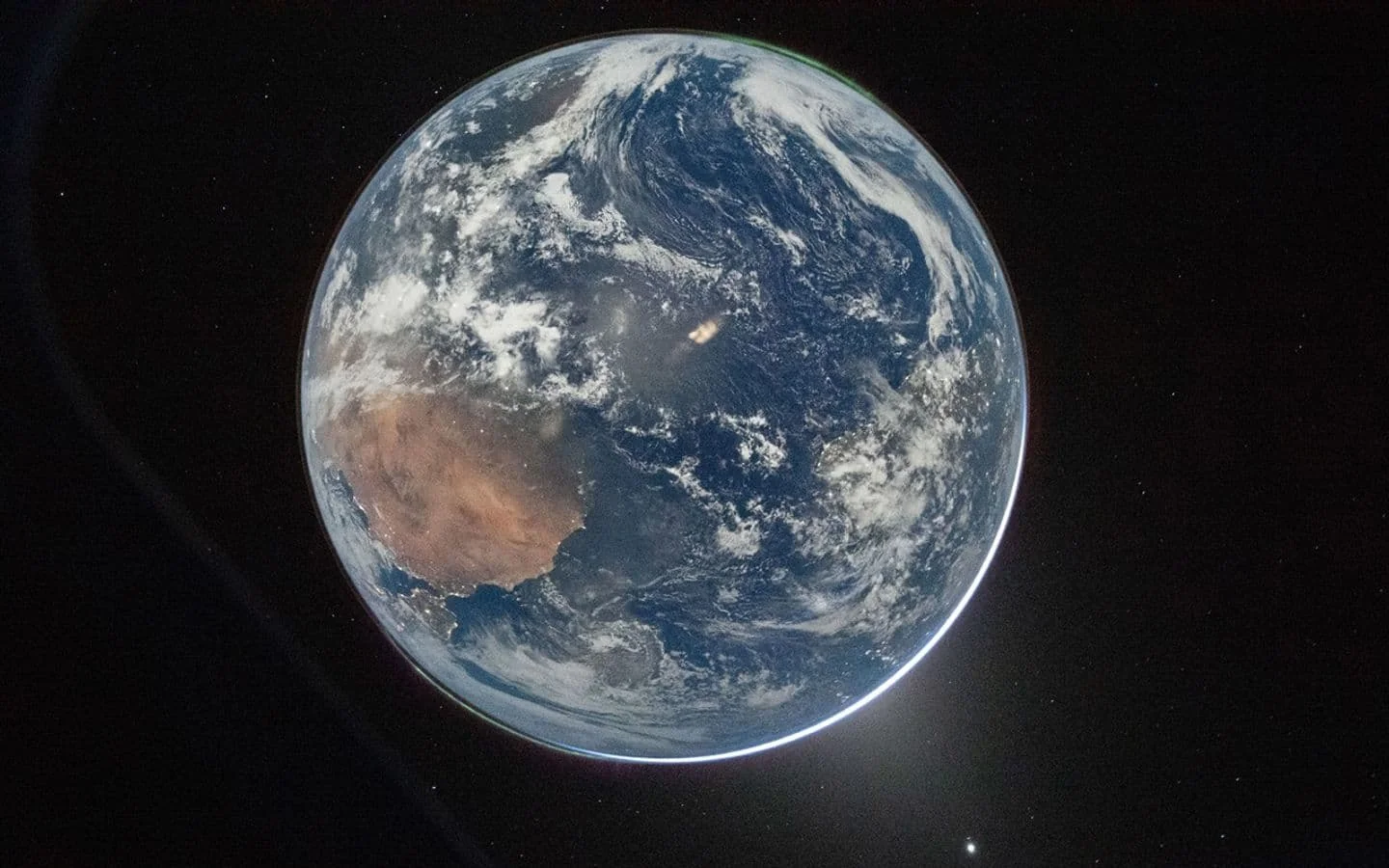
On July 6 of this year, planet Earth passes through the point of its orbit farthest from the Sun — the aphelion point. As a result of this astronomical event, our planet's speed of motion through space drops to its lowest level of the year. This process is part of the laws of nature and is observed annually at the beginning of July. Ixbt.com reports on this.
According to a report by TASS news agency, citing data from the Moscow Planetarium, on this day the distance between Earth and the Sun will be approximately 152.1 million kilometers. For comparison, in January, when our planet is closest to the Sun (perihelion point), this distance shrinks to 147 million kilometers. The increase in distance directly affects our planet's orbital speed.
Decrease in Speed and Kepler's Law
On July 6, Earth's orbital speed decreases to 29.27–29.29 kilometers per second. Compared to January's figures, this is a significant difference — at that time, the speed was 30.27–30.29 kilometers per second. Such changes are explained by the second law of the German astronomer Johannes Kepler: the closer a planet is to the Sun, the faster it moves, and vice versa.Since Earth's orbit is not a perfect circle but an elongated ellipse, the distance to the Sun varies throughout the year. During aphelion, because Earth is farther from the Sun, the effect of the Sun's gravity slightly decreases, which leads to the planet slowing down.
Changes in the Sun's Appearance
As the distance reaches its maximum, on July 6 the Sun's apparent diameter in the sky will be at its smallest of the year. Of course, this change is difficult to detect with the naked eye, but with specialized astronomical equipment, the reduction in the Sun's disk can be recorded.Many people have the misconception that moving away from the Sun should lead to colder weather. In reality, the fact that the Northern Hemisphere, including Uzbekistan, is currently experiencing the hot summer period is related to the tilt of Earth's axis. An increase in distance of several million kilometers has less effect than the change of seasons.
This event is important for astronomers and space enthusiasts in studying our planet's complex mechanisms. Earth's slowing down and moving away poses no threat to human health or daily life — it is simply part of the balance of the cosmos.


Comments 0
…