


Engineering Revolution: Wind Turbine Blades 4D-Printed
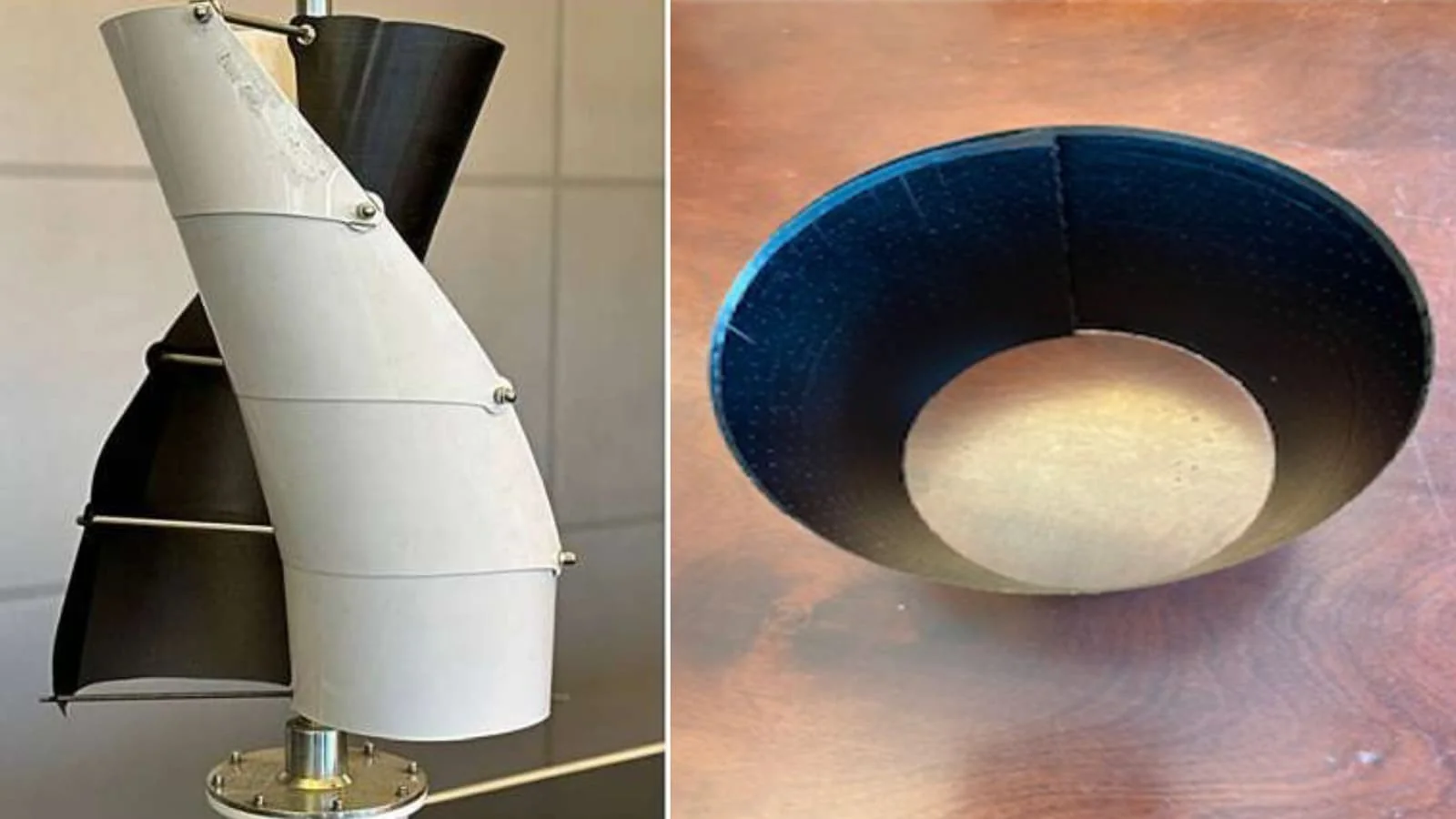
Scientists at Concordia University in Canada have introduced a new technology expected to create a major breakthrough in the field of renewable energy. Instead of traditional casting or stamping, researchers developed a method to produce blades for vertical wind turbines using 4D-printing technology. This method significantly reduces production costs and simplifies the process. This is reported by Ixbt.com news reports.
The uniqueness of 4D technology is that the blades are not initially printed in a curved shape, but as completely flat composite raw material. Once production is complete, these flat parts spontaneously take the required aerodynamic shape without any external mechanical influence. This completely eliminates the need for complex molds and expensive processing equipment.
The secret of self-shaping structures
According to the project authors, the process is based on the principle of "inverse design." Engineers first calculate the final shape of the blade, then determine how to arrange the layers of carbon fiber and epoxy resin. As the composite material hardens and begins to cool, internal stresses are created, which force the part to bend into the predetermined precise shape.Laboratory test results were even better than expected. It was found that composite blades produced with the new method are nearly 80 percent lighter than traditional aluminum counterparts. At the same time, they fully retain their aerodynamic properties. This is a crucial factor in increasing the efficiency of wind energy devices.
During the research, it was observed that turbines equipped with the new blades rotated even faster than devices with metal blades. This leads to an increase in energy production volume. Scientists emphasize that this technology is particularly promising for small-scale vertical wind turbines installed on the roofs of buildings in cities.
In countries like Uzbekistan, where attention to renewable energy sources is growing, the popularization of such affordable and efficient technologies is of great importance. In the future, this approach could be widely used not only in energy but also in other fields requiring lightweight parts with complex shapes, such as aviation and automotive industries.


Comments 0
…