


Intel Launches Revolutionary High-NA EUV Technology for Chip Manufacturing
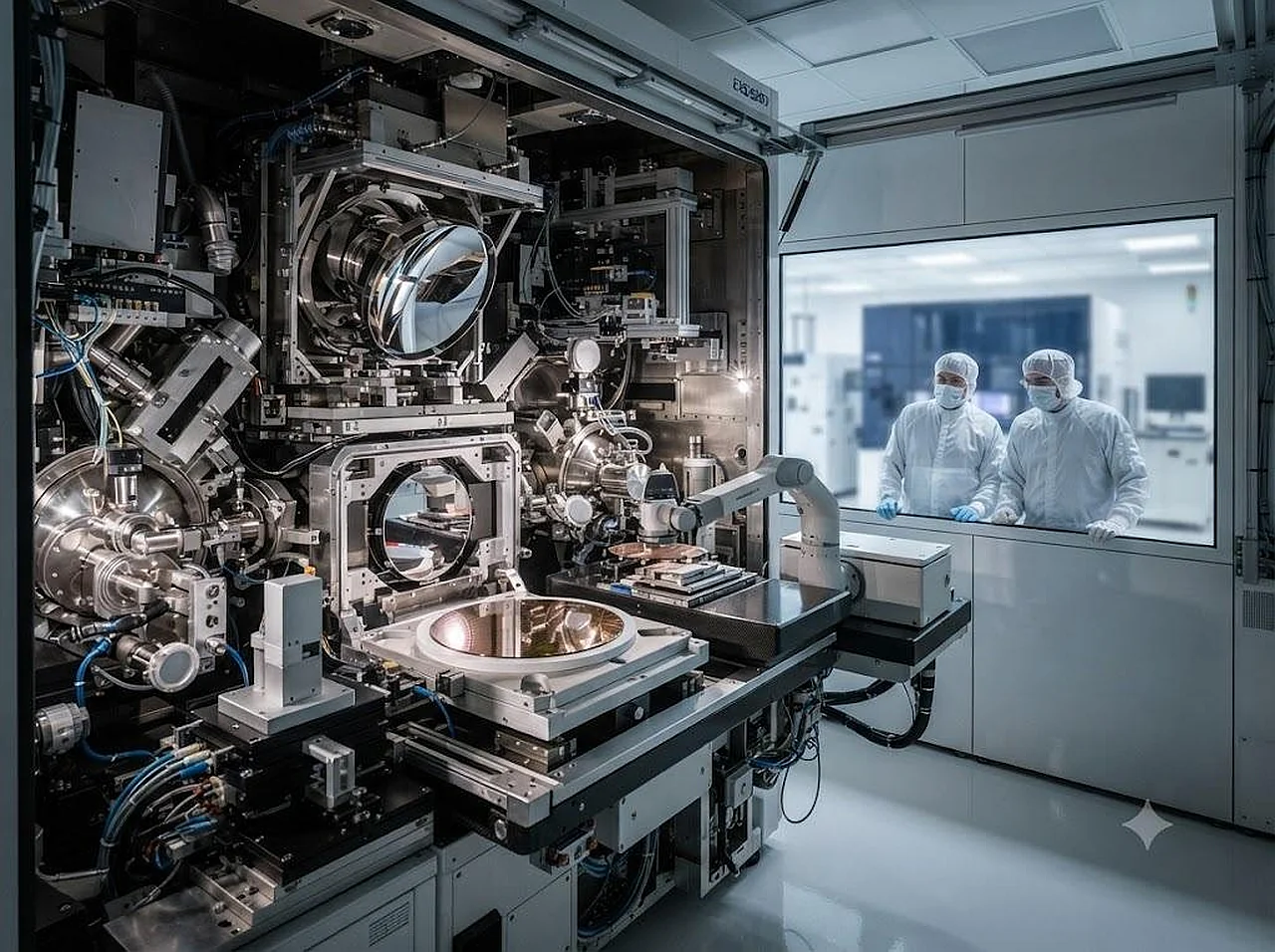
Intel Corporation, a leader in the semiconductor industry, has begun using high-numerical aperture extreme ultraviolet (High-NA EUV) lithography for the mass production of commercial processors for the first time. This step marks a new era not only for the company's history but for the entire global technology market. Currently, this technology is being used to prepare certain layers of Panther Lake processors, which are part of the Intel Core Ultra Series 3 lineup. This is reported by Ixbt.com reports .
Until now, High-NA EUV systems were used only for laboratory research and creating test samples. According to Reuters and ixbt.com, the new technology is based on EXE-series lithography machines manufactured by the Dutch company ASML. These machines have a numerical aperture of 0.55, which is significantly higher than the 0.33 of current NXE systems.
Technological Superiority and Manufacturing Complexity
The new generation optical system allows for the formation of even smaller elements on microchips. According to ASML's analysis, the imaging resolution has improved from 13 nanometers to 8 nanometers. This is not a marketing term, but the physical capability of the optical system itself. For now, processors are not being produced entirely via High-NA; only the most complex layers of Panther Lake chips are prepared using this method. Intel has the expertise to use both traditional NXE and new EXE systems simultaneously, which helps make the manufacturing process flexible.However, such a technological leap requires enormous costs. The price of a single High-NA EUV machine is approximately $400 million, which is twice as expensive as standard EUV machines. Beyond the financial burden, manufacturers had to develop new photoresists, photomasks, and measurement methods from scratch. This requires a fundamental transformation of the entire manufacturing ecosystem.
Strategic Importance and Future Prospects
The main advantage of High-NA technology is that complex structures can be formed in fewer steps. This reduces wafer processing time, lowers material consumption, and decreases the likelihood of alignment errors between layers. As a result, in the long term, product costs are expected to decrease, and the number of defective chips is expected to drop.For Intel, the implementation of this technology is of strategic importance. The company intends to use the experience gained through Panther Lake processors to develop its Intel Foundry contract division. Through this, Intel aims to gain an advantage in the global market in competition with giants like TSMC and Samsung. This news is also important for consumers in Uzbekistan, as processors created based on this new technology will bring the performance of laptops and computers to a new level in the coming years.


Comments 0
…