


New Graphene Alternative: Scientists Make Revolutionary Discovery in MXene Class
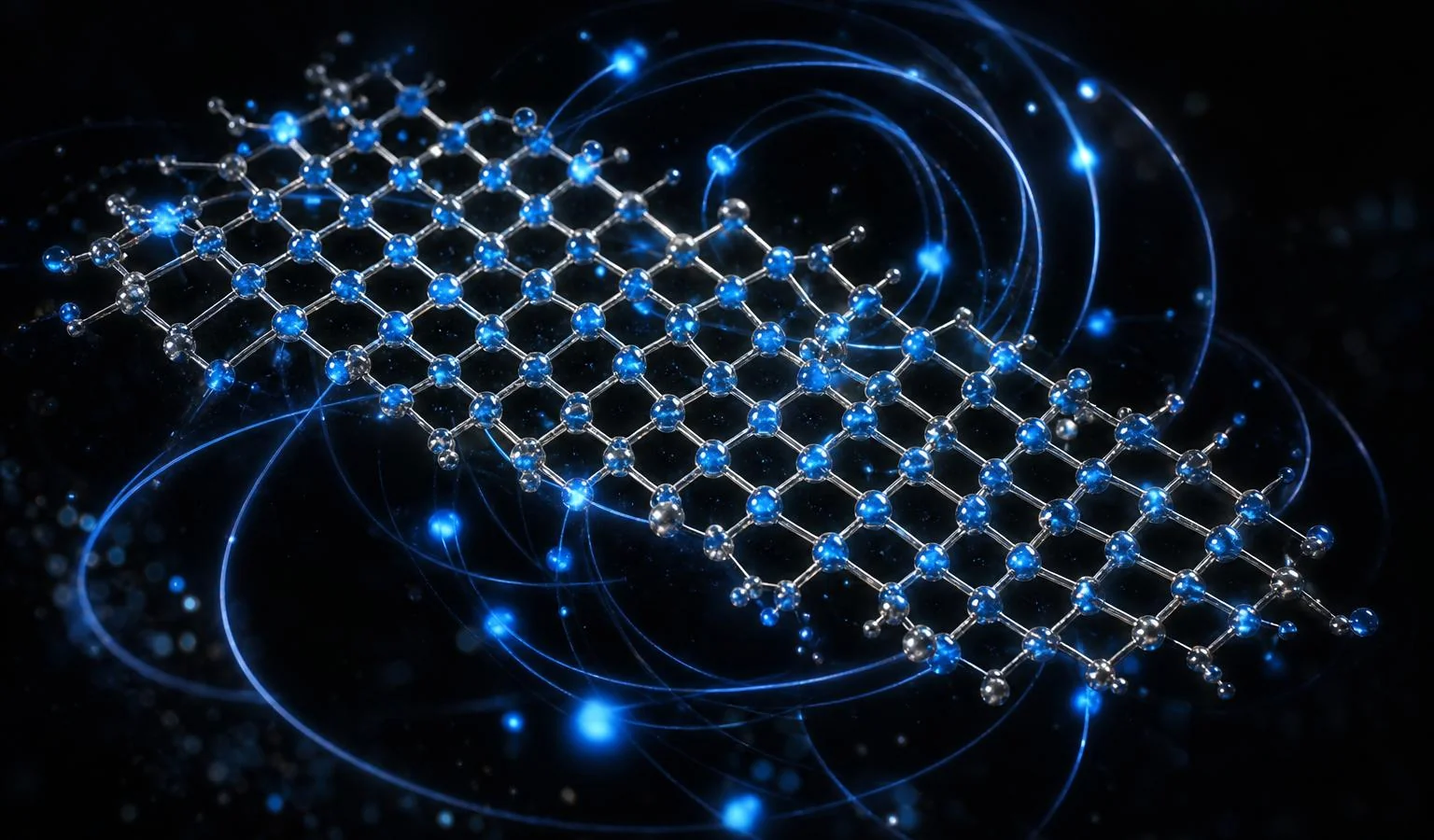
A long-awaited technological breakthrough has occurred in the field of materials science. Researchers from the Ningbo Institute of Materials Technology and Engineering of the Chinese Academy of Sciences and Zhejiang University have successfully created the world's first lanthanide-based two-dimensional MXene material. Published in the journal Nature, this discovery is expected to completely transform the future of modern electronics and computing technologies. This is reported by Ixbt.com. reports .
While graphene consists of a single-atom-thick layer of carbon, MXenes are similarly ultra-thin layers containing transition metals (titanium, vanadium, niobium, etc.) along with carbon or nitrogen. The main achievement of the scientists is that, for the first time, they managed to combine two properties in a single material that previously did not coexist in the MXene class: semiconductivity and ferromagnetism.
Although most previously known MXene materials possess high electrical conductivity, they were unsuitable for devices requiring simultaneous control of both electrical and magnetic properties. According to Ixbt.com, the new discovery overcomes this exact limitation, allowing for equal control over the flow of electrons and their magnetic state.
“Chemical scissors” technology and the synthesis process
To achieve this result, the researchers developed a new synthesis method called “chemical scissors.” This approach allows the crystal structure to be “cut” at the atomic level—meaning specific atomic layers can be selectively removed, replaced, or rearranged. As a result, scientists can assemble the material like a constructor set, imparting pre-determined properties to it.The process consists of two stages: first, a metal from the lanthanide group reacts with a copper halide. Then, at high temperatures, this compound interacts with graphite to form a new layered structure where metal, carbon, and halogen atoms alternate. Tests fully confirmed the material's stable ferromagnetic properties.
Spintronics and future devices
The creation of the new material is particularly crucial for the field of spintronics. Unlike traditional microelectronics, spintronics utilizes not only the charge of an electron but also its spin (magnetic moment). This serves to make devices even faster, more compact, and energy-efficient.According to the scientists, this new MXene material can be applied in the following areas:
- High-performance logic processors;
- High-frequency communication systems and 6G technologies;
- Next-generation memory elements and magnetic sensors;
- Components for quantum computers.
The authors of the study emphasize that the “chemical scissors” method is universal and that in the future, it can be used to create an entire family of new materials with pre-programmed optical, magnetic, and electrical properties. For countries striving for technological modernization like Uzbekistan, such fundamental discoveries are significant as they will set new standards in the semiconductor industry of the future.


Comments 0
…