


Côte d’Ivoire and San Marino Join NASA Artemis Accords
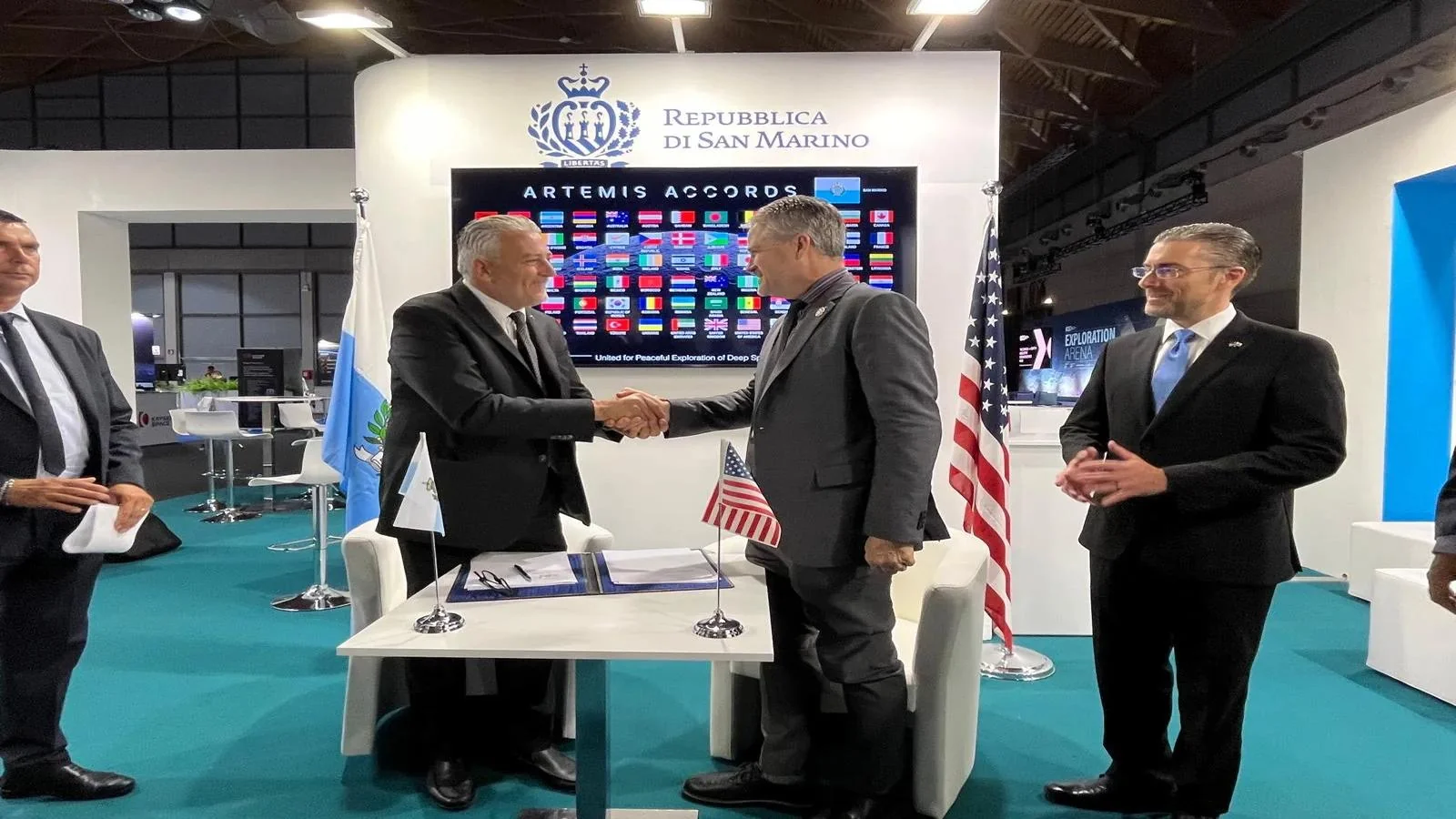
International cooperation for the peaceful exploration and research of space is expanding. Within two days, Côte d’Ivoire and San Marino officially signed the Artemis Accords promoted by NASA, becoming the 75th and 76th participants in the initiative. This is reported by Ixbt.com reports .
According to ixbt.com, this significant step for Côte d’Ivoire took place on September 24 during the Africa Space Expo ASPEX 2026 conference held in Abidjan. The document was signed on behalf of the country by Minister of Higher Education and Scientific Research Adama Diawara.
A day later, on September 25, San Marino also joined the international agreement in Rimini. Signed by San Marino's Minister of Industry and Technological Research Rossano Fabbri, this document demonstrates the growing interest of the small European state in space initiatives.
Space Infrastructure and History of Cooperation
For Côte d’Ivoire, this agreement is a logical continuation of long-term cooperation with the US space agency. Since 2019, the country has been working with NASA on Earth observation and geodesy—measuring Earth's shape, gravity, and motion.Additionally, in 2025, Côte d’Ivoire established its own national space agency. This agency coordinates national projects in Earth observation, space weather, astronomy, satellite navigation, and communications.
San Marino does not yet have such extensive national space infrastructure. Nevertheless, NASA officials emphasized that the country is exploring opportunities to participate in future lunar projects.
Key Principles of the Artemis Accords
According to NASA, all participating countries can contribute to the process of sending humans to the Moon through scientific instruments, technology demonstrations, satellites, and other developments. This opens a path for smaller nations to participate in global space exploration.As a reminder, the Artemis Accords were established in 2020 by NASA, the US Department of State, and seven other countries. The document defines practical principles for the transparent, safe, and peaceful exploration of the Moon, Mars, and other celestial bodies at a time when interest from states and private companies is growing.
Experts explain that signing the agreement does not mean the country will automatically participate in any specific mission or fund the lunar program. It merely signifies adherence to the stated principles and opens doors for future cooperation with NASA and other participants.


Comments 0
…