


1.5 million vehicles move in Tashkent every day: a new system against traffic jams...
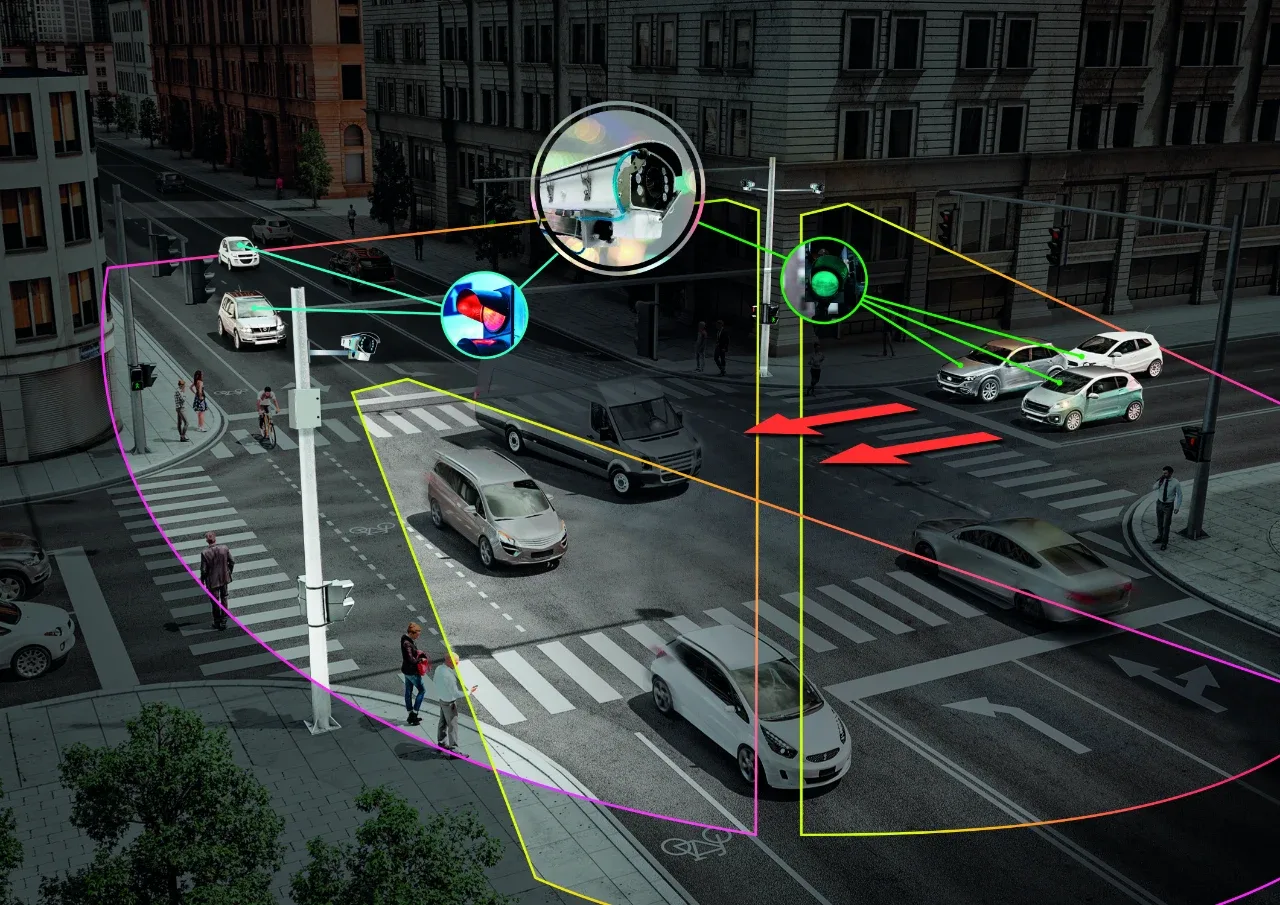
Nearly 1.5 million vehicles travel on the streets of Tashkent every day. Under conditions of a growing number of cars, it has been stated that the problem of traffic congestion in the capital cannot be solved solely by building new roads, bridges, and tunnels. Now, it is planned to transition from human-managed traffic to intelligent transport systems relying on data and artificial intelligence.
This was emphasized during a video selector meeting chaired by the head of state.
Responsible officials were tasked with initiating the introduction of intelligent transport systems in Tashkent by the end of 2026.
This decision signifies a changing approach to combating traffic jams in the capital: the primary focus will no longer be solely on expanding roads, but on how rationally the existing roads are utilized.
What kind of burden is 1.5 million vehicles for the capital?
The 1.5 million vehicles moving in Tashkent daily place immense pressure on the capital's streets.
Traffic flows increase sharply in the mornings when people go to work and study, and in the evenings when they return home.
Under such conditions, even wide streets can become congested after a certain time.
Because the problem is not just the width of the road.
How many cars are heading in which direction? At which intersection has the flow slowed down? On which street did an accident occur? Which traffic light mode does not match the current situation?
Answering these questions in real time is becoming one of the most crucial conditions for effectively managing the transport system.
Why is building new roads alone not enough?
In conditions where the number of cars is steadily increasing, building a new road or bridge may ease traffic at a certain point.
However, if the traffic flow continues to grow, the capacity of the new infrastructure will also become limited after a certain time.
Furthermore, accelerating traffic on one street can lead to increased traffic congestion on another.
Therefore, one of the main methods of combating traffic jams in modern cities is preliminary analysis of transport and real-time flow management.
The intelligent transport system planned for Tashkent is intended to perform precisely this task.
What does a "smart" transport system do?
An intelligent transport system is not just a simple camera or traffic light.
It is a digital infrastructure that integrates data from various sources to help analyze and manage traffic movement in the city.
Through such a system, opportunities will expand to:
monitor traffic flow in real time;
identify bottleneck points where congestion is forming;
adapt traffic light operation modes to the traffic flow;
receive prompt information about road traffic accidents;
redistribute traffic flow to alternative routes;
organize pedestrian movement more safely;
coordinate public transport movement.
Most importantly, decisions can rely not only on a dispatcher's observation, but on automatic analysis of large volumes of data.
Traffic lights can also operate "depending on the situation"
Today, traffic lights at many intersections operate based on set time intervals.
However, the situation on the road is not the same every day.
For example, the number of cars in one direction may increase sharply, while the traffic flow in another direction decreases.
An intelligent system allows analyzing the traffic flow and adapting the operation modes of traffic lights to the situation.
This, in turn, can serve to reduce vehicle idling time at certain intersections.
The system, not the driver, can foresee traffic jams
Another important aspect of intelligent transport systems is forecasting.
The system will have the ability to analyze movement data from previous days and hours to determine at what times and on which streets traffic flow will increase.
For example, if congestion regularly occurs at a certain intersection during a specific time interval, the system can identify this in advance and help make decisions to distribute traffic flow in other directions.
Thus, the goal shifts from reacting to traffic jams after they appear to reducing them in advance.
This is also important for pedestrians
The new system's task should not be limited to making cars move faster.
At the meeting, it was emphasized that intelligent transport systems are being introduced to manage pedestrian and vehicle movement safely and efficiently.
This will improve traffic safety in areas with high pedestrian flow, such as schools, bus stops, major intersections, and crowded zones.
In other words, in the future, transport policy in Tashkent may shift from the approach of "let cars drive faster" to the principle of "let all participants move safely and efficiently."
The main task for Tashkent is to make effective use of existing capacities
Building new roads, bridges, and tunnels in the capital is important.
However, under conditions of a 1.5-million daily traffic flow, infrastructure alone is not enough.
No matter how many cars are on the same road, if intersections are not coordinated, traffic lights do not adapt to traffic flow, and information about accidents is delivered late, the road's throughput capacity may not function at full potential.
Therefore, the intelligent transport system is expected to shape a management model relying more on data than on new asphalt.
Work must begin by the end of 2026
At the video selector meeting chaired by the head of state, responsible officials were given the task of initiating the introduction of intelligent transport systems by the end of 2026.
This means that practical work on the digital infrastructure for managing traffic movement in Tashkent must begin in the near future.
However, the true effectiveness of the system will be determined not by how many cameras are installed, but by how information obtained from these cameras, traffic lights, road data, and other sources is translated into decisions.
The biggest change on Tashkent's streets is yet to come
At a time when 1.5 million vehicles are moving in the capital every day, solving the traffic jam problem solely through road construction is becoming increasingly complex.
Now the main question is being framed differently:
Not how many new roads will be built in Tashkent, but how existing roads can be used most effectively?
Intelligent transport systems should serve as a technological answer to that question.
If the new systems can truly analyze traffic flow in real time and effectively coordinate traffic lights and movement directions, the entire mechanism for combating traffic jams in the capital could change.
In this new era for Tashkent, the primary resource will no longer be just asphalt — it will be data.



Comments 0
…