


Why is Tashkent's air becoming polluted and when will the dust settle?
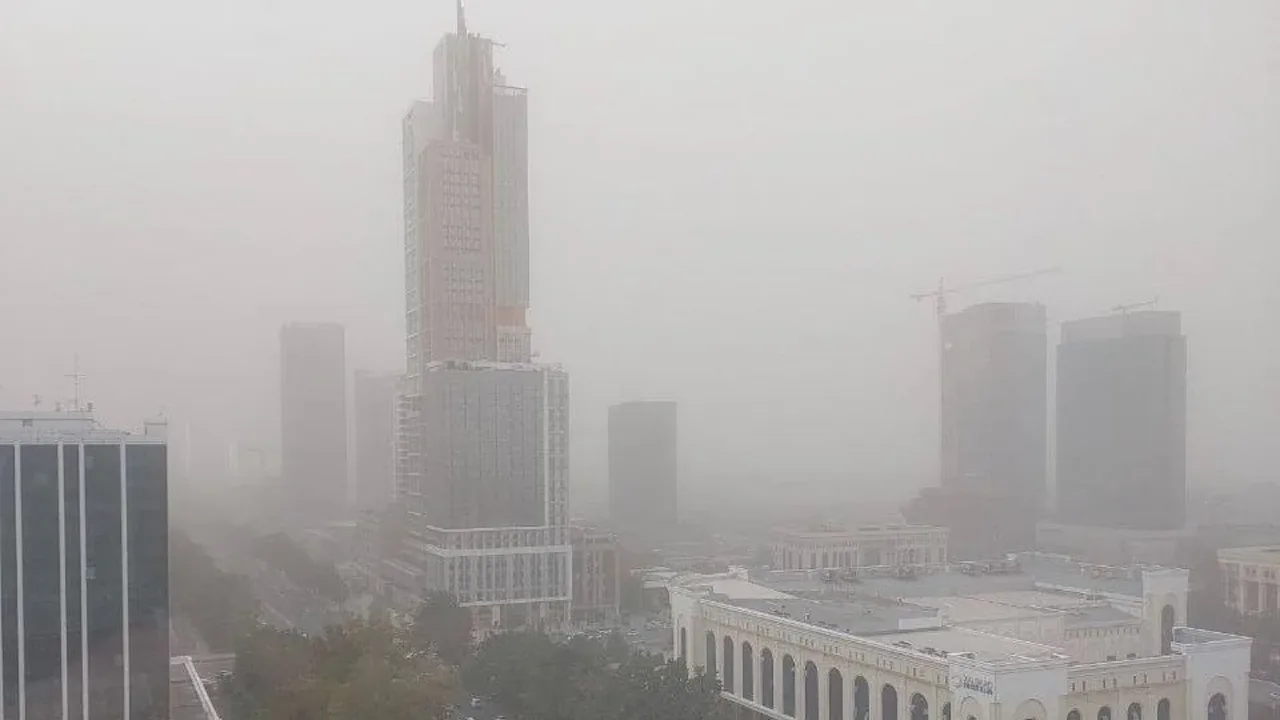
In Uzbekistan, particularly in the city of Tashkent, the observed air pollution is being caused by unfavorable meteorological conditions and natural factors. A lack of precipitation, wind, and changes in the natural circulation of atmospheric air are impacting air quality. This was reported by Farrukh Sattarov, Director of the National Center for Climate Change.
It is noted that as of October 26 of this year, only 3.9 millimeters of precipitation had been recorded in Tashkent. The monthly norm is 23.7 millimeters. This means the amount of precipitation was nearly six times lower than normal. This makes it difficult for dust particles in the air to be washed away by rain, creating conditions for them to accumulate in the atmosphere.
Unfavorable weather conditions have increased by 57 percent
According to scientific observations, changes have been recorded in processes related to the natural circulation of atmospheric air over the last decade. Specifically, unfavorable meteorological conditions associated with strong winds and low precipitation during the cold half of the year have increased by 57 percent compared to previous years. Such situations can hinder the natural cleansing of the air.
The National Committee on Ecology and Climate Change is monitoring changes in air quality through monitoring stations and satellites. Data obtained based on the SILAM model for October 1–26 has been compared with the AQI air quality index.
Analyses showed that the air quality index rose when dust masses entered Tashkent and surrounding areas. For example, precipitation was recorded on October 4–5, and the AQI index was at a level of 66–71. In the following days, air quality deteriorated against the backdrop of low precipitation and dust accumulation.
Dust masses observed in Tashkent and neighboring regions
Images from Europe's EUMETSAT platform and the Meteosat satellite recorded large dust masses in Tashkent city and its surroundings on October 25–26. This process covered Tashkent city and the region, as well as parts of the Sirdaryo and Jizzakh regions.
According to expert forecasts, the impact of dust masses and unfavorable conditions related to air pollution may continue until the beginning of next week.
The report emphasizes that to correctly assess air quality, it is important to analyze meteorological conditions, the movement of dust masses, and monitoring data together. Therefore, air pollution in Tashkent is being influenced not only by dust but also by the lack of precipitation and changes in the natural circulation of the atmosphere.


Comments 0
…