


Scientists identify another potentially habitable planet
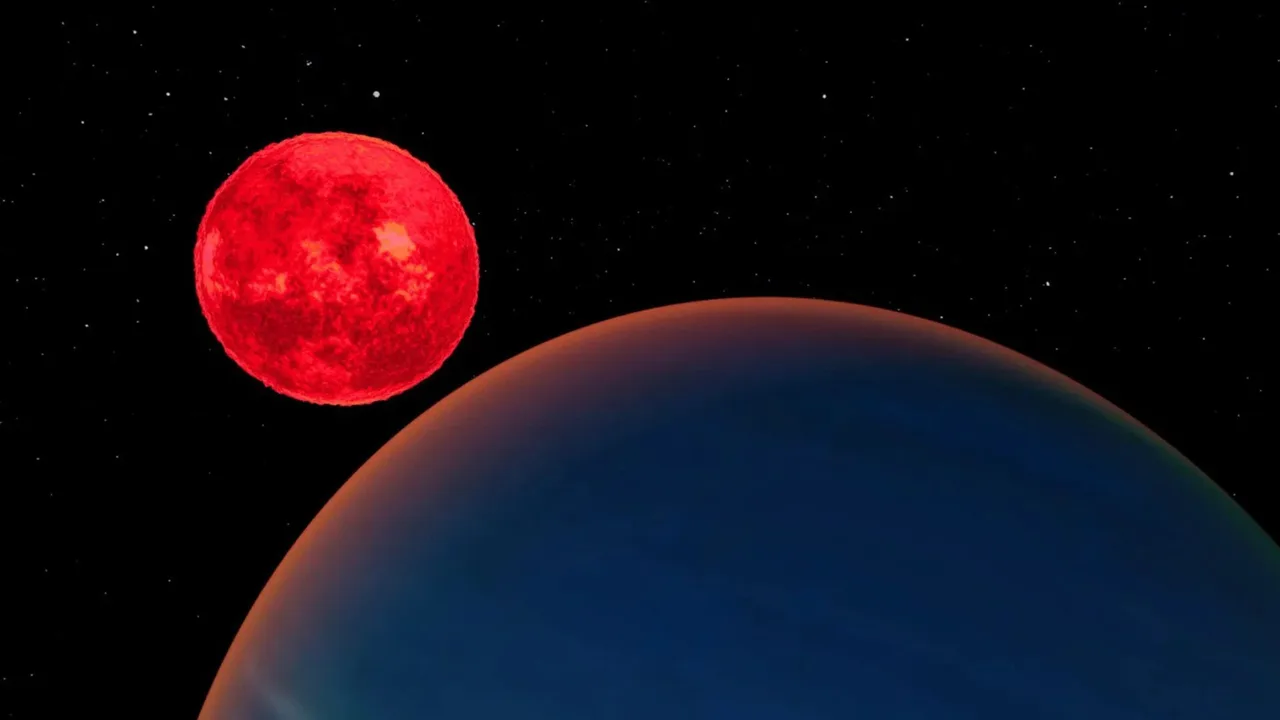
Scientific research on the search for life outside the solar system has yielded another significant result. Scientists have announced that a planet located approximately 25 light-years away in the constellation Camelopardalis, GJ 3378b, could be one of the most promising candidates for extraterrestrial life. The results of the new study were published in The Astrophysical Journal.
Researchers from the University of California, Irvine, state that this planet receives approximately 90 percent of the heat and radiation from its star that Earth receives from the Sun. This means it is located in the habitable zone, where liquid water could potentially exist. According to experts, the presence of liquid water is considered one of the most important factors for the formation of life.
However, with current technology, humanity does not have the ability to reach this planet. Calculations show that if a human were to travel at the speed of the Apollo 10 spacecraft, approximately 11.1 km/s, the flight to GJ 3378b would take nearly 675,000 years.
Initially, this celestial body was classified as a gas giant. After its discovery in 2024, French scientists determined its mass to be approximately 5.26 times greater than Earth's, classifying it as a mini-Neptune with a dense hydrogen atmosphere. Such an atmosphere was previously thought to reduce the likelihood of liquid water.
Currently, the question that interests scientists most is whether GJ 3378b has retained its atmosphere despite the intense radiation and particle flow from its star. Unfortunately, it is not yet possible to verify this directly, as the planet does not transit its star from Earth's perspective, meaning the James Webb Space Telescope cannot analyze its atmosphere.
Experts believe that more precise data on GJ 3378b and the study of potential signs of life will become possible in the future. In particular, next-generation space observatories like NASA's Habitable Worlds Observatory, planned for the 2040s, are expected to provide the ability to study such planets in greater depth.


Comments 0
…