


13-Year-Old Boy Accidentally Discovers a Creature Unknown to Science
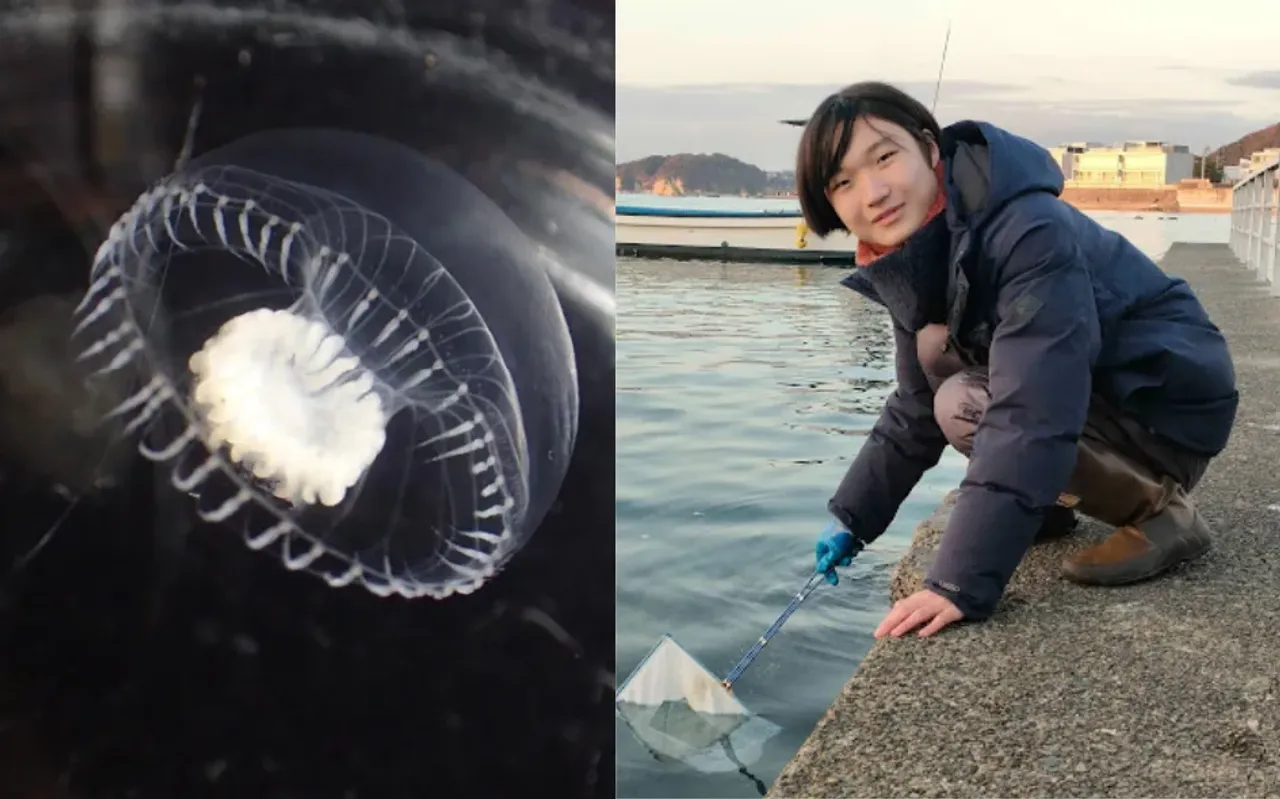
In Japan, 13-year-old Ryoya Sugimoto came across a creature unknown to scientists while making routine observations by the sea. At the time, the boy had no idea that this tiny organism would later be officially recognized as a distinct new species.
The incident occurred in 2018 in Tanabe Bay, Wakayama Prefecture, Japan. Interested in marine creatures, Sugimoto noticed several tiny jellyfish-like organisms floating in the water near a dock. But they looked unlike any jellyfish he had seen in the books he had read.
He Took the Strange Creature Home
Sugimoto had been interested in jellyfish since childhood. After accidentally touching a blue button jellyfish (Porpita porpita) when he was young, he began independently learning what species it was and read books about jellyfish at his local library.
That was why the creatures he encountered in Tanabe Bay seemed so strange to him. He collected several specimens and decided to care for them at home.
As the creatures grew, their appearance became even more fascinating. Sugimoto was especially struck by their distinctive, twisted reproductive organs. He suspected that the organisms might differ from species described in the scientific literature.
He Contacted a Scientist
Sugimoto did not stop at making his own observations. He contacted jellyfish expert Allen Collins, director of the National Systematics Laboratory at the U.S. National Oceanic and Atmospheric Administration (NOAA).
At first, Collins did not think the organism was necessarily a new species. But once scientists had the opportunity to study the specimens preserved by Sugimoto, they analyzed their external structure and genetic characteristics. The results confirmed that the creature was indeed a new species that had never been officially described.
It Was Not an Ordinary Jellyfish
The New Organism Was Given the Scientific Name Orchistoma integrale It is called the “integral jellyfish” because its distinctive twisted reproductive organs resemble the mathematical integral symbol.
Interestingly, scientists do not classify it as a “true jellyfish” in the strict taxonomic sense. O. integrale belongs to the hydrozoans. Although they are related to true jellyfish, they form a separate group.


Comments 0
…