


State of Emergency in Japan: 2 Million People Evacuated!
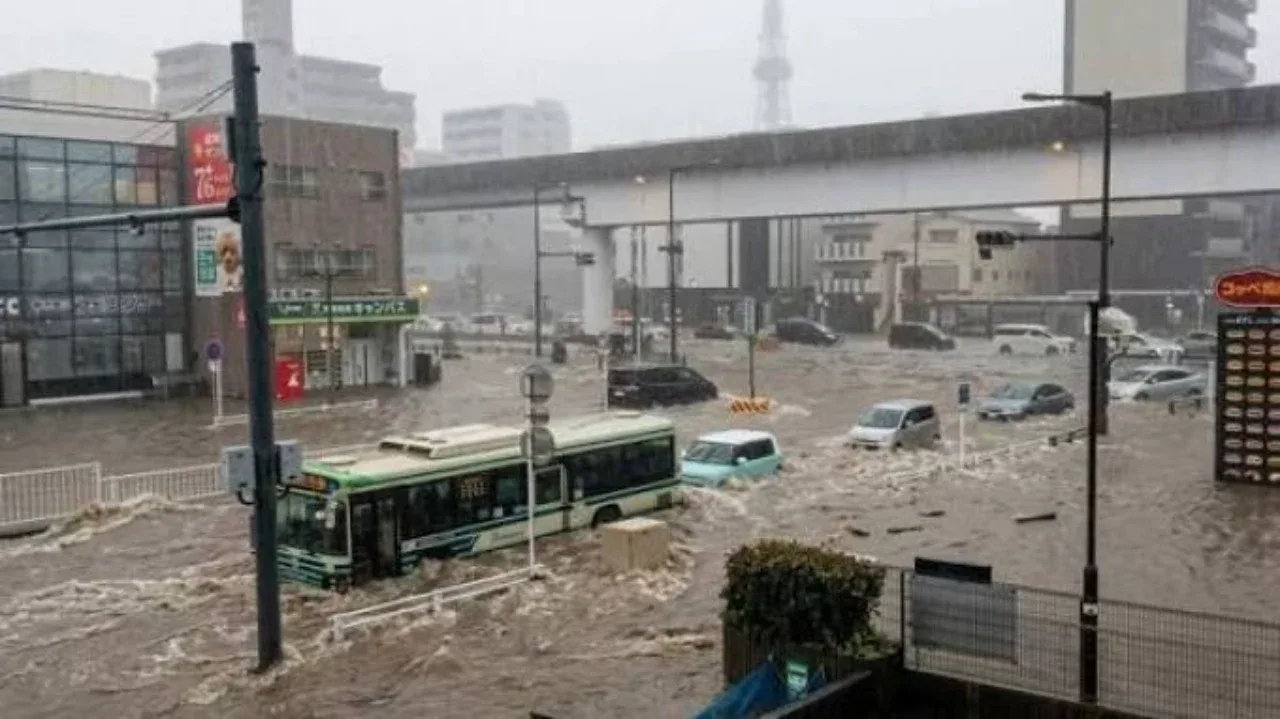
Aichi Prefecture in central Japan is facing one of the most devastating natural disasters in decades. Due to two days of relentless torrential rain, the region's largest metropolis, Nagoya, has set a historic record: 104.5 mm of rain fell in just one hour. According to the influential Yomiuri newspaper, the city administration has ordered the immediate evacuation of 2 million people to safe areas due to the catastrophic risk of flooding. Which central districts of the metropolis are underwater, how was transport halted, and what dangerous forecasts have meteorologists issued? At the end of the article, we reveal the main intrigue: the highest danger level on the Shonai River and all details regarding the new natural strike expected in the next 24 hours.
Knee-deep water and paralyzed public transport
Heavy rainfall has completely disrupted urban infrastructure:
City center flooded: In the Sakae district, considered the city's busiest commercial and business hub, roads have been flooded, with water levels reaching knee-height on some streets;
Transport collapse: During peak hours, rail and bus services were frozen; including JR, Meitetsu companies, and the Nagoya City Subway, which completely halted operations to ensure passenger safety;
Temporary shelters: Across the city, particularly around Nagoya Station, emergency temporary shelters and accommodation points have been set up for thousands of citizens unable to reach their homes;
Underground passages at risk: According to the Chubu Regional Development Bureau, two of the 15 underground passages under the prefecture's jurisdiction have been flooded; no casualties have been reported so far.
“We have mobilized all forces for evacuation to save the lives of our citizens. The water level is rising very rapidly, and moving to safe places is an urgent task that cannot be delayed,” reports from Japanese rescue services state.
A 24-year historical record not seen since 2000
The Nagoya Meteorological Observatory notes that such a powerful flood has not been observed in a quarter of a century:
One-hour record strike: Between 15:53 and 16:53 local time on September 8, 104.5 mm of rainfall per hour was recorded;
Previous record broken: The previous highest figure (97 mm) was recorded exactly 24 years ago, on September 11, 2000, in the Tokai region;
Threat of linear rainband: Meteorologists warn of the potential formation of a “linear rainband” in the atmosphere, which brings continuous, prolonged torrential rain to specific areas.
Level 5 special warning on the Shonai River
The most important issue of interest to many observers and the international community is what emergency regime the Japanese government has introduced against this disaster and when the next wave of rainfall is expected. The most important conclusion is that, the Japan Meteorological Agency has issued a “level 5 — the highest level special flood warning” for the Shonai River in the region. This level means that riverbanks could be washed away and the river overflowing could turn into a real catastrophe. According to the meteorological forecast, up to 200 mm of additional rain is expected in the 24 hours until 18:00 on September 9, and an additional 80 mm by 18:00 on September 10. For this reason, authorities are implementing the evacuation of 2 million residents to high and safe shelters as the only correct solution.
Do you think that even Japanese metropolises, with the world's most advanced urban planning and drainage systems, are helpless in the face of such unprecedented global climate change? What lessons should other countries learn from the experience of evacuating millions of people during floods? Leave your thoughts in the comments and share the details of this emergency event happening in the Land of the Rising Sun with your loved ones!



Comments 0
…