


Saudi Arabia restores major oil pipeline: Oil price drops to $95
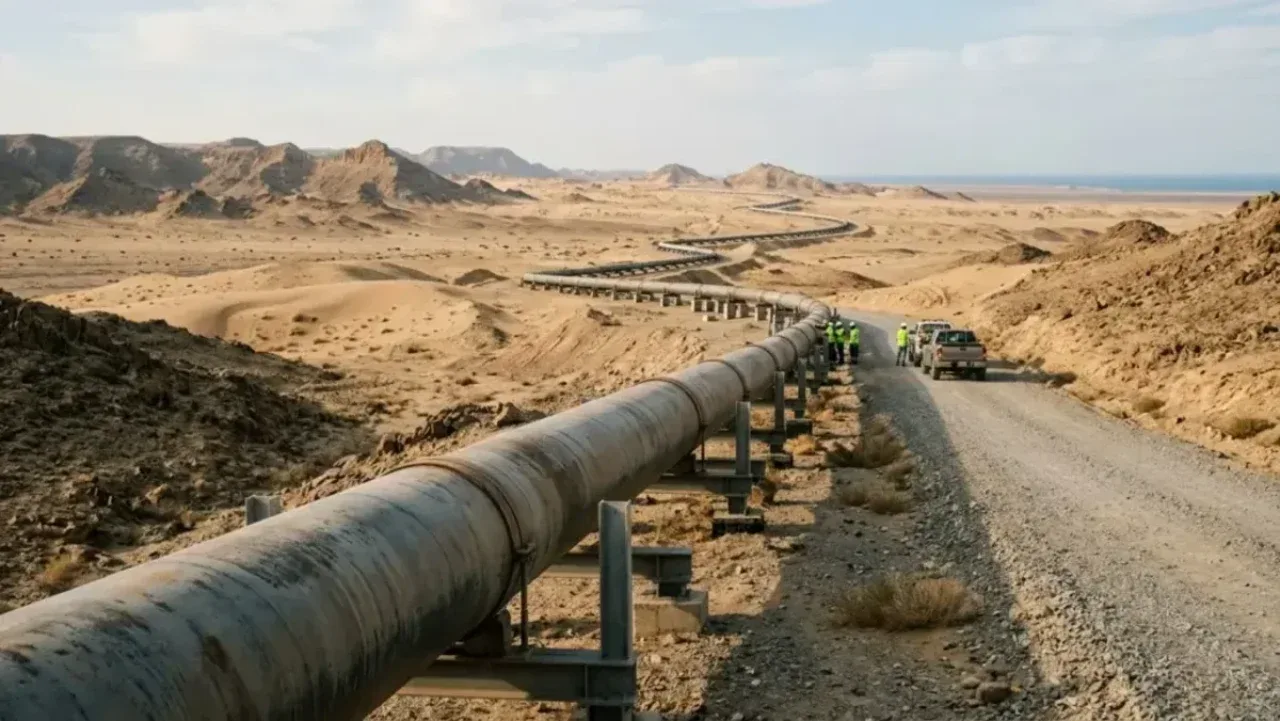
Long-awaited stabilization is observed in the global energy market: Saudi Arabia has fully restored the operation of the strategic "East–West" oil pipeline, which was severely damaged as a result of a Houthi attack, and resumed the export of crude oil abroad. According to Bloomberg, citing its sources, the kingdom's national oil giant, Saudi Aramco, has officially begun pumping operations to deliver oil abroad via the system.
This pipeline, with a total length of 1.2 thousand kilometers, delivers black gold extracted from the fields in the Eastern Province to the port of Yanbu on the Red Sea coast, and has a throughput capacity of up to 7 million barrels per day. Following the attack carried out in early September, Saudi engineers managed to restore logistics in a record short time by building alternative networks bypassing the three damaged pumping stations. When the supply was halted, oil prices jumped to $109 on world markets, but immediately dropped to $95 upon the announcement of the pipeline's launch.
"1,200 km trunk pipeline, 7 million barrels per day, and $95 price": 5 key points of energy recovery
The most important official facts regarding the restart of the "East–West" pipeline and the global market reaction:
The "East–West" pipeline fully restarted: The strategic oil network damaged by the Houthi strike has been restored and shipments abroad have begun;
Saudi Aramco revived exports: The national oil company is fully resuming oil loading onto international tankers via the port of Yanbu;
7 million barrels per day capacity: The colossal 1,200-kilometer trunk line is considered the main route bringing the bulk of Saudi oil to the Red Sea;
3 pumping stations bypassed: Saudi engineers promptly constructed new bypass pipeline networks around the damaged stations;
Oil price fell by $14: The price of a barrel of oil, which had risen to $109 during the supply disruption, dropped to $95 after the pipeline was restored.
Classification of technical and market parameters of the "East–West" oil pipeline
Analytical table of strategic pipeline indicators and its role in the world market:
Indicator and analysis criteria | Official technical indicators | Importance for the market and geopolitics |
Pipeline length and route | 1,200 km (Eastern Province — Yanbu Port) | An alternative route bypassing dangerous straits in the Persian Gulf |
Daily throughput capacity | Up to 7 million barrels of oil per day | Accounts for a significant portion of global daily oil consumption |
Attack on infrastructure | 3 pumping stations targeted in early September | Success of alternative bypass solutions against military strikes |
Recovery method and speed | Network bypassing damaged points | Supply restored in a record short time |
Global oil price change | Dropped from $109 to $95 (-$14) | Price panic and inflation in the global energy market decreased |
Managing national operator | State corporation Saudi Aramco | Guarantee of stability as the world's largest supplier |
Energy and geopolitics expertise: Why did this event save the global economy?
Conclusions of international energy analysts, oil traders, and geopoliticians:
"Security of bypassing the Strait of Hormuz": This 1,200-kilometer pipeline is not just an engineering structure; for Saudi Arabia, it is the only overland lifeline to export oil directly through the Red Sea to Europe and Asia without relying on Middle Eastern conflicts and the Strait of Hormuz, where Iranian influence is strong;
"Saudi Aramco's promptness and price balance": Despite the failure of 3 main pumping stations, the company's prompt laying of bypass pipelines proved the high crisis resilience of the Saudi engineering system; the immediate drop in prices by $14 once again demonstrated that Riyadh remains the primary "regulator" maintaining balance in the world market;
Global vulnerability and the issue of protection: The September Houthi attack showed how fragile the world's oil supply chain is; the short-term halt of a single pipeline pushed prices up to $109, accelerating fuel and product inflation worldwide; this requires international coalitions to further strengthen measures to protect Middle Eastern logistical arteries from air attacks.
Do you think Saudi Arabia's full restoration of oil exports will lead to even lower prices on the global market, or could overall military-political tensions in the Middle East push prices back above $100? How do you think this energy stabilization will affect national and regional markets? Leave your personal thoughts in the comments and share this analysis dedicated to the most important artery of the global economy with your loved ones!



Comments 0
…