


191 grams of gold found among electronic waste
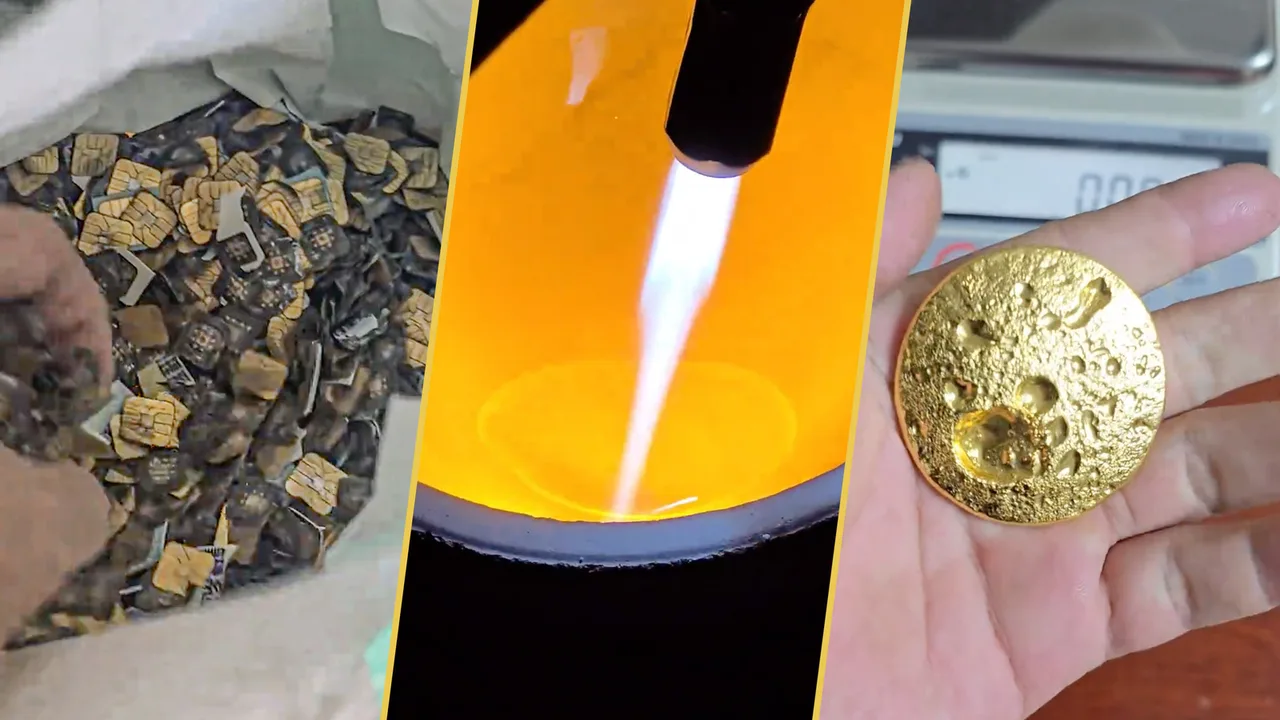
A Chinese blogger announced that he had extracted gold worth 120,000 yuan, or approximately 17,000 dollars, from thousands of SIM cards and other electronic waste. After he posted a video showing the process on social media, the clip sparked widespread discussion.
The blogger, living in Guangdong Province, claimed to have obtained a total of 191.73 grams of gold from old SIM card chips and other electronic components. He said that this involved complex processes such as acid-dissolution and recovery via electrolysis.
One user interested in the video commented, «It's better to collect electronic waste for a year than to work for ten years,» and asked the blogger to take him on as an apprentice. Another user wrote, «Can you even get gold from SIM card chips? I've never heard of that before.»
However, experts pointed out that the amount of gold in ordinary SIM cards is very small. Although the video claimed that each card contains 0.02 grams of gold, the actual figure is only 0.47 milligrams. Therefore, extracting 191 grams of gold would likely require about 400,000 SIM cards.
Following the controversy, the blogger clarified that the materials used did not consist solely of ordinary SIM cards. He stated that the gold was also extracted from gold-plated waste chips from the telecommunications and electronics industries.
«This is not a story about a person extracting gold from ordinary SIM cards. This is a legitimate process of recycling certain electronic waste in the precious metals recycling industry. The purpose of the video was not to create a sensation, but to demonstrate the process and the value of waste recycling,» the blogger said.
Experts warned that attempting to replicate this method independently is dangerous. The gold extraction process involves extremely strong and corrosive chemicals. They can cause serious harm to human health and pollute the environment. Therefore, the recycling of electronic waste must be carried out in special conditions and in compliance with safety requirements.


Comments 0
…