


From the Persian Gulf to Israel: What giant facilities are among Iran's new targets?
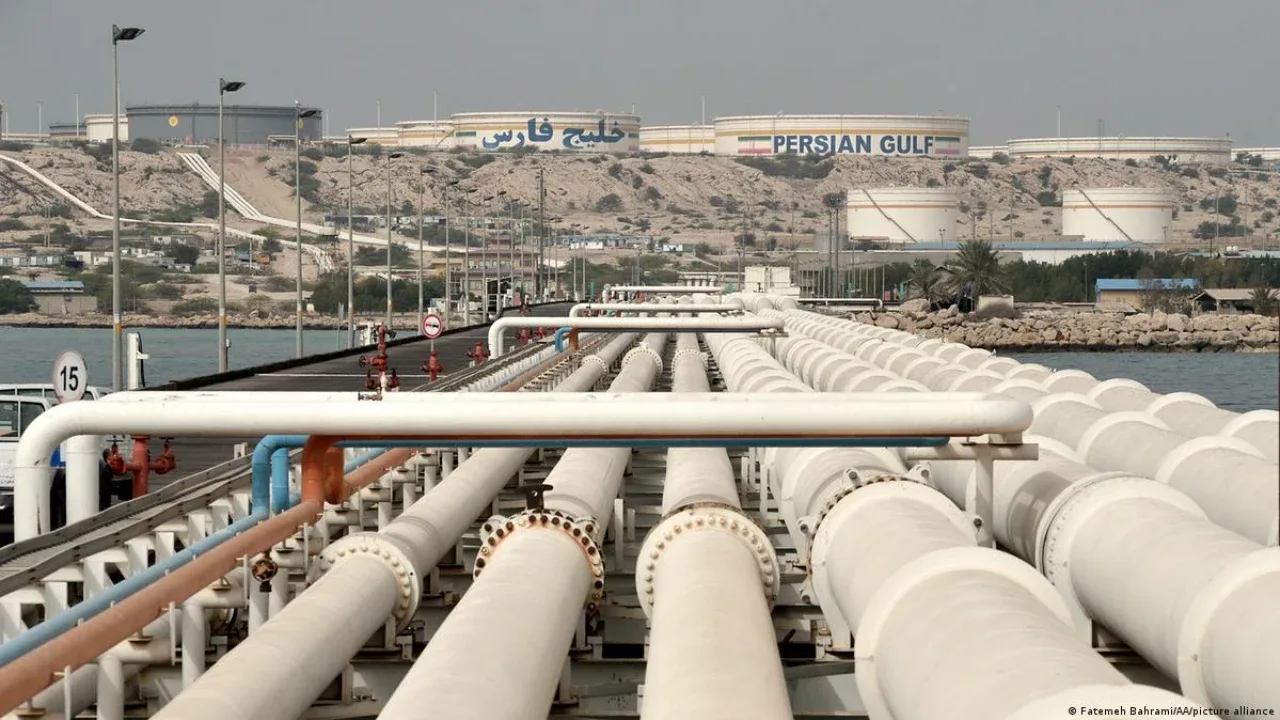
In the event of a renewed escalation of military operations in the Middle East, Iran has presented a comprehensive list of strategic infrastructure facilities that would be subject to retaliatory strikes. Alongside U.S. military bases in the region, targets aimed at crippling transport, energy, water supply, global communications, and trade networks have been identified.
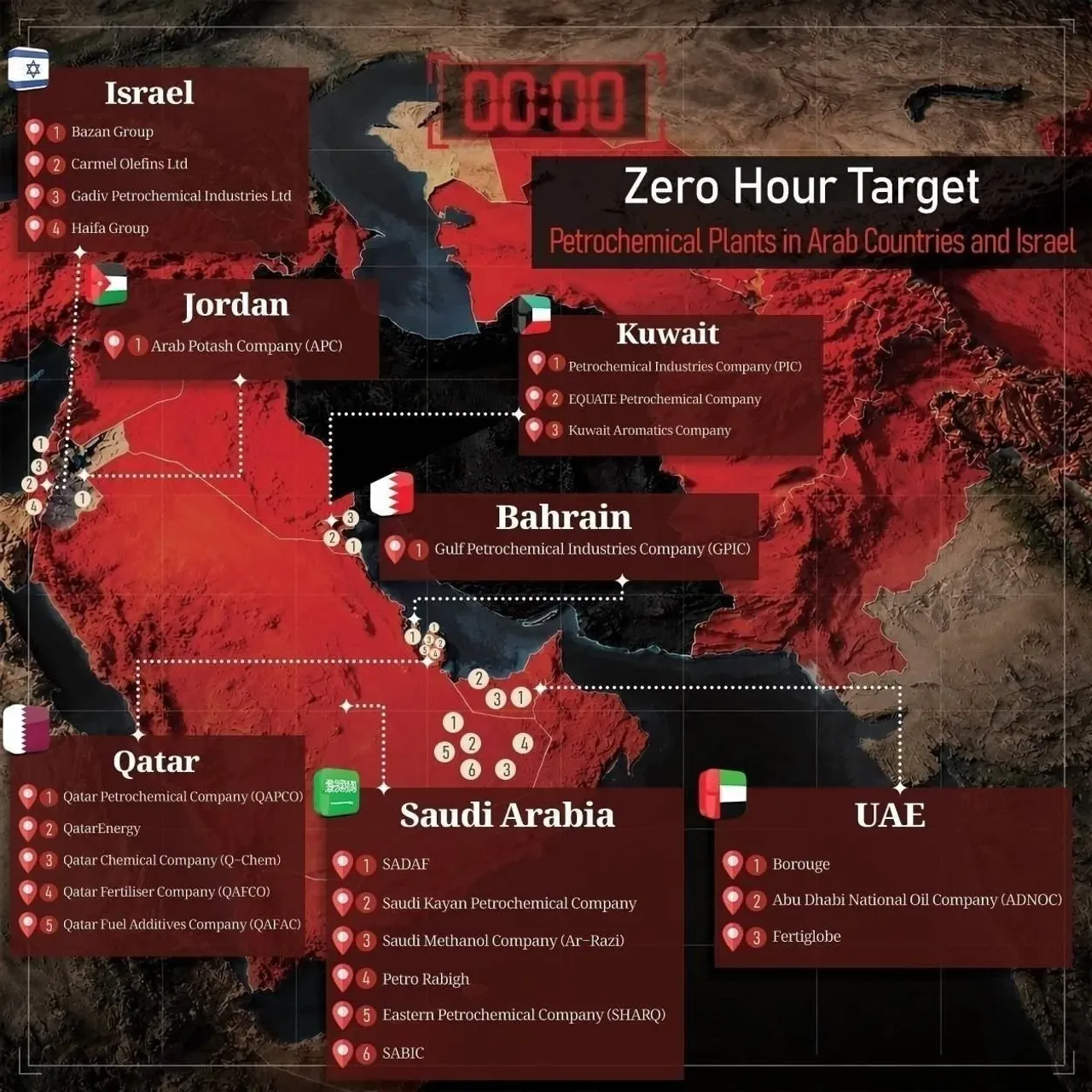
In a disclosed special infographic, the largest petrochemical industry complexes in Israel and Arab nations are mapped out as "Zero Hour Targets." Experts warn that targeting these facilities would trigger an unprecedented humanitarian and economic crisis across the entire region.
Strategy of total paralysis: Transport, water, and digital communications
The strike targets announced by Iran include seven major vital sectors:
Transport and logistics arteries: Strategic bridges, railway junctions, international airports, and seaports;
Communications and high technology: Intercontinental underwater internet cables passing through the Persian Gulf, as well as technology and artificial intelligence (AI) companies;
Energy and drinking water supply: Giant seawater desalination plants, major power stations, and petrochemical enterprises;
Trade and tourism sector: International hotel chains and major shopping centers.
"Zero Hour Target": Industrial giants on the map
The map clearly indicates the primary petrochemical and fertilizer production enterprises in Israel and neighboring Arab states:
Israel: Bazan Group, Carmel Olefins Ltd, Gadiv Petrochemical Industries Ltd, and Haifa Group enterprises in Haifa and coastal areas;
Saudi Arabia: World-class industrial complexes including SABIC, SADAF, Saudi Kayan Petrochemical Company, Saudi Methanol Company (Ar-Razi), Petro Rabigh, and SHARQ;
United Arab Emirates: The national oil company ADNOC, and chemical enterprises Borouge and Fertiglobe;
Qatar: Giants processing gas-chemical reserves such as QatarEnergy, QAPCO, Q-Chem, QAFCO, and QAFAC;
Kuwait, Bahrain, and Jordan: Kuwait's PIC, EQUATE, and Kuwait Aromatics companies; Bahrain's GPIC complex; and Jordan's Arab Potash Company (APC), considered the country's main chemical enterprise.
Potential consequences of military conflict
Sector | Targeted facilities | Risks and potential consequences |
Petrochemical industry | SABIC, ADNOC, Bazan, QatarEnergy, EQUATE | Sharp rise in fuel and mineral fertilizer prices on the global market |
Water and energy | Desalination plants, power stations | Drinking water shortages and mass blackouts in Gulf states |
Communications and internet | Persian Gulf underwater cables, IT centers | Disruption of the international financial system and internet traffic |
Logistics | International ports, airports, bridges | Stoppage of international maritime traffic and trade across the region |



Comments 0
…