


Kyrgyzstan to abolish regions and districts, replacing them with over 20 'aymaks'
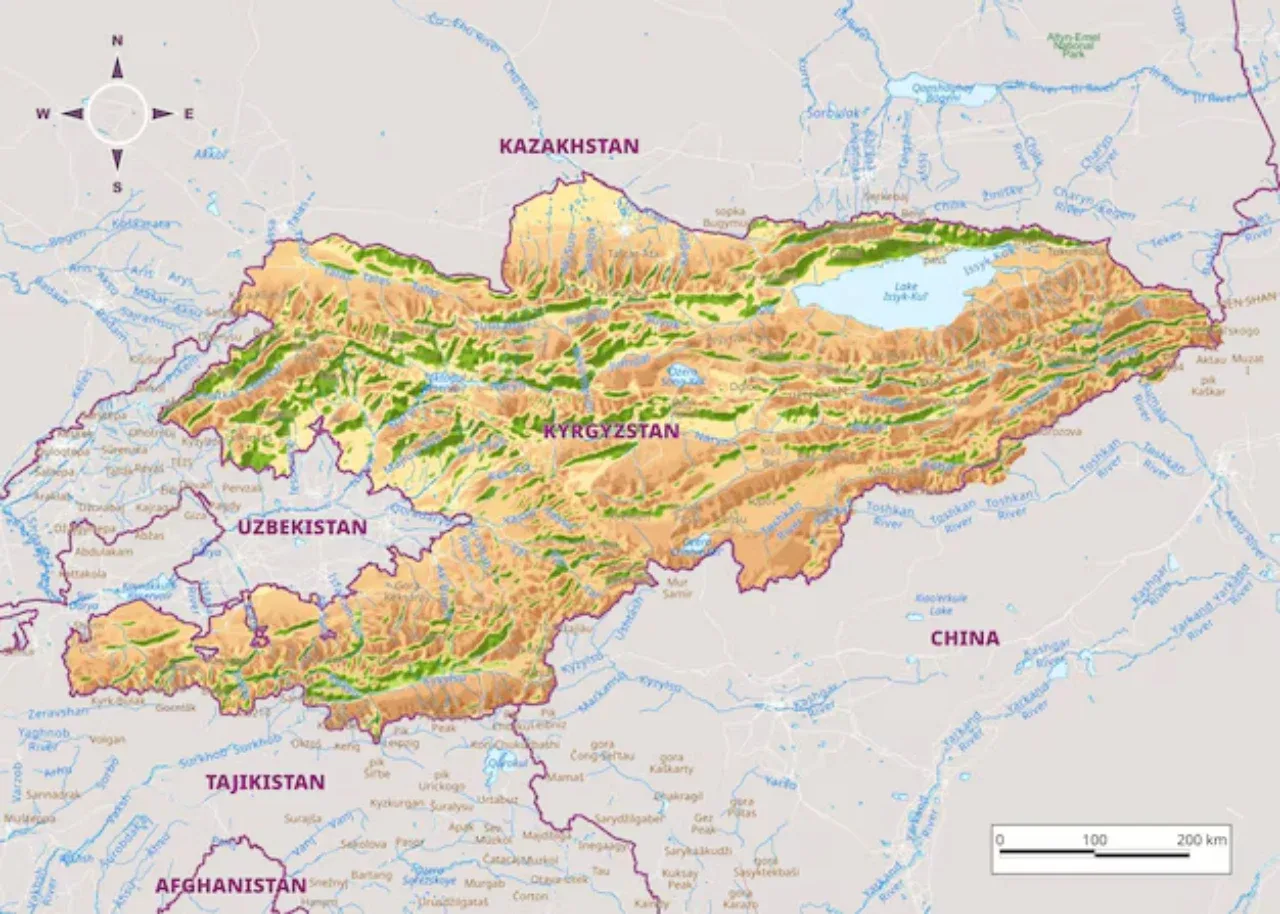
Kyrgyzstan is preparing to fundamentally change its administrative map. More than 20 large administrative units, known as 'aymaks', may be established to replace the country's existing regions and districts. If this reform is implemented, both the state governance system and the procedure for managing territories will change significantly.
As part of the second phase of the administrative-territorial reform initiated in the neighboring country, plans are underway to merge current territories, reduce overlapping functions of management agencies, and form new administrative units. This was announced by Elchibek Jantayev, head of the State Agency for Civil Service and Local Self-Government of Kyrgyzstan, on the air of the 'Kabar' agency.
What will happen to the 7 regions and 40 districts?
Currently, there are 7 regions and 40 districts in Kyrgyzstan. As a result of the proposed changes, these administrative structures are expected to be replaced by more than 20 large aymaks.
The new aymaks will be larger in territory than the current districts but smaller than the regions. When defining their borders, the economic potential, geographical characteristics, and development opportunities of the areas will be taken into account.
The main directions of the reform are as follows:
Consolidation of administrative territories. It is planned to merge districts that are close to each other and have similar characteristics.
Reorganization of the management system. It is intended to eliminate overlapping functions of certain agencies at the regional and district levels.
Efficient use of regional potential. New administrative units will be formed taking into account economic opportunities and development prospects.
What changes might occur in Issyk-Kul, Osh, and Jalal-Abad?
The specific features of the territories play an important role in forming the new administrative units.
For example, the possibility of dividing the Issyk-Kul region into northern and southern parts is being considered. In the Osh and Jalal-Abad regions, it has been proposed to merge some smaller districts around areas with higher economic potential.
These are currently just examples of the potential directions of the reform. All details regarding the final number, borders, and administrative centers of the new aymaks have not yet been strictly defined.
Why does Kyrgyzstan want to change its administrative system?
One of the important goals of the reform is to simplify state governance and reduce overlapping administrative structures.
In practice, the functions of management bodies in adjacent territories can overlap. By consolidating administrative units, it is intended to optimize management costs, distribute resources effectively, and make broader use of the economic opportunities of the regions.
However, the real effectiveness of the reform will depend on how it is implemented. Merging territories does not automatically improve the quality of service for the population. In the new system, how convenient state services are for the public, how quickly local problems are solved, and the efficiency of management will be of great importance.
When will the reform be implemented?
The first phase of the administrative-territorial reform in Kyrgyzstan began in 2023. During this process, the borders of some districts were changed, a number of settlements were incorporated into cities, and rural administrative units were reorganized.
Now, in the second phase, the issue of further consolidating territories and introducing a new system of aymaks to replace regions and districts is being considered.
Previously, President Sadyr Japarov also spoke about plans to implement the administrative reform in stages. Initially, the new management model is intended to be introduced on a trial basis to evaluate its effectiveness.
Therefore, the current news should be understood as a plan for reorganization rather than as an indication that regions and districts have already been abolished. Additional official decisions regarding the specific timelines and the final administrative map of the reform are of great importance.
Will Kyrgyzstan's administrative map change?
If the plan is fully implemented, a major change will occur in Kyrgyzstan's territorial management system. Replacing the current 7 regions and 40 districts with more than 20 large aymaks will require redefining the number and functions of administrative structures in the country.
These changes could open up new opportunities for simplifying state governance. However, the impact of the reform on the lives of the population will depend on how the new administrative units are managed, how convenient services become, and how economic disparities between regions are taken into account.
The most important question remains open: will consolidating administrative units make state governance truly effective? The answer to this question will be determined not by the announcement of the plan, but by the results it yields in practice.



Comments 0
…