Golden coats, blue eyes: what is the secret behind the unusual colors of horses?
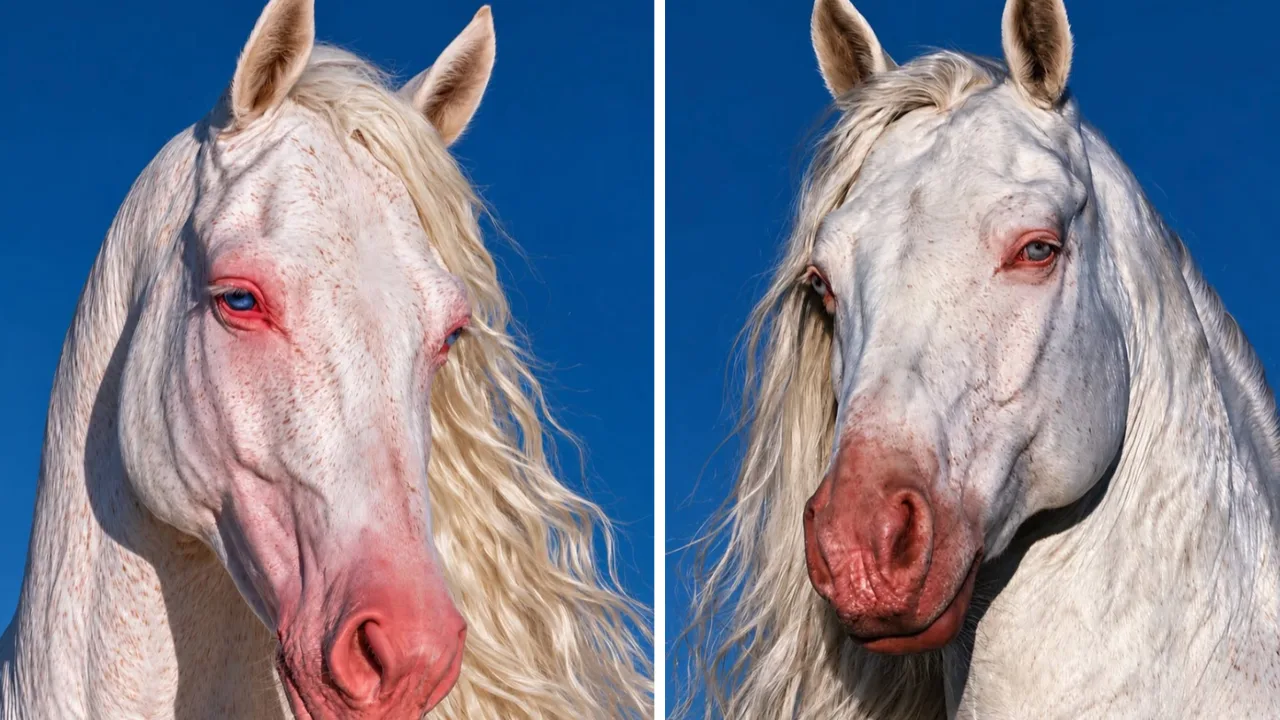
Among horses, there are not only common colors but also incredibly unusual ones, such as golden, silver, spotted, or those with a metallic sheen. Such unique appearances are related to the genetic characteristics of the animals and the process of pigment formation in their organisms.
The color of a horse's coat, skin, and eyes is primarily determined by a pigment called melanin. There are two main types: eumelanin, which produces black and brown shades, and pheomelanin, which creates reddish and yellowish hues. The amount and distribution of these pigments are controlled by the interaction of several genes.
For example, the genetic variant known as Champagne gives a horse's coat a golden or champagne-colored tint. The eyes of such horses are often bluish or greenish, and their skin can have a pinkish tone. The Cream gene lightens existing colors, resulting in light golden, cream, or almost white appearances in horses.
Another interesting feature is the Leopard complex. It creates the spotted coat pattern found in Appaloosa horses. The Sabino variant causes white patches to appear on certain parts of the body, especially around the legs and head.
Melanocytes—specialized cells that produce pigment—also play an important role in the formation of these colors. Their development, distribution to the skin and hair follicles, and melanin production are regulated by genetic mechanisms.
It should also be noted that such unusual colors are not the same phenomenon as albinism or leucism. For instance, in true albinism, melanin production is drastically reduced or almost ceases. In leucism, the development or distribution of pigment cells may be impaired.

No ads with a subscription
Zamin Premium — 4 900 UZS a month


Related news


Comments0
…