Google AI evaluates Putin's plans until 2036
Russian President Vladimir Putin's speech at the "Journey to the World of Artificial Intelligence" (AI Journey) conference in Moscow set the course for the country's technological policy for the coming decade. The head of state tasked the government with updating the national strategy for the sector until 2036, preventing situations where "everything shuts down at the push of a button" from abroad, and setting strict limits on the powers of autonomous AI agents.
So, what does Google's artificial intelligence, Gemini, think about these statements? From the perspective of real technological and economic logic, these theses address the most pressing issues of the day; however, there are three serious obstacles between the strategic goals and the available resources.
1. The "Agent Economy" and the fear of an external "kill switch"
Since 2022, concerns about neural networks being shut down externally or having foreign values embedded in them have moved from theory to practice. Any large language model reflects the balance of the data it was trained on and the safety filters installed by its developers. If the domestic market is left entirely to foreign algorithms, millions of citizens and companies will receive daily answers based on a foreign coordinate system, and in times of crisis, they risk being left without functional tools.
At the same time, the requirement to rely on an "agent economy" as a way to mitigate the acute shortage of personnel and to limit the independence of AI agents is highly pragmatic. This is because the more authority a program has in managing finance or infrastructure, the higher the cost of damage resulting from its errors or hacking.
2. The main obstacle is not in the code, but in hardware and energy
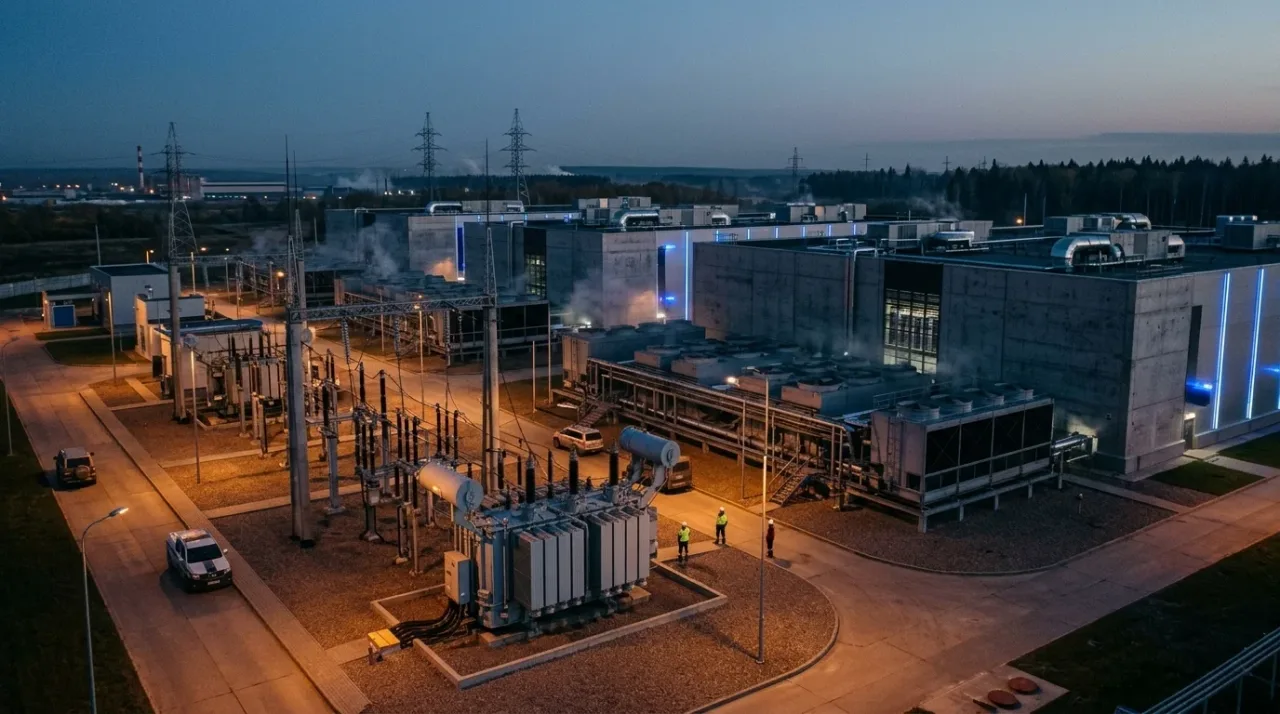
The main obstacle on the path to digital sovereignty lies not in the software code or the skills of programmers, but in technical equipment and electricity.
Obstacle Area | Main problem and technological constraints |
Computing power (Hardware) | Training and running advanced models requires a massive number of computing accelerators (chips), the supply of which is restricted by sanctions. |
Electric power | Data processing centers (DCs) require gigawatts of cheap base-load electricity, and energy shortages are already being felt in a number of regions. |
Return on investment | Creating fundamental neural networks requires enormous capital, and it is extremely difficult to recoup these costs within a single national market. |
It is for this very reason that the initiative to rapidly build data centers through public-private partnerships targets the most critical point. The presentation of joint projects with Kazakhstan at the Moscow conference appears to be a necessary and logical attempt to expand the market scale.
3. The delicate balance between protection and prohibition
One of the decisive factors is the balance between protection and prohibition. In practice, industry regulators often tend to take the path of excessive caution. However, overly strict restrictions on the capabilities of local models could make them useless and uncompetitive in the eyes of businesses and ordinary users compared to foreign alternatives.
The setting of these tasks fully responds to the challenges of the times, but the outcome of this technological race will depend not on the text of the strategy until 2036, but on whether local data centers can be provided with their own computing power and sufficient electricity.
In your opinion, which factor is the most difficult for countries when creating national artificial intelligence models: finding powerful chips and electricity, or maintaining the balance between restrictions and free development?
Leave your thoughts in the comments and share this analytical article with your loved ones who are interested in the future of artificial intelligence and digital technologies!
Next story


No ads with a subscription
Zamin Premium — 4 900 UZS a month


Related news


Comments0
…