


Ways of moral upbringing of youth through speech
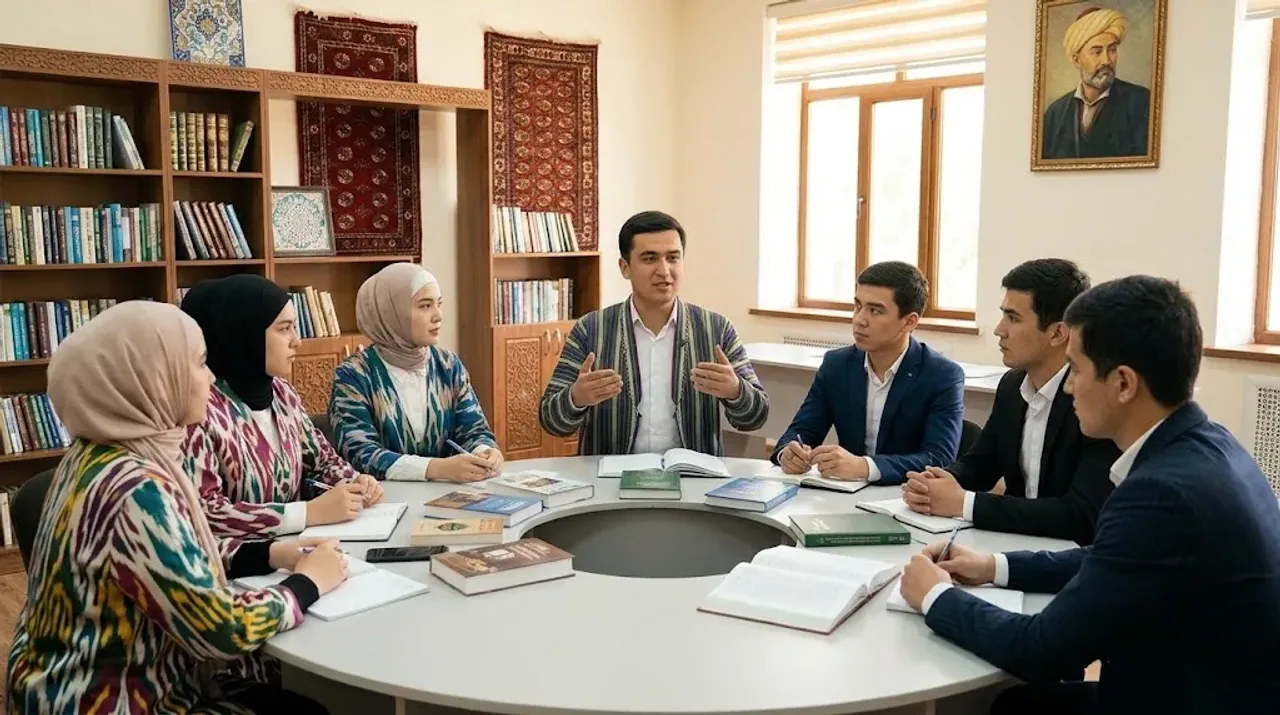
In today's era of accelerated globalization and digital information exchange, raising youth to be morally mature, independently thinking individuals who respect national and universal values is becoming one of the essential tasks of societal development. Culture of speech acquires particular significance in this process. After all, speech is not only a means of expressing one's thoughts, but also a social phenomenon reflecting a person's worldview, moral character, cultural level, and attitude toward others.
How the younger generation speaks, to what extent they can substantiate their thoughts, and their ability to listen to others and treat different views with respect are directly related to their moral upbringing. Therefore, upbringing through speech should not be limited to teaching how to speak eloquently. In this process, instilling noble ideas into the minds of youth, forming communication etiquette, developing critical thinking, and strengthening social responsibility play an important role.
Legal and social foundations of moral upbringing
The Law of the Republic of Uzbekistan No. ORQ-406 "On State Youth Policy" dated September 14, 2016, defines promoting the spiritual, intellectual, physical, and moral development of youth as one of the main directions of state policy. It also envisages educating youth in the spirit of patriotism, tolerance, respect for laws, and national and universal values.
Furthermore, the Law of the Republic of Uzbekistan No. ORQ-637 "On Education" dated September 23, 2020, defines upbringing as a systematic process aimed at forming the mindset, moral values, and worldview of the younger generation.
In particular, the "Concept of Continuous Moral Upbringing" approved by Resolution No. 1059 of the Cabinet of Ministers dated December 31, 2019, serves as an important programmatic basis in this regard. It prioritizes the gradual development of qualities such as loyalty to the Motherland, responsibility, kindness, tolerance, legal culture, independent thinking, and diligence in youth.
The main conclusion derived from the analysis of these documents is that moral upbringing should not be limited to random events or one-time conversations. It must be a continuous socio-pedagogical process implemented through the cooperation of family, educational institutions, makhallas, and the public. In this process, speech is one of the most vital tools influencing a person's heart and mind.
Speech as a means of moral influence and upbringing
The power of the word is incomparable in finding a way to a person's heart. A well-timed thought can inspire confidence in youth, guide them toward noble goals, and encourage them to realize their potential. Conversely, insulting, derogatory, or rude treatment may negatively affect young people's self-confidence and social relationships.
From this perspective, the effectiveness of educational speech is determined not by being expressed in a loud voice or a strict tone, but by its substantive rationale, sincerity, richness in life examples, and suitability for the listener's age characteristics. For instance, rather than giving general lectures on honesty, discussing moral choices encountered in daily life can be more effective. Such an approach encourages youth not to accept ready-made conclusions, but to analyze the situation, express their attitude, and understand the consequences of their decisions.
Thus, the function of speech in moral upbringing is not merely to convey information, but to create conditions for thinking, reasoning, and drawing conscious conclusions.
Communication culture in the family – the first stage of upbringing
The speech and moral development of youth is primarily formed in the family environment. A child absorbs certain behavioral patterns from their parents' speech style, attitude toward elders, culture of resolving family conflicts, and daily communication. Therefore, it is important to listen to the child's opinion in the family, treat their questions with respect, and correct mistakes through explanation rather than humiliation.
Three aspects are particularly noteworthy in this regard: the personal speech example of parents, regular meaningful conversations with the child, and a communication environment based on mutual respect within the family.
It is not enough to simply tell a child "be a good person." They must see qualities inherent to a good person—such as polite treatment, honesty, apologizing, expressing gratitude, and accepting responsibility—in the daily actions of adults.
Strengthening speech upbringing in educational institutions
Forming a culture of speech in the educational process is not solely the task of native language and literature classes. Every subject teacher can contribute to developing students' logical thinking, expressing their views based on evidence, and fostering a culture of scholarly debate. For this purpose, it is necessary to purposefully utilize discussions, problematic questions, independent presentations, group discussions, and analyses of socio-moral situations in classes.
In particular, the following principle is important: a pupil's or student's opinion may be wrong, but their personality must not be degraded. A teacher's critical yet respectful attitude serves to form a culture among youth of speaking based on evidence, listening to others, and admitting mistakes.
At the same time, it is advisable to teach the ideas of word etiquette, humanism, respect for science, and goodness expressed in the works of our great thinkers, particularly Alisher Navoi, by connecting them to modern life situations.
Culture of speech in the digital environment: new tasks
Today, the communication field of youth is not limited to traditional conversations. Social networks, messengers, video platforms, and virtual communities have become their daily information environment. Therefore, digital communication culture must be considered an integral part of moral upbringing. Phenomena such as insulting attitudes, unfounded news, disregard for privacy, and public humiliation of others on social networks can negatively affect the moral views of youth.
In such a situation, rather than trying to isolate youth from the internet, it is more important to teach them to critically evaluate information, check sources, express thoughts culturally, and realize digital responsibility. It is advisable for every young person to ask themselves three questions before commenting on social media: Is the information I am spreading reliable? Does this opinion infringe upon the honor and dignity of others? What impact might this message have on society? Precisely through such questions, speech culture merges with information culture and civic responsibility.
Practical ways to increase the effectiveness of moral upbringing
In moral upbringing through speech, rather than limiting ourselves to traditional lectures, it is advisable to expand methods that turn youth into active participants.
First, regular open dialogues on topics such as "Communication etiquette", "Responsibility of the word", "My opinion – my responsibility" can be organized in educational institutions.
Second, it is necessary to develop skills of independent conclusion-drawing and thought-substantiation in youth through reading discussions and analyzing the moral choices of literary characters.
Third, it is advisable to support the activities of clubs aimed at public speaking, debating, and presenting social initiatives in educational institutions and makhallas.
Fourth, short educational videos, audio discussions, and impactful educational speeches can be prepared for social networks with the participation of youth. Here, young people emerge not merely as recipients of information, but as active participants shaping a positive information environment.
Fifth, the results of educational work should be evaluated not only by the number of events held, but through changes in youth communication etiquette, argumentation culture, readiness for cooperation, and responsible attitude.
This approach resonates with the idea of evaluating upbringing through scientifically grounded indicators outlined in the "Concept of Continuous Moral Upbringing".
Conclusion: spirituality is manifested in words, strengthened in deeds
Moral upbringing of youth through speech is not just teaching them to speak politely, but forming an understanding of human dignity, responsibility for one's thoughts, respect for truth, and a sense of duty to society.
The most influential word in moral upbringing is the word confirmed by deed. Therefore, parents, educators, makhalla activists, and public representatives must demonstrate speech and moral culture that can serve as an example for youth.
We need to teach today's youth not only how to speak, but why to speak, when to listen, how to argue, and how to take responsibility for the consequences of a word.
After all, in a society where speech culture is elevated, mutual respect is strengthened, independent thinking develops, and a solid foundation is created for raising a morally mature generation.
Shukrillo Saydaliyev
Trainee of the Namangan regional branch of the Institute for Advanced Training and Retraining in the Religious and Educational Sphere under the Committee on Religious Affairs



Comments 0
…