


Alien Traces: Scientists propose a new method for searching signals from space
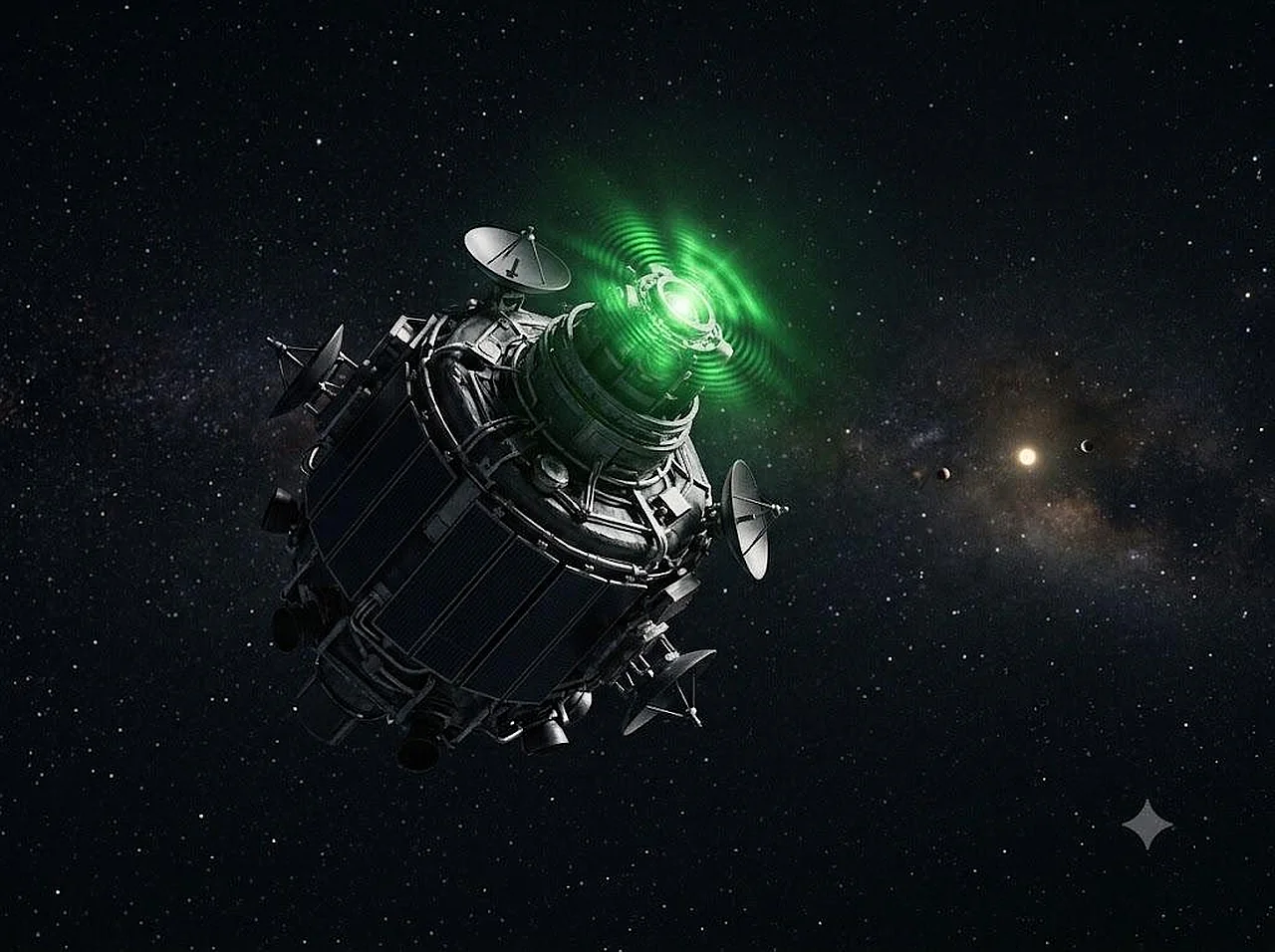
Humanity may have been searching for alien civilizations using the wrong methods for decades. The authors of a new scientific study propose fundamentally revising the approach to searching for signs of intelligent life in the universe. They believe that instead of the complex and ultra-short laser pulses we are waiting for, attention should be focused on much simpler and cheaper technologies. This is reported by Ixbt.com reports .
According to Ixbt.com, the researchers cite the economic factor as the main argument. If a technologically advanced civilization wants to save resources, it is likely to build microsecond or millisecond laser beacons that serve for centuries, rather than expensive femtosecond transmitters. Such autonomous devices are much more durable and convenient for sending signals over long distances.
Scientists suggest that such laser beacons may not be located near stars, but in interstellar orbits, for example, in areas similar to the trajectories where humanity's Voyager spacecraft are moving. This method makes it easier to isolate the signal from the star's intense light and reduces the need for complex filtering systems.
Why haven't we found them yet?
The problem may not be the absence of signals, but the flaws in our search methods. Currently, the exposure time used in sky observation ranges from a few seconds to hours. During such long time intervals, microsecond flashes simply get "washed out" and become indistinguishable from background noise. The researchers note that existing SETI programs are practically "blind" to the microsecond range of the universe.To fill this gap, the Cosmic Lighthouses project is proposed. Within the framework of the project, the use of three modern technologies is envisaged:
- CMOS matrices capable of recording ultra-short flashes;
- Diffractive-refractive MODE lenses allowing wide-scale observation;
- Modern NVIDIA and other types of GPUs processing large volumes of data in real time.
According to calculations, even a simple ground-based telescope with a diameter of 1 meter can detect a 100 MW laser beacon from a distance of 72 light-years. Within this distance, there are approximately 3,000 nearby star systems. If repeating pulses are accumulated during a week of observations, an opportunity arises to scientifically prove the authenticity of the signal.
This project is important not only for finding aliens, but also for astronomy in general. By studying the microsecond range, scientists may discover yet unknown rapid astrophysical processes in the universe. Even if artificial beacons are not found, this research will significantly enrich our knowledge about the universe.


Comments 0
…