


Shavkat Mirziyoyev gets acquainted with unique trout cluster in Baliqchi (video)
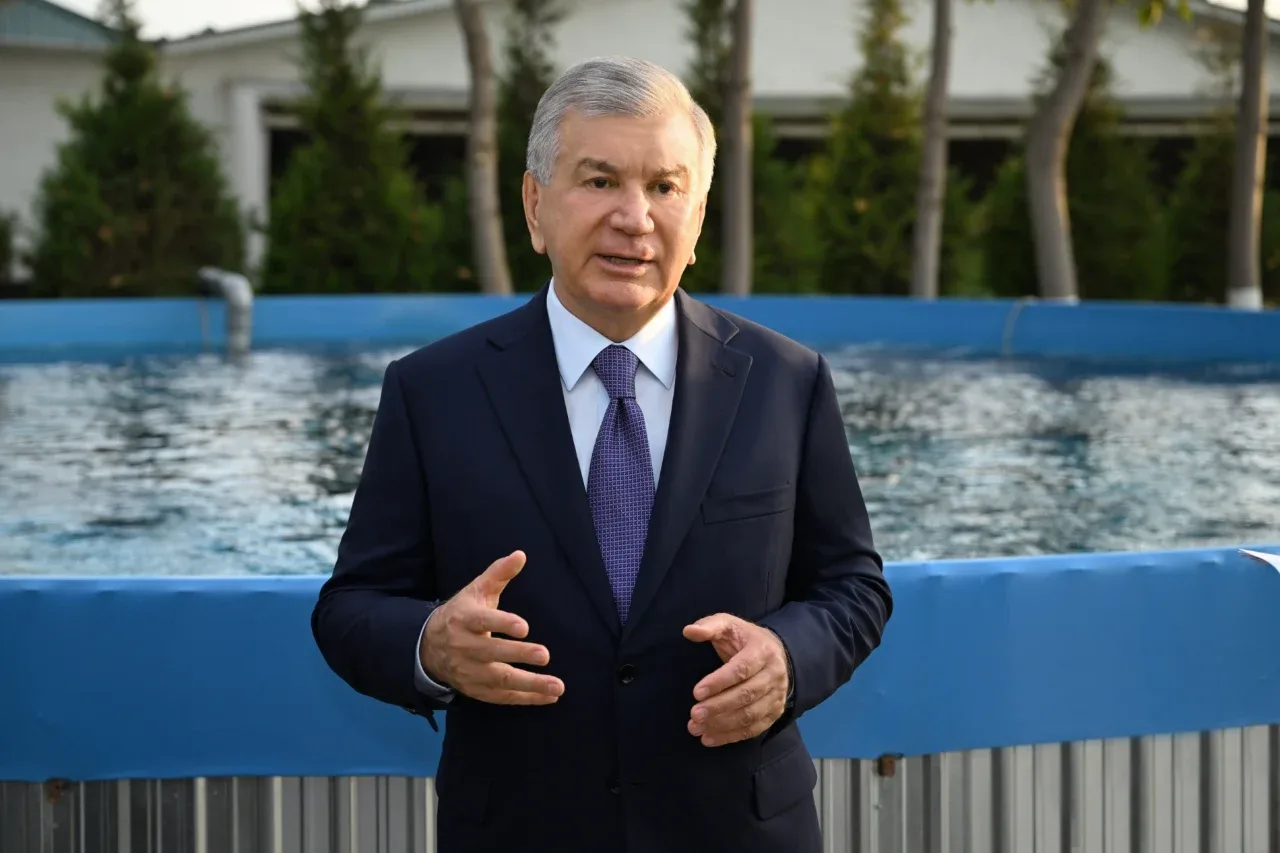
An era of innovative technologies has begun in Uzbekistan's agrarian sector, ensuring a sharp conservation of land and water resources and making it possible to obtain unprecedentedly high yields from small areas. President Shavkat Mirziyoyev personally familiarized himself with the activities of the modern fish-breeding complex of the "Chinobod real biznes" enterprise located in the Baliqchi district of the Andijan region.
Launched in pursuance of the Head of State's decree on the development of fisheries dated July 2 of this year, this project with a total cost of 30 billion soms is of strategic importance not only for the valley regions, but for the entire region. The most sensational aspect of the complex is that thanks to intensive technologies, products are grown on a mere 2 hectares in a volume equal to traditional water reservoirs spanning 100 hectares. Producing 200 tons of dietary fish meat and 2.5 million trout fry annually, the enterprise's annual production capacity reaches 50 billion soms.
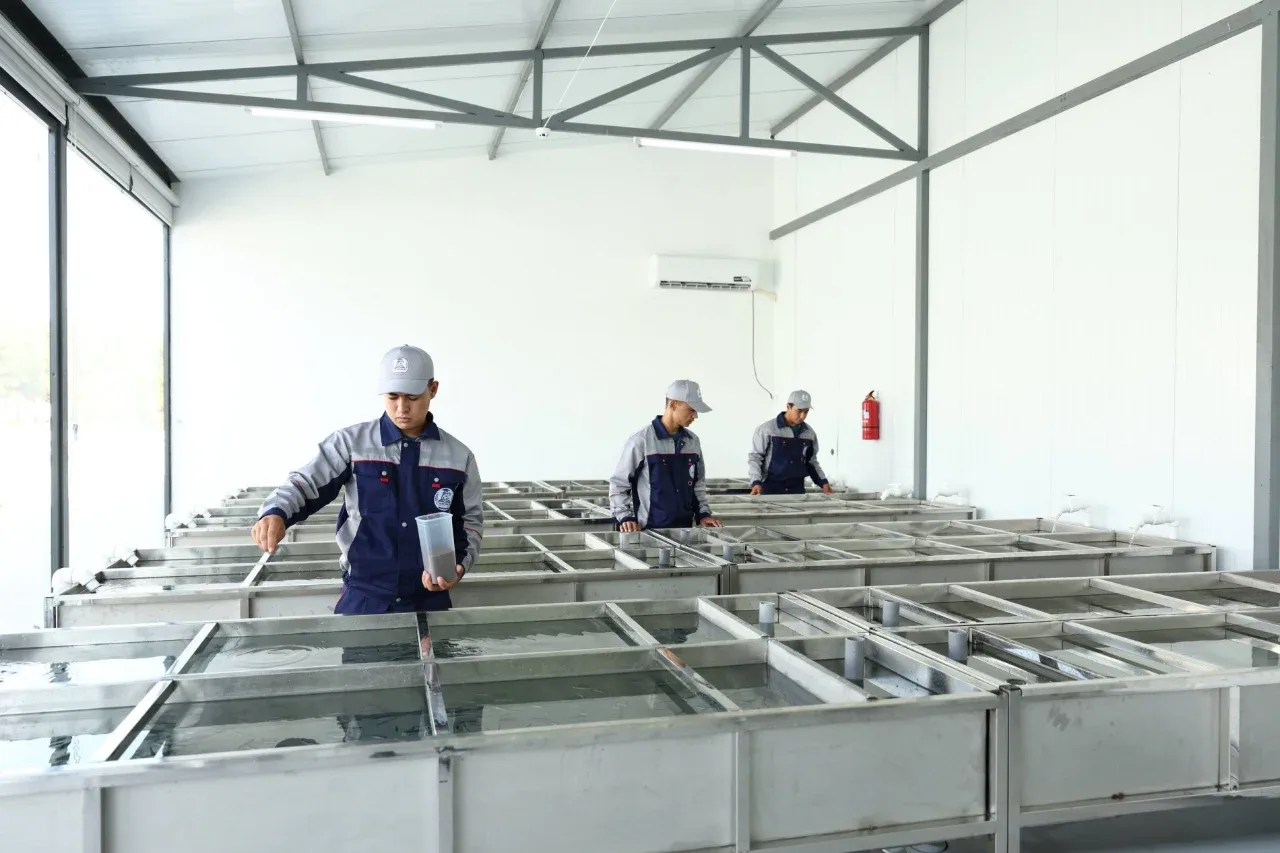
The fact that the project is 100% based on green energy (solar panels), features a laboratory that naturally purifies 2 million liters of water, and employs a zero-waste production system is recognized by experts as the future model of agriculture. So, how is it possible to get a 100-hectare harvest from 2 hectares of land, why is wastewater worth its weight in gold for agriculture, and why is this experiment in Baliqchi being popularized throughout Uzbekistan?
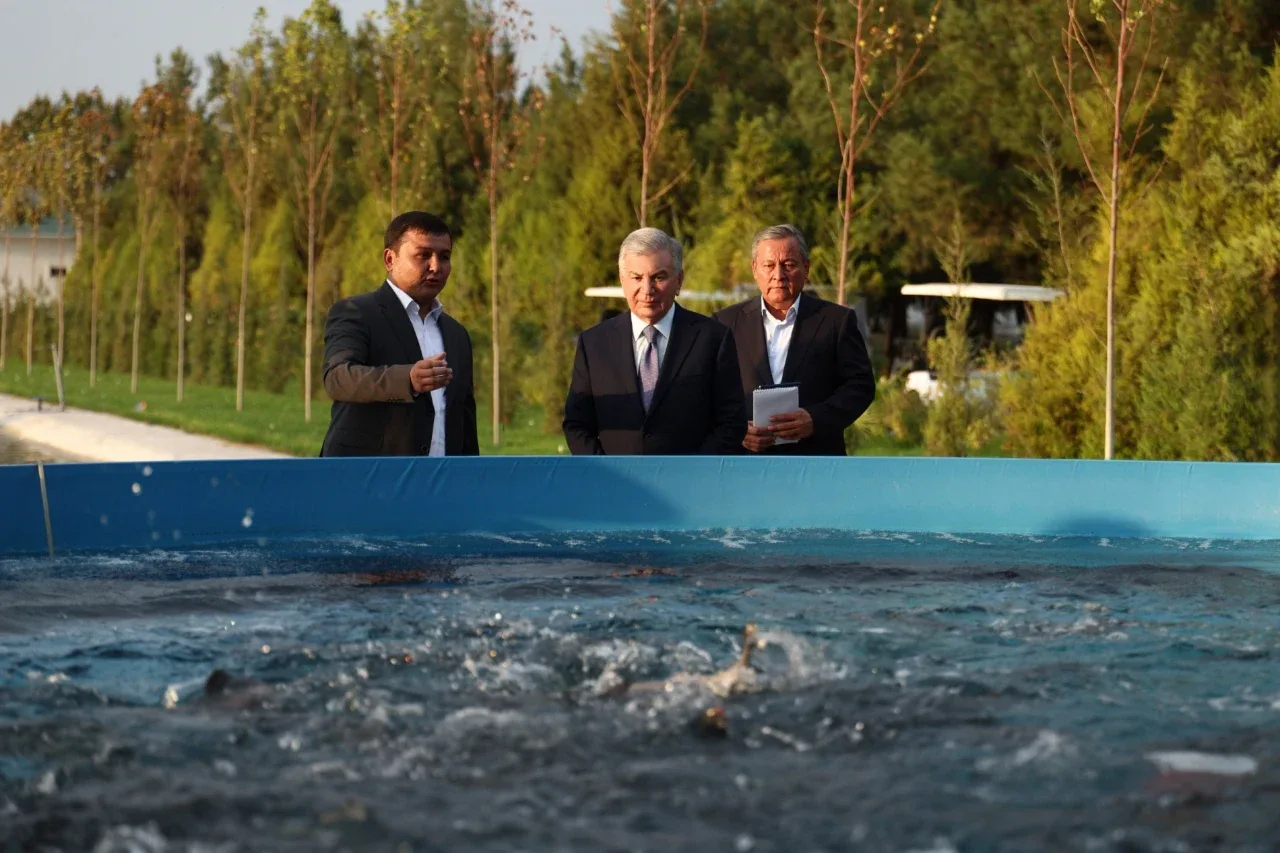
"A 2-hectare miracle, chlorella laboratory, and 20 households": 5 key points of the project
Most important indicators and innovative facts from the "Chinobod real biznes" complex:
100-hectare efficiency on 2 hectares: The intensive closed system yields 200 tons of fish meat per year on an area 50 times smaller than traditional giant ponds;
$2 million export potential: The enterprise exports 2 million trout fry annually to Kyrgyzstan, Tajikistan, and Afghanistan, bringing 5 billion soms in revenue to the budget;
Chlorella algae and bio-laboratory: A laboratory that naturally purifies 2 million liters of water restores water quality and increases productivity by another 15-20 percent;
100% green energy and zero-waste ecology: The enterprise receives electricity entirely from solar panels, and pool water rich in nitrogen and minerals is directed to irrigate crops;
Household cooperation and training center: 20 households in the Sarvul mahalla earn income by raising trout through cooperation; a "Fisheries and Poultry Farming Practical Training Center" operates for students.
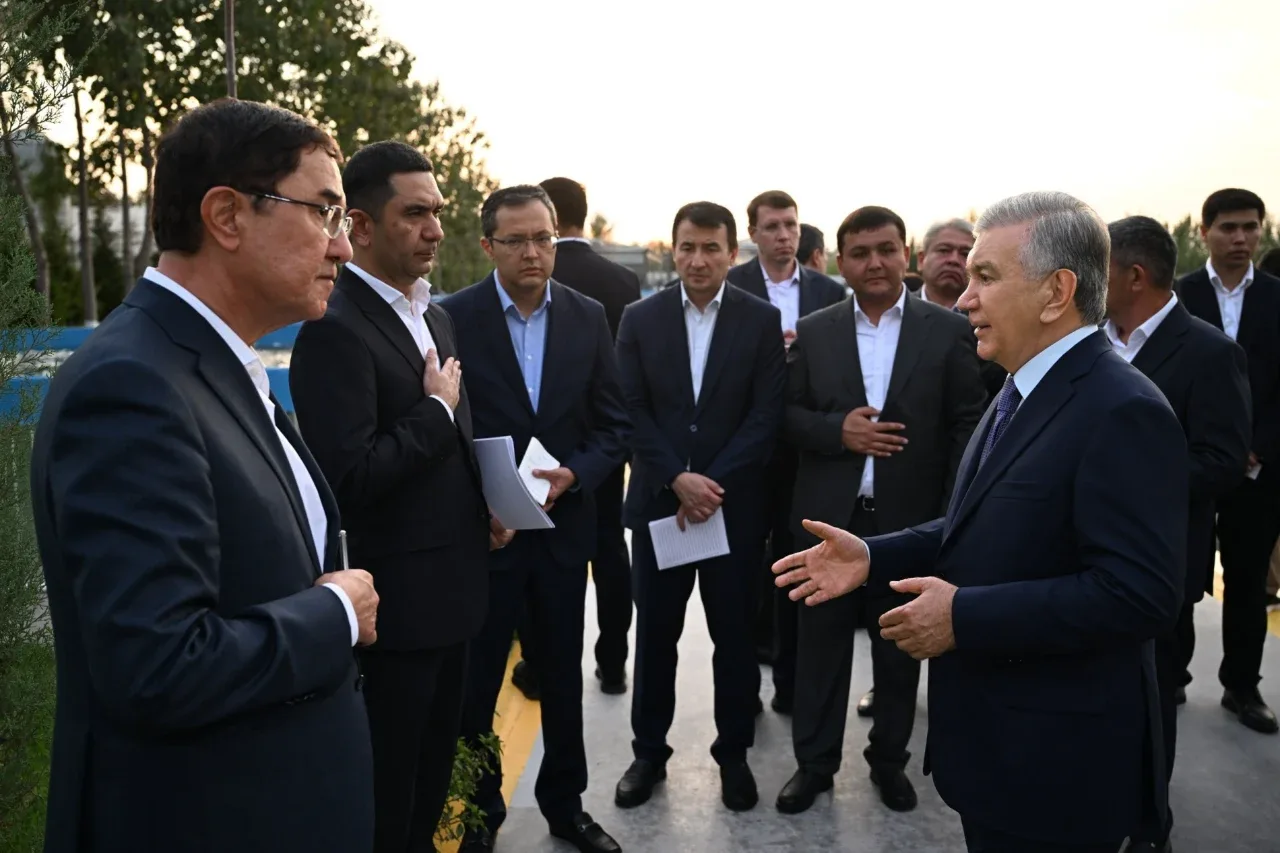
Fisheries sector: Comparison of traditional reservoirs and the "Chinobod real biznes" intensive system
Analysis of the difference between old and new technologies and resource consumption:
Criteria and parameters | Traditional reservoir fishing | "Chinobod real biznes" modern complex |
Land area consumption | 100 hectares of land required for 200 tons yield | The exact same volume is obtained on just 2 hectares |
Annual product volume | Low density over a large area | 200 tons of meat and 2.5 million trout fry |
Water purification and conservation | Water constantly flows and is wasted, quality is unmonitored | 2 million liters of water are bio-purified with chlorella algae |
Power supply source | Traditional electrical grid and high costs | 100% autonomous supply via solar panels |
Wastewater utilization | Often discharged into collectors | Water rich in phosphorus and calcium is supplied to crops |
International market and export | Local limited market | $2 million export to Kyrgyzstan, Tajikistan, and Afghanistan |
Cooperation with the population | Only hired seasonal workers | Permanent partnership with 20 households in Sarvul mahalla |
Agro-economic and technological expertise: Why is this project a model for all of Uzbekistan?
Conclusions of agricultural specialists, ecologists, and economists:
The only right way in conditions of water scarcity: At a time when water resources are increasingly limited in Uzbekistan, the evaporation and waste of water in old-style 100-hectare open reservoirs caused huge economic damage; closed loop and bio-purification systems save water by up to 90 percent;
Added value and organic fertilizer cycle: Water coming out of fish ponds is considered a natural fertilizer extremely rich in phosphorus, ammonia, and calcium; directing it to crop fields sharply reduces the cost of expensive chemical mineral fertilizers and increases yields;
Conquering neighboring countries' markets: Central Asia has a sharply high demand for cold-water trout; the enterprise's specialization in breeding fry connects farmers of Kyrgyzstan, Tajikistan, and Afghanistan to our products, ensuring a stable flow of foreign currency into our country;
Formula for reducing social poverty: Connecting 20 households to the enterprise to raise trout in their backyard plots is the simplest and most effective way to turn families into small entrepreneurs and create a guaranteed source of income.
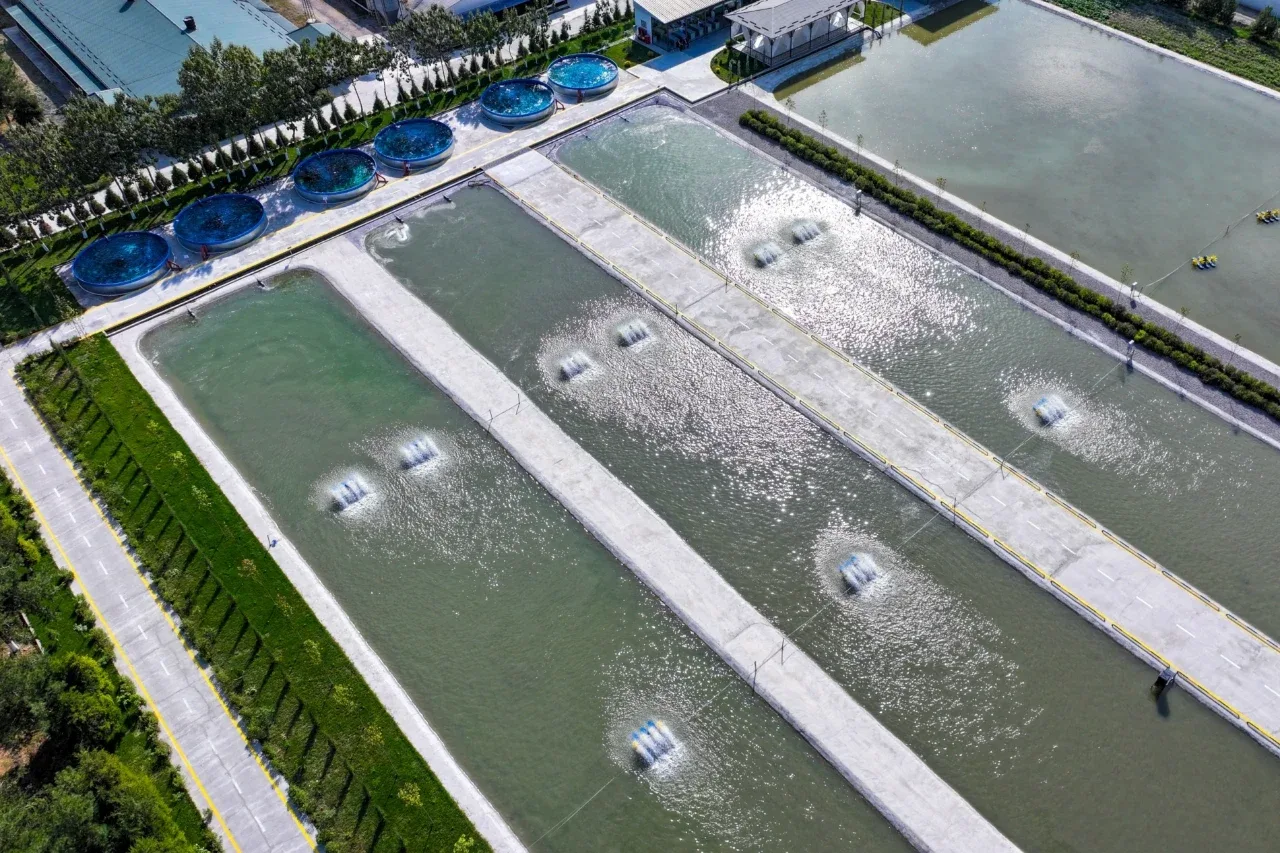
Instructions given by Shavkat Mirziyoyev to spread the Baliqchi experience throughout the republic are aimed at bringing Uzbekistan's food security and agrarian export potential to a new stage.
In your opinion, how beneficial would it be to apply such intensive fisheries projects, which yield a 100-hectare harvest on 2 hectares, in household plots and farms in your region? How do you feel about the population raising trout in households on the basis of cooperation? Leave your personal feedback in the comments and share this article dedicated to these revolutionary changes in our agriculture with all your farmer and entrepreneur friends!



Comments 0
…