


Air quality in Tashkent is expected to improve today
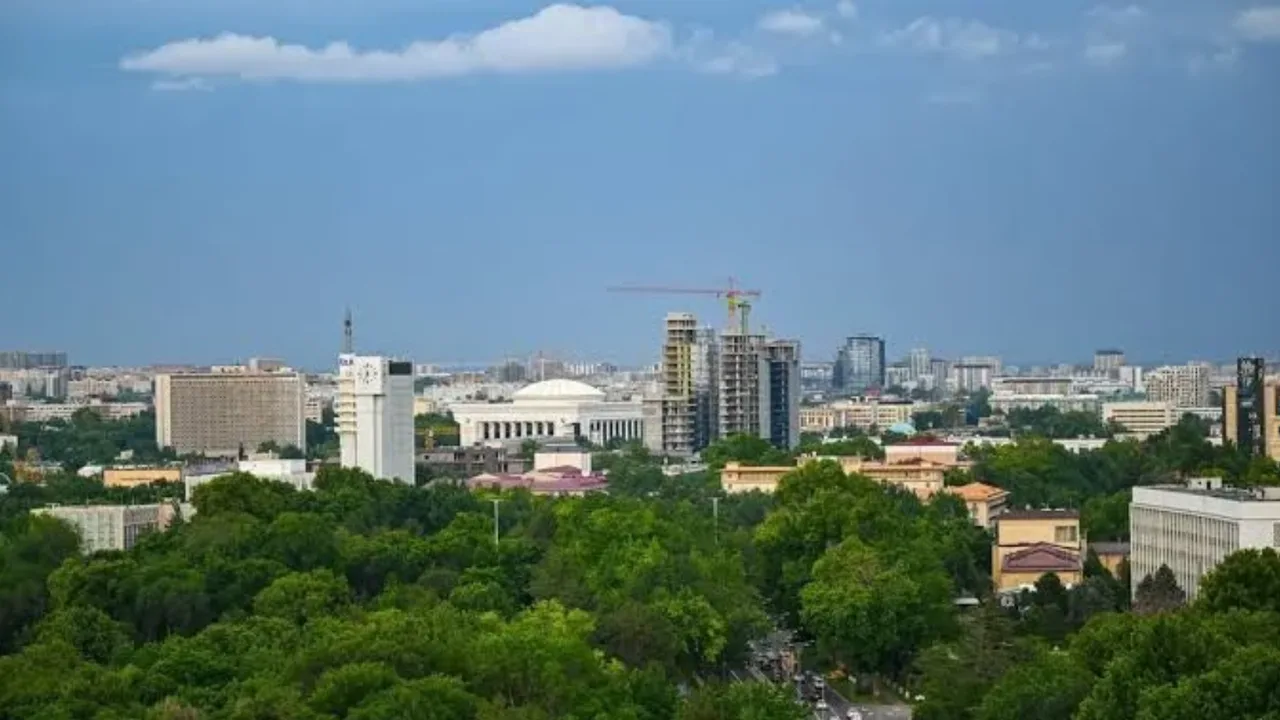
In Tashkent, air quality is expected to gradually improve during the daytime on November 1. Rising temperatures and increased air circulation are likely to stabilize the situation in the capital. This was reported by the National Committee for Ecology and Climate Change.
According to the committee's data, a deterioration in air quality was forecast for the capital from the night of October 31 to November 1. During the evening, night, and early morning hours, air quality was expected to be "unhealthy" according to the international Air Quality Index (AQI) and at an "orange" level according to the national index.
Such conditions can be caused by a drop in nighttime air temperature, low wind speeds, and temperature inversion. These factors limit air exchange in the lower layers of the atmosphere and slow down the dispersion of pollutants.
As a result, the dispersion of pollutants emitted into the atmosphere from local and neighboring areas becomes difficult, and PM particles may accumulate in the air layer close to the ground.
Today, November 1, during the daytime hours, temperature inversion is expected to weaken due to rising air temperatures and improved vertical air circulation. This process helps disperse pollutants in the atmosphere, which may lead to a gradual improvement in air quality.
Currently, the air quality in the capital is being continuously monitored by a Special Commission.
What factors are affecting air pollution?
Experts note that one of the main factors affecting air pollution is related to air circulation, i.e., the processes involving the movement and exchange of air masses.
Tashkent is located in the foothills, adjacent to the valley. Winds blowing from the northeast and southwest directions are of great importance in this region. The direction and speed of the wind directly affect air exchange and the dispersion of pollutants.
In the capital, the increase in air pollution is influenced not only by human activity but also by natural dust, low precipitation, and unfavorable meteorological conditions.
In particular, the lack of precipitation slows down the process of washing away dust particles from the air. In Tashkent, the amount of precipitation has been nearly 6 times lower than the monthly average. This can cause dust particles to remain in the atmosphere for longer.
Air quality deterioration had been forecast previously
Earlier, a warning was issued that air quality in Tashkent could deteriorate from the night of October 27 to October 28.
At that time, it was forecast that air quality would be mainly at a "yellow" level according to the national index during the evening and night hours, and would improve during the daytime.
Experts emphasize that changes in air quality depend on factors such as weather conditions, wind speed, temperature, and air circulation. For this reason, monitoring of air quality in the capital is continuing.


Comments 0
…