


Can a black hole split in two? Scientists have explored an unusual theory
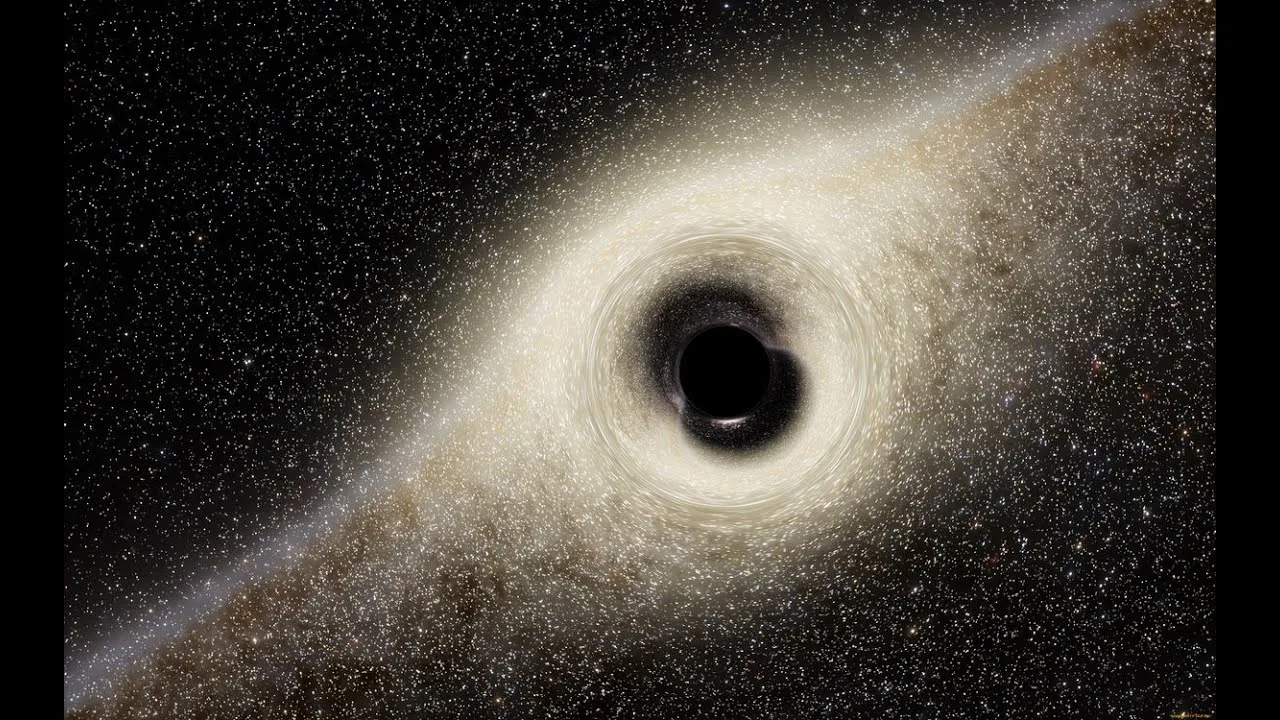
Scientists have studied through calculations whether a black hole can split in two under certain theoretical conditions. However, the practical occurrence of such a process has not yet been proven. This was reported by the Naked Science publication.
Usually, two black holes merge to form a single, larger black hole. Gravitational waves resulting from such events are recorded by scientists. But the splitting of a single black hole into two is considered a much more complex process.
One of the main reasons for this is related to the second law of thermodynamics. The entropy of a black hole is proportional to the area of its event horizon. If a simple, non-rotating black hole were to split into two smaller black holes, their total entropy could decrease. This severely limits the possibility of the process occurring.
Researchers also studied black holes whose rotation speed is close to the theoretical maximum. The calculations analyzed the conditions related to the separation of the fragments, the conservation of energy and momentum, and entropy.
According to the results, it is very difficult to satisfy the necessary conditions for a black hole to split simultaneously. If the separated smaller part does not have sufficient energy, it may be pulled back by the gravitational force of the main black hole. The study examined narrow conditions under which such a split could theoretically be possible, including cases where the rotation speed is extremely close to the maximum value.

Scientists also analyzed theories that suggest the existence of additional spatial dimensions. In such models, black hole-like structures could potentially split into several parts. However, the existence of additional dimensions has not yet been confirmed by experiments.
The authors of the study believe that small black holes formed in the early universe might be more prone to such a process than large astrophysical black holes. In the future, scientists are also exploring the possibility of detecting potential traces of such an event through gamma radiation.
Nevertheless, no black hole has been observed splitting in two so far. The study only theoretically examines the conditions under which black holes might disintegrate.


Comments 0
…