


What happens to a person's Facebook and Instagram page when they pass away?
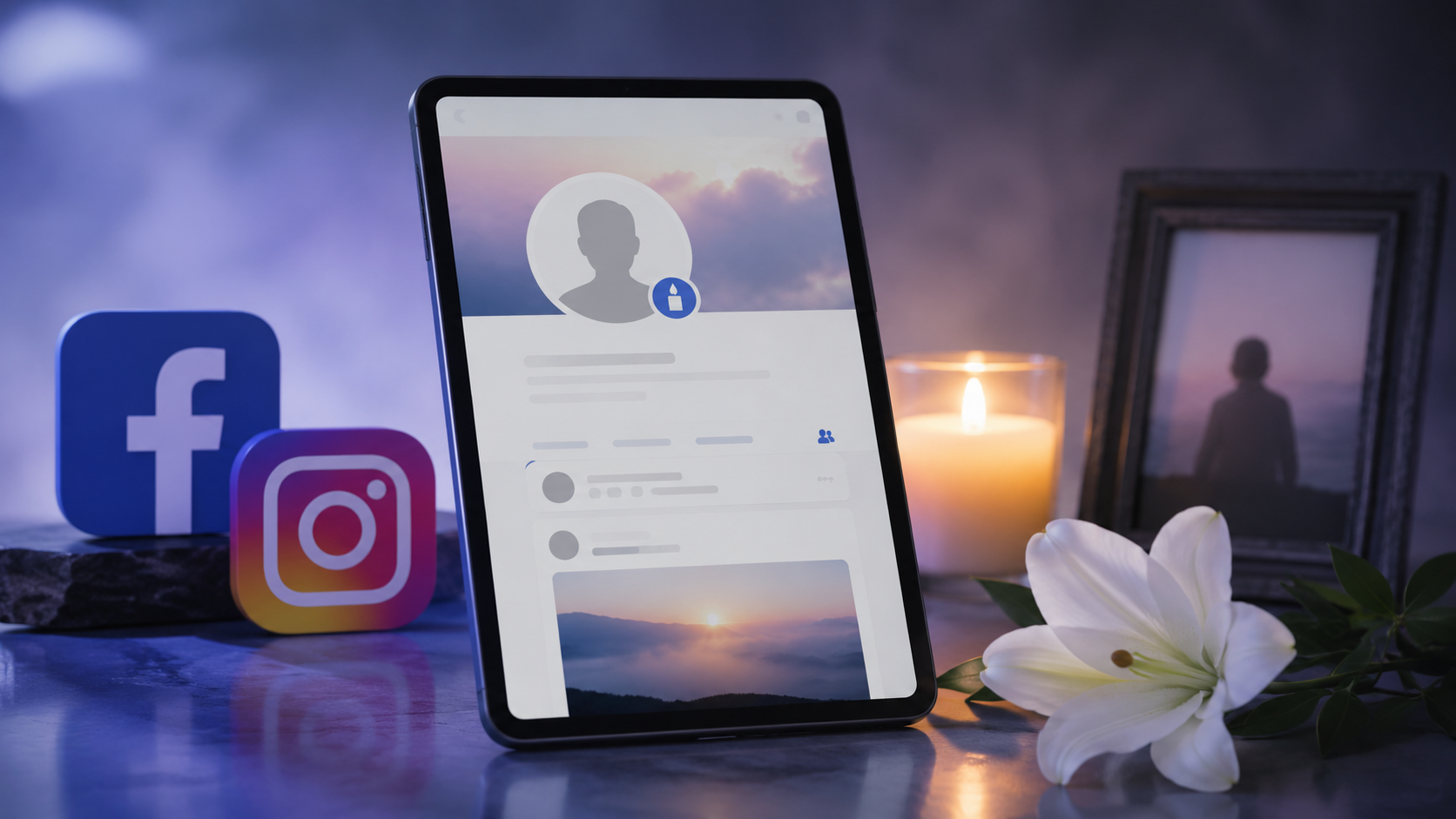
When a person passes away, their social media page does not disappear immediately. Photos, videos, comments, and other information can remain on the platform for years. For this reason, the concept of "digital legacy" has been discussed more frequently in recent years.
Figures often appear online suggesting that about 8,000 Facebook users die every day, which amounts to 11 people every two minutes. Mathematically, 11 people every two minutes equals 7,920 people per day. However, this is not Meta's current official report, but rather an estimated figure cited in previous years.
The most frequently cited study on when the number of deceased Facebook users might exceed the number of living ones was published in 2019. Researchers from the Oxford Internet Institute used United Nations mortality data and Facebook's 2018 audience data.
The study examined two scenarios. If no new people were to join Facebook at all, the profiles of deceased users could exceed those of the living around the 2070s. If the platform continues to grow, this point will come later, but there is a possibility that the number of profiles belonging to deceased users could exceed 4.9 billion by 2100.
Therefore, citing 2050 as a precise threshold is not reliable. Furthermore, the study focused primarily on Facebook. Instagram also has memorialized profiles, but this study did not provide a specific forecast for when the number of deceased users on that platform might exceed living ones.
According to Meta's policies, a deceased person's Facebook account is turned into a memorial page after a request from their loved ones. Such an account is secured, and no one can log into it in the normal way. Friends and family members can continue to view the memories on the page.
A user can pre-select a trusted person as a legacy contact. They will have limited rights, such as pinning a tribute post, responding to new friend requests, and changing the profile picture. However, they cannot read private messages.
Close relatives can also request that the account be permanently deleted by providing the necessary documentation. On Instagram, if a source confirming the death is provided, the profile is also turned into a memorial page.
Information left on the internet can later become a memory for the family, a historical source for researchers, or a legal issue. Oxford researchers have noted that keeping billions of profiles under the control of a private company raises ethical and political questions. They stated that a system is needed to manage digital legacy that takes into account the interests of families, historians, lawmakers, and platforms.
A simple photo or comment posted today may become one of the main digital memories left by a person years later. Therefore, pre-determining the fate of one's social media page is becoming a part of how we handle personal data.



Comments 0
…