


China creates a revolutionary orbit in space: Shijian-31 monitors the entire geostationary belt
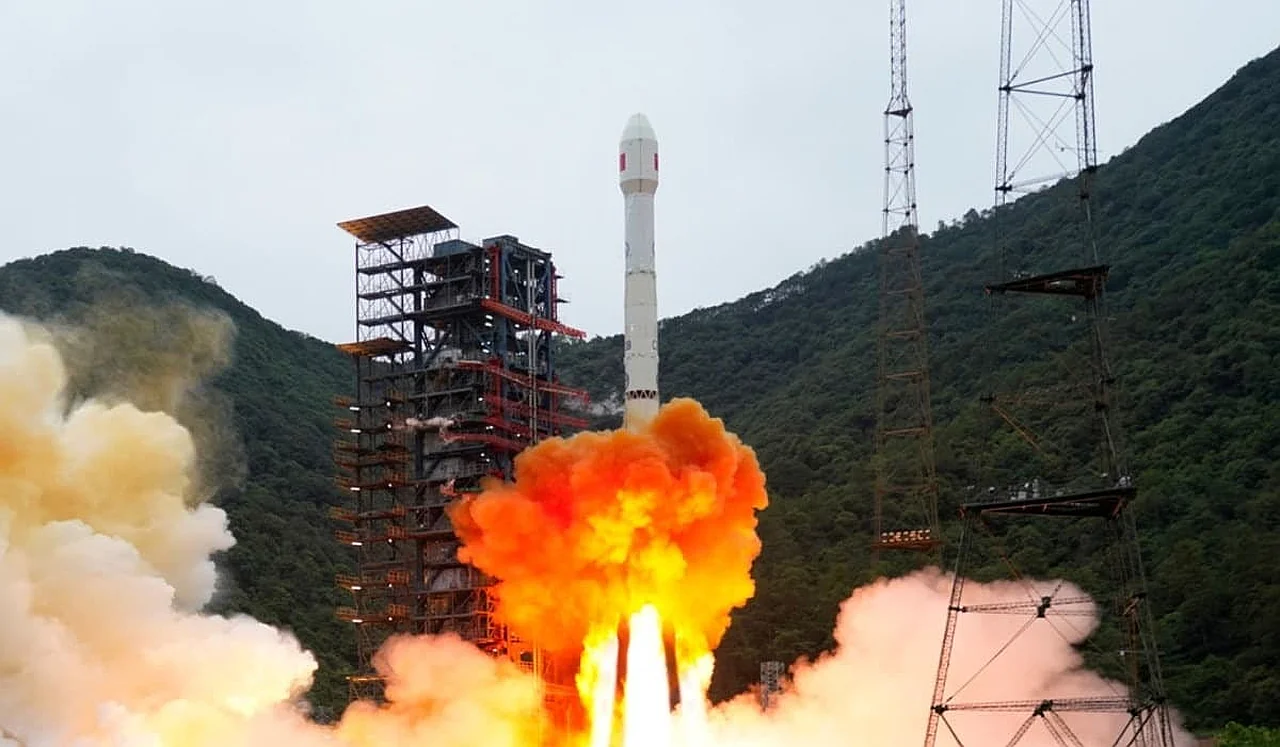
China has taken a strategic step in space exploration that has not been seen before. Launched on June 16, the Shijian-31 experimental satellite was placed into a highly unusual orbit. According to data from analytical companies Integrity ISR and ComSpOC, this device is capable of consistently monitoring the entire geostationary belt located approximately 35,786 km above the Earth's surface. This is reported by Ixbt.com .
The geostationary belt is a critical region for humanity, as it hosts the majority of communication, television, and meteorological satellites. Shijian-31 uses a modified version of the classic "Molniya" orbit. While such orbits are typically used for communications at northern latitudes, the Chinese device has adapted its mechanics to conduct long-term surveillance over the equator.
Unusual orbital mechanics and capabilities
The main uniqueness of the new satellite lies in its orbital period. Instead of the traditional 12-hour cycle, Shijian-31 completes each full rotation in 12.5 hours. This causes the device to shift its observation point by 15.7 degrees in longitude with each new pass. As a result, the satellite scans the entire geostationary belt around the Earth in approximately 23 days.At the highest point of its orbit (apogee), the device reaches a distance of 39,900 km from Earth. This is several thousand kilometers higher than the geostationary orbit, allowing it to monitor the entire region from a convenient "top-down" perspective. Experts describe this approach as a highly clever and efficient solution in orbital mechanics.
Strategic importance and secrecy
In an official statement, the China Aerospace Science and Technology Corporation (CASC) emphasized that Shijian-31 is intended solely for "space environment research." However, previous devices in this series have been used for complex military-technical tasks such as in-orbit refueling and monitoring the orbital situation. So far, CASC has not released any images of the new device.Analysts believe that tracking Shijian-31 from Earth is also an extremely difficult task. Its minimum altitude is 2,000 km, which is significantly higher than many remote sensing satellites. It also moves thousands of kilometers away from other inspector satellites in the geostationary orbit, making it nearly undetectable.
Experts conclude that this Chinese technology indicates a growing interest in constant monitoring of space activities. If necessary, Shijian-31 can change its trajectory with minimal fuel consumption to enter the geostationary belt directly and approach any object there for close-range interaction.


Comments 0
…