


Paper wallpaper that generates electricity from air humidity created in the USA
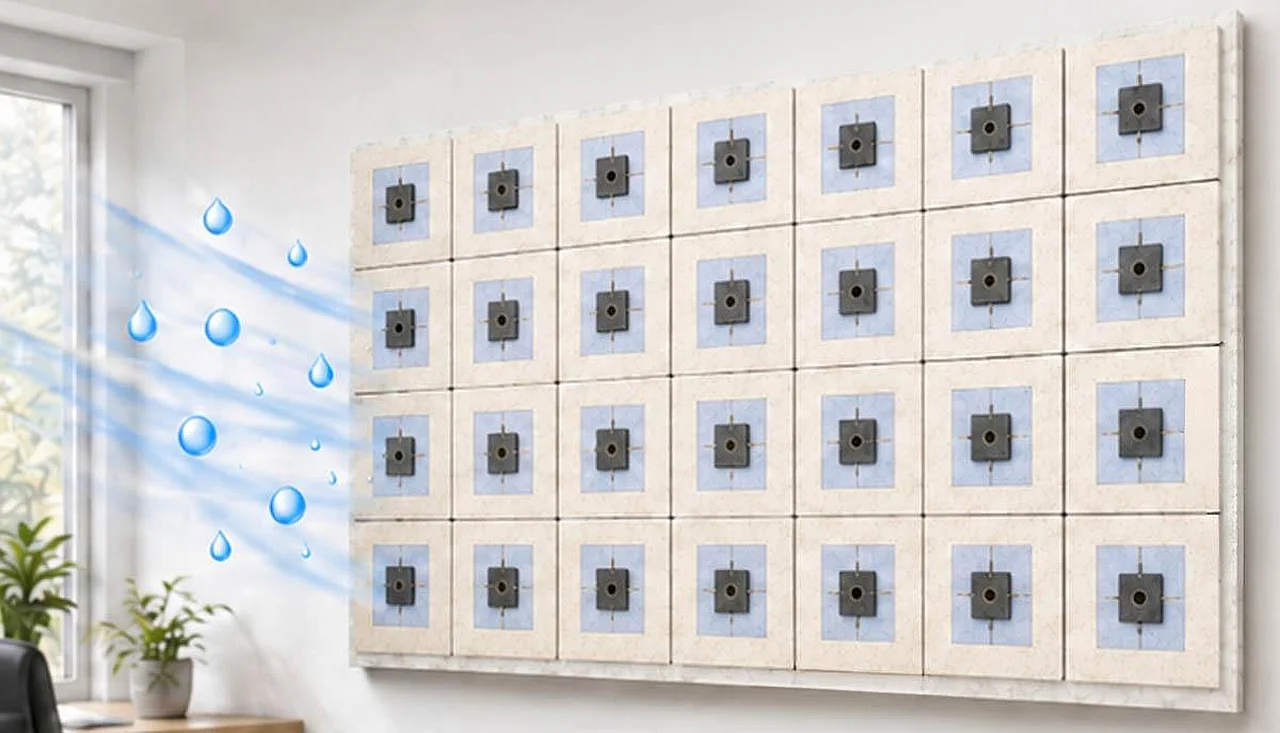
Researchers at Binghamton University in the USA have created an innovative paper coating capable of continuously generating electricity from indoor air humidity. According to ixbt.com, this technology simultaneously acts as a passive dehumidifier and could eventually allow smart home sensors and other low-power electronics to be powered without batteries. This is reported by news source.
Operating principle and features of the technology
The core of the new development consists of miniature moisture-electric generators. They absorb water molecules from the air, triggering an ion separation process within the material. The resulting concentration gradient creates an electrical voltage between the opposite sides of the sheet. Unlike solar panels, this system requires no light at all.Experts note that indoor environments are the most favorable for such technology, as humidity levels in homes and buildings are typically maintained between 30–60 percent. Furthermore, water vapor in the air is constantly replenished by human breathing, cooking, showering, and other daily activities.
Production and practical tests
Paper electronics technology was used to create the generators, allowing the necessary structures to be formed directly on the paper sheet. The edges of the paper are coated with glycerin, which actively absorbs moisture, while the central part contains a wax-patterned polymer structure. It regulates evaporation and ensures the directional movement of moisture necessary for continuous electricity generation.Researchers assembled a full-scale experimental sheet consisting of 1,596 interconnected generators. In conditions with 80 percent relative humidity, each element provided a voltage of approximately 0.34 V, and the specific power reached 2.2 µW/cm². The entire system successfully powered a wireless keyboard continuously without any batteries.
At the same time, the new wallpaper also demonstrated the ability to reduce air humidity. In the experimental room, the humidity level dropped from 38 percent to 32 percent. The authors believe that in the future, this technology could partially reduce the load on air conditioners and dehumidification systems while allowing small amounts of electricity to be harvested from humidity.
All electrical connections are placed on the back of the sheet, allowing the coating to be used as regular wall decor without visible wires. At the current stage, the technology's power is not sufficient to power home appliances like refrigerators or televisions. The main area of application is low-energy wireless temperature and humidity sensors, climate monitors, and other low-power elements of smart home systems.


Comments 0
…