


Why does Paris want to lift sanctions on Alisher Usmanov? The French Foreign Minister reveals the secret!
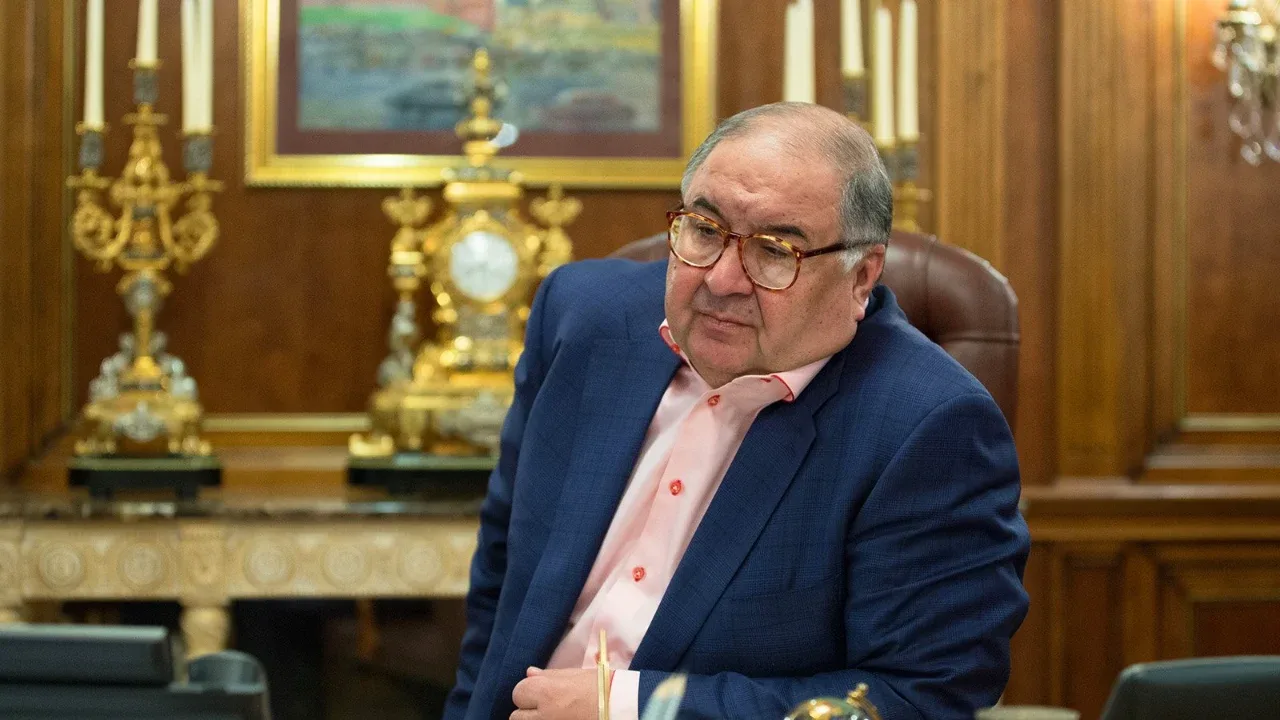
The French government has put forward a proposal to cancel the sanctions imposed by the European Union against the prominent businessman of Uzbek origin, Alisher Usmanov. French Foreign Minister Jean-Noël Barrot revealed on France 2 television's program "Franc-jeu" that this decision was not Paris's personal initiative, but was put forward at the "request of international partners." The head of the Ministry of Foreign Affairs emphasized that lifting the restrictions on Usmanov will not weaken the overall pressure on Moscow and "will not affect the general situation at all."
The diplomat recalled that the EU's sanctions policy is, on the contrary, being further strengthened; in particular, the practice of renewing restrictions every six months is proposed to be abandoned and extended for a three-year term at once. Barrot also expressed dissatisfaction with the fact that excessive hype is being raised around the exclusion of a single person from among nearly 3,000 individuals and companies on the sanctions list.
"Demand of international partners, 3-year regime, and 3-thousand-person list": 5 key points of the statement
The most important official facts from the resonant statement of French Foreign Minister Jean-Noël Barrot:
"Request of international partners": Barrot emphasized that the proposal to lift restrictions against Alisher Usmanov was introduced at the request of foreign partners;
"Does not affect the general situation": The head of French diplomacy said that Usmanov's exemption from sanctions will not weaken the EU's policy against Russia;
Sanctions extended for 3 years: France is proposing to introduce restrictions directly for a three-year period, rather than every 6 months as before;
List of 3 thousand and a single candidate: Nearly 3,000 individuals and organizations have been included in the EU sanctions list, and Paris recalled that it had personally proposed hundreds of them;
The Minister's grievance against journalists: Barrot complained that instead of focusing on the hundreds of people added to the list on his own initiative, the media is only questioning him about Usmanov.
Comparison of EU sanctions policy and France's position on the case of Alisher Usmanov
Official approach of the French Ministry of Foreign Affairs and classification of sanction parameters:
Analysis criteria and directions | Current EU standard sanctions system | New position promoted by France |
Attitude towards Alisher Usmanov | Was on the individual restrictions list | Proposal to cancel sanctions (at the request of partners) |
Period for extending restrictions | Procedure required to be updated every 6 months | Mechanism for extending for a three-year (3-year) term at once |
List coverage and size | Nearly 3,000 individuals and legal entities | "One out of 3 thousand was removed, but hundreds of new ones were added" |
Political motive of the decision | Pressure on the Russian political and economic elite | Strategic interests and diplomatic demand of international partners |
France's overall role | Active participant of the sanctions coalition | Initiator of institutional strengthening of restrictions |
International and diplomatic expertise: Why did Paris take this step and who are the "partners"?
Conclusions of European politics analysts, international lawyers, and economists:
"The international partners factor — Central Asia and Uzbekistan": Behind the "international partners" mentioned by Jean-Noël Barrot may lie the diplomatic efforts of Central Asian states, in particular Uzbekistan; since Alisher Usmanov has been financing a number of major social, infrastructural, and industrial projects in Uzbekistan, removing his name from sanctions fully aligns with the region's economic interests;
Legal proceedings and legal vulnerability: Lawsuits by many major businessmen against sanctions are being considered in European courts; it is not excluded that the weakness of the legal basis for the accusations against Usmanov and the businessman's distance from making political decisions prompted Paris and Brussels to reach a compromise;
Pragmatism in the sanctions system: By introducing the new three-year mechanism, the European Union is focusing on primary targets; removing figures whose commercial activities are focused on charity and the social sphere from the list is a way to demonstrate Brussels' diplomatic flexibility.
What do you think European countries' readiness to lift sanctions against Alisher Usmanov indicates: pragmatism in European diplomacy or the strong influence of international partners? How do you think this decision will give impetus to the development of major social and investment projects in Uzbekistan? Leave your analysis and thoughts in the comments and share the analysis of the most sensational topic in European politics with everyone!



Comments 0
…