


Protests continue in Baku following school headscarf ban
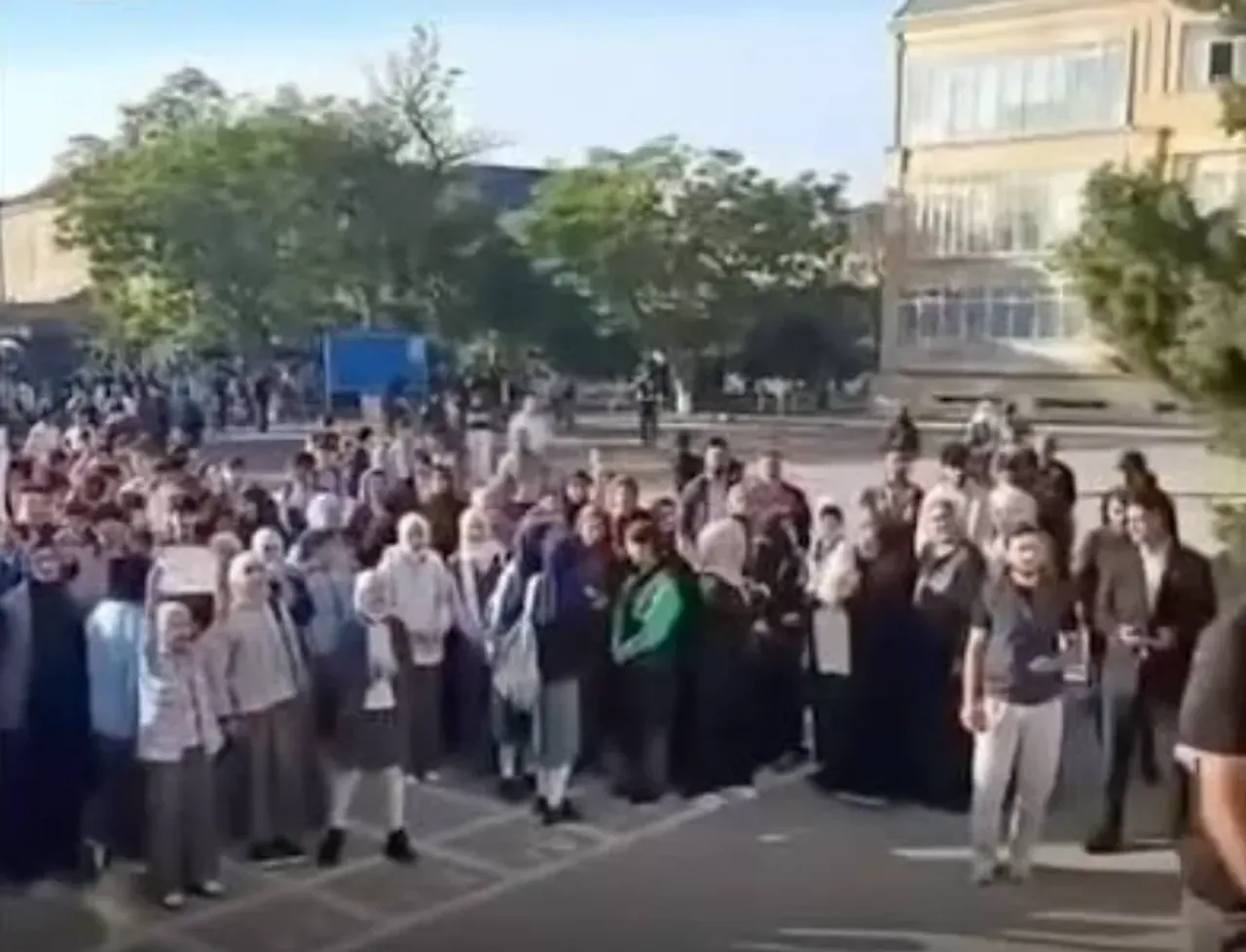
The introduction of unified rules restricting religious attire, specifically wearing the hijab, for school students in the capital of Azerbaijan, Baku, and several regions of the country has sparked serious public discontent. According to the "Dejurniy po SNG" channel and media reports, the resulting situation has exposed a sharp contradiction between the country's secular governance model and the growing influence of the religious environment in society.
The situation escalated particularly against the backdrop of girls being barred from classes starting October 12, and quickly turned into street demonstrations.
Center of protests and school boycott
The sharpest and most massive resistance was observed around school No. 69, located in the Balakhani settlement of Baku:
«Hijab is not an obstacle to education!»: Devout parents and civil activists took to the streets with protest banners, opposing the school administration and state restrictions. They view such restrictions as an unjustified state interference in personal and family life;
Student school boycott: To express solidarity with the headscarfed girls barred from classes, hundreds of other students temporarily stopped going to school and announced a boycott;
37 people detained: According to a statement released by the Ministry of Internal Affairs of Azerbaijan, 37 people were detained and arrested on charges of grossly violating public order and organizing illegal rallies. A criminal case has been initiated over the incident.
Root causes of the conflict: External influence or internal factor?
Experts and political observers assess the nature of the emerging resistance differently:
External interference unproven: Initially advanced versions of "external orders" or "outside conspiracies" have not yet found proof;
Activation of the internal religious environment: Analysts explain the situation through internal social processes: official religious organizations in Azerbaijan control only a certain part of the sphere, while the influence of unofficial communities, independent preachers, and transnational religious networks among youth is increasing significantly;
Control of the younger generation and secularism policy: The government sees this restriction as a means to prevent schools from turning into grounds for religious mobilization and to preserve the secularity of educational institutions.
State and society: Will a path to compromise be found?
Official Baku intends to prevent religious grouping in the educational environment where social views and political norms are formed by restricting religious attributes in schools. However, religious citizens emphasize that the right to education and freedom of conscience should not be pitted against each other.
Currently, police forces have stepped up security around schools, and representatives of society are awaiting a compromising solution that will ensure schoolgirls return to education without further exacerbating the situation.



Comments 0
…