


Second tanker carrying 2 million barrels of oil hits a sea mine in the Strait of Hormuz
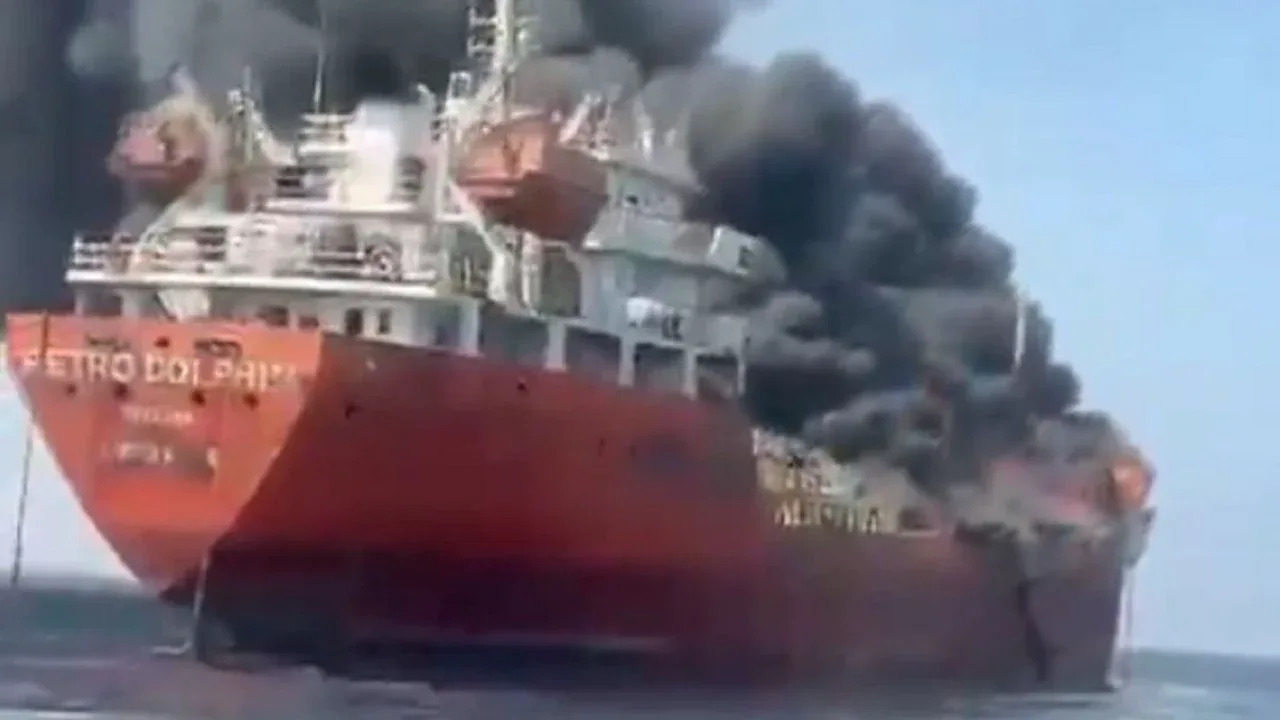
The situation in the Strait of Hormuz, considered the world's main oil artery, is taking a critically dangerous turn. On the morning of Saturday, October 17, another supertanker that attempted to sail through the strait without coordination with Tehran and with its transponder turned off hit a sea mine and exploded.
According to official information provided by the press service of the Islamic Revolutionary Guard Corps (IRGC), the large vessel was carrying over 2 million barrels of oil.
Second emergency in twenty-four hours
The sequence of explosions at sea has dealt a severe blow to the global oil tanker fleet:
Details of the second incident: Following the explosion on the morning of October 17, the tanker sustained damage; information regarding casualties and the ship's country of origin has not been disclosed yet;
First fire at night: Just a few hours earlier, on the night of October 17, an explosion and massive fire were recorded on another supertanker carrying a similar volume — nearly 2 million barrels of crude oil — in the Strait of Hormuz;
Transponders turned off: It is reported that both vessels attempted to cross the dangerous zone without official permission and with their satellite tracking systems disabled.
Prohibited zone in the strait and geopolitical conflict
These incidents are a direct result of the protracted military-political tensions in the region:
Tehran's strict demand: In September, the Islamic Revolutionary Guard Corps of Iran officially announced the introduction of a special restricted navigation zone in the eastern part of the Strait of Hormuz, mandating that all commercial vessels pass through the area only with Tehran's prior coordination;
Clashes with the US and Israel: Strikes launched by the US and Israel against targets inside Iran on February 28 of this year, along with Tehran's retaliatory attacks, created a new flashpoint of war in the region. Although a memorandum to cease military operations was signed in June, the parties subsequently exchanged strikes once again, and the conflict remains unresolved.
Considering that a significant portion of global oil exports passes through the Strait of Hormuz, the disabling of two major vessels within a single day could lead to a sharp surge in black gold prices on world exchanges.



Comments 0
…