


AVO Bank depositor cannot access his funds for 134 days: Money from apartment sale remains frozen
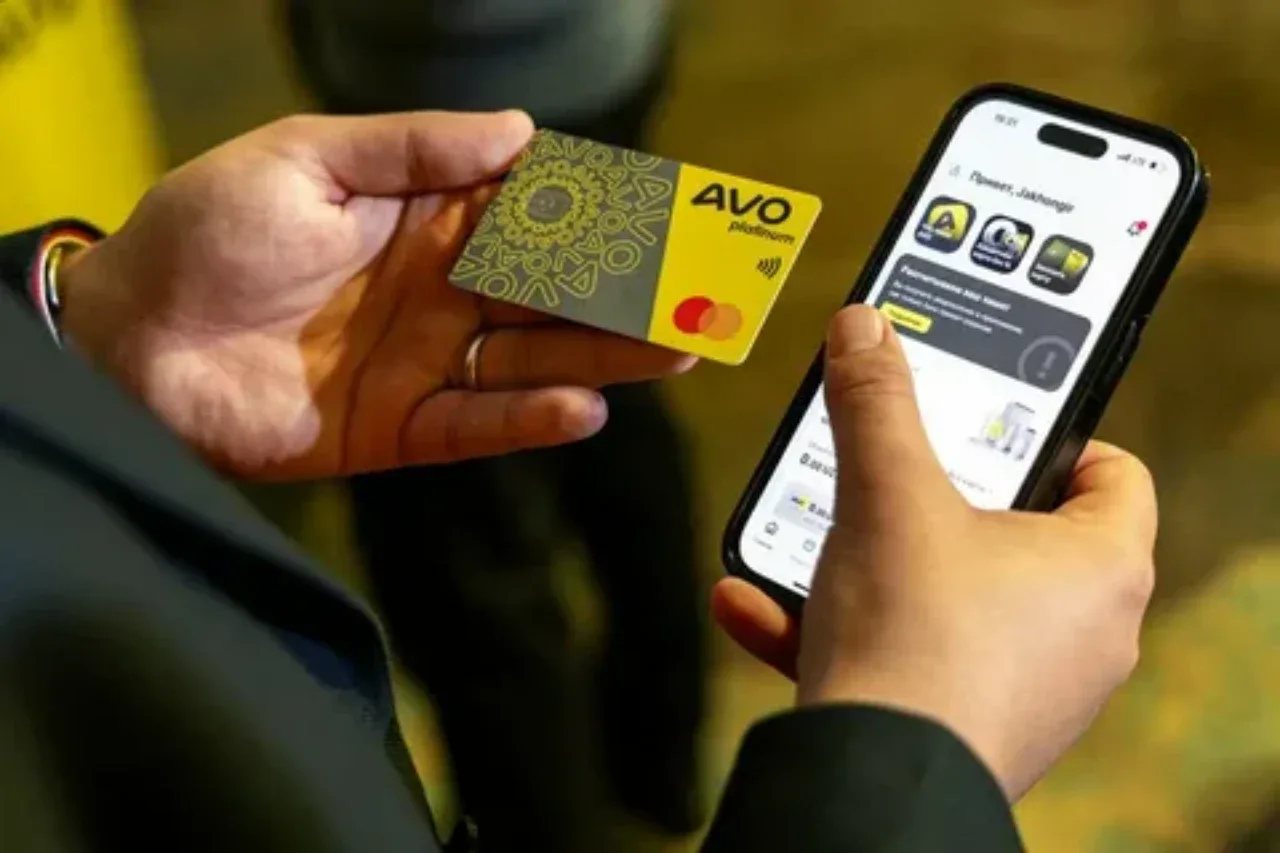
A conflict raising serious concerns regarding the inviolability of citizens' savings has emerged within Uzbekistan's banking and fintech sectors. Aleksey Moskovsev, founder and head of OneDev, publicly stated that his personal deposit at AVO Bank has been blocked and he has been unable to retrieve his funds for 134 days. Based on a notarized agreement, the entrepreneur sold his apartment and deposited the proceeds for a 6-month term via the bank's mobile app on December 9, 2025.
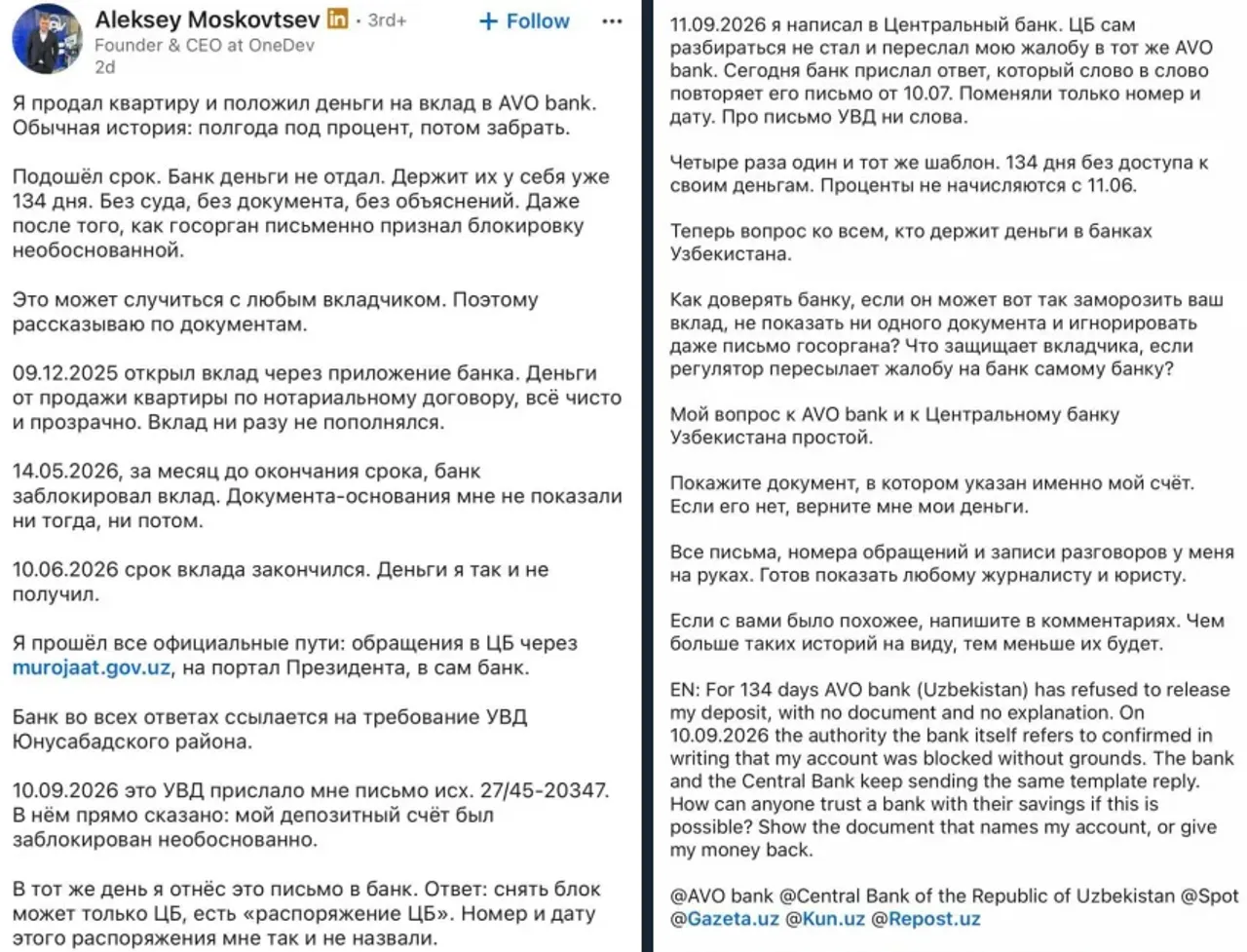
However, on May 14, 2026, one month before the maturity date, the account was frozen without any official documentation. Although the deposit term expired on June 10, the bank refused to return the funds, citing instructions from the Yunusobad District Internal Affairs Department (IAD). Interestingly, on September 10, 2026, the very same Internal Affairs Department officially acknowledged in an official letter that the blocking of the deposit account was groundless, yet the bank still refuses to return the funds to the owner.
"Notarial agreement, official police letter, and bureaucratic runaround": 5 main points of the conflict
The most important official evidence regarding the tense situation between AVO Bank and the depositor:
Legal origin of funds: The citizen sold his apartment through a notary and placed the transparent funds into a deposit on December 9, 2025;
Groundless and sudden blocking: One month before the deposit maturity date (May 14), the bank blocked the account without citing any decision;
Internal Affairs Department found the blocking groundless: In letter No. 27/45-20347 dated September 10, 2026, the Yunusobad District IAD officially confirmed that the account blocking was groundless;
Central Bank forwarded the complaint back to the bank: Instead of reviewing the application received via murojaat.gov.uz, the regulator sent it back to AVO Bank, and the bank repeated its old template response;
Interest suspended, 134 days of silence: No interest has accrued on the deposit since June 11, and the citizen has been unable to access his money for 134 days.
Chronological development classification of the dispute between the depositor and AVO Bank
Table of key dates, documents, and actions of the parties regarding the case:
Dates and stages | Depositor's lawful action | Reaction of the bank and state bodies | Legal status |
09.12.2025 | Placed money from apartment sale into a deposit via the app | Deposit opened and agreement concluded by the bank | Fully legal transaction |
14.05.2026 | Discovered that the account was blocked | The bank used the Yunusobad IAD demand as an excuse | No substantiating document indicating a specific account was provided |
10.06.2026 | Deposit term expired, requested the money | The bank did not release the money, stopped paying interest from June 11 | Breach of contractual obligation |
10.09.2026 | Received an official response letter from the IAD | IAD found the blocking groundless (No. 27/45-20347) | The bank's main argument was invalidated |
11.09.2026 | Complained to the Central Bank and visited the bank | CB forwarded the complaint to the bank, the bank issued the same old template response | Bureaucratic trap in the oversight system |
Legal and financial expertise: How does such a situation harm the banking system?
Conclusions of banking lawyers, independent economists, and financial analysts:
«Inviolability of deposits is guaranteed by law»: According to the Civil Code of the Republic of Uzbekistan and banking legislation, a bank must unconditionally return money upon expiration of the deposit term or at the client's first request; withholding funds without a court decision or an official ruling from an investigative body indicating a specific person and account is a direct violation of the law; holding onto the money even after the IAD letter completely destroys trust in depositors;
The problem of passive oversight by the regulator: While the Central Bank is the main guarantor protecting depositors' rights, leaving a complaint to the discretion of the accused bank itself indicates that officials' oversight functions are failing; the regulator must immediately schedule a special inspection in such cases;
Vulnerability of digital neobanks: Although digital financial institutions like AVO Bank promise speed to clients, when a problem arises, the client's inability to communicate with live staff and responsible managers, with everything depending on dry templates and bots, leaves depositors unprotected.
In your opinion, what disciplinary measure should the Central Bank apply to the bank for withholding a citizen's money for 134 days even after a state agency's letter? How do you think such incidents affect public confidence in banks and deposits in the national currency? Leave your personal thoughts in the comments and share this high-profile analysis regarding depositors' rights with everyone!



Comments 0
…