


Over 1,200 errors in school textbooks: Education is undergoing fundamental renewal in Uzbekistan!
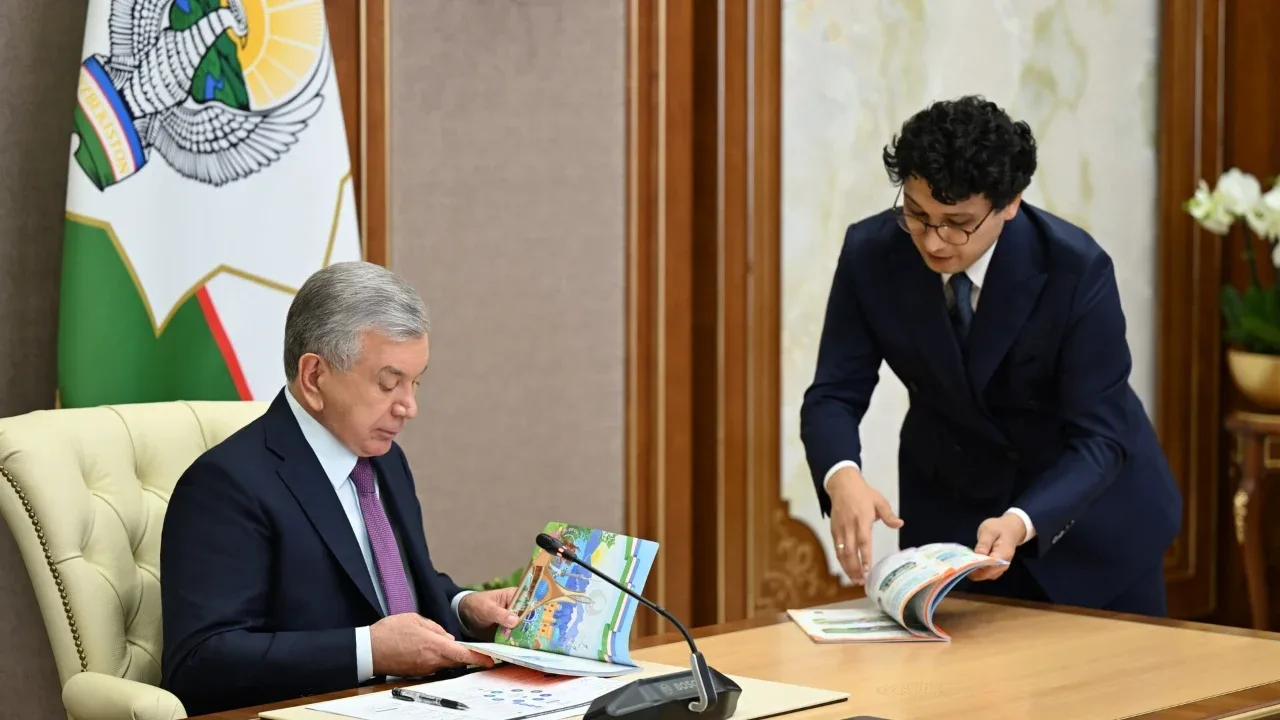
The issue of textbook quality in Uzbekistan's school education system, which has long been a source of justified complaints from parents and specialists, has been addressed at the level of the head of state. President Shavkat Mirziyoyev thoroughly reviewed presentations on the introduction of a new generation of textbooks, the establishment of dual education between universities and industrial enterprises, and the activities of the Liaoning Normal University branch.
During the thorough expert review of previous curricula, shocking figures emerged: exactly 1,257 content errors were found in 260 textbooks, and another 464 gross translation errors were detected in 51 textbooks. Criticizing the fact that the information was inappropriate for children's ages and relied on rote memorization (cramming), the system is being fully transitioned to advanced standards of Finland and Singapore.
“1,257 errors, Finnish certificate, and Singapore model”: 5 key points of the reform
The most important official evidence regarding the expert review and renewal of school textbooks:
Thousands of errors exposed in old textbooks: It was revealed that 260 books contained 1,257 content errors and 51 books contained 464 translation errors;
From rote memorization to independent thinking: Since the old curricula forced children only to memorize, they did not develop critical thinking and practical skills;
Finland and Singapore standards: Primary school books were certified by the Finnish Education Alliance, while exact and natural sciences for grades 5–7 were transitioned to Singapore methodology;
1,342 new manuals by 2027: 255 vocational guidance lessons, 300 ecology-related topics, and financial and digital literacy blocks are being added to the curricula;
Over 200,000 teachers retrained: 110,000 primary school teachers upgraded their qualifications, and trainers prepared with the participation of Singaporean specialists trained another 90,000 educators in new methodologies.
Classification of former problems and new generation standards in Uzbekistan's school textbooks
Analysis of the identified flaws and indicators of ongoing international changes:
Direction and analysis criteria | Situation identified in the analysis of old textbooks | New generation textbooks and standards |
Scale of identified errors | 1,257 errors in 260 textbooks, 464 translation flaws in 51 books | Complete rewriting based on international expertise and strict standards |
Teaching methodology | Rote memorization (cramming), age-inappropriate complex information | Practical analysis, critical thinking, and skill development |
Primary education base | Traditional local curricula | Finnish Education Alliance certificate |
Exact and natural sciences (grades 5–7) | Theoretical load in mathematics, physics, chemistry, and biology | Curricula based on Singapore's education system and experience |
Integration of modern knowledge | Topics disconnected from practical life | 255 vocational guidance lessons, 300 ecology topics, finance and IT blocks |
Professional development of educators | Theoretical qualification upgrading courses | Retraining 90,000 teachers through 121 master-trainers in cooperation with Singapore |
Pedagogical and social expertise: Why does renewing the school curriculum determine the future?
Conclusions of international experts, methodologists, and educators on education:
“A flawed textbook means broken logic and the threat of illiteracy”: The presence of dozens of errors in a single book led to the instillation of incorrect concepts in the minds of millions of children; gross confusion in translation dampened students' interest in science; therefore, openly admitting errors and conducting a full audit of textbooks became the most important step towards purifying education;
Nationalization of the Finnish and Singaporean phenomenon: The Singaporean and Finnish systems, which are leaders in the global PISA international ranking, are famous precisely for teaching children to think independently and apply theory in life; introducing this methodology into national schools increases the global competitiveness of the youth;
Reform will not work without teachers: Even the most perfect book loses its power if it falls into the hands of a teacher who does not know how to use it; the retraining of 110,000 primary school teachers and courses involving Singaporean trainers lay the foundation for the correct application of new textbooks in schools.
In your opinion, can applying the experience of Finland and Singapore yield the expected result in putting an end to thousands of errors in school textbooks and the system of rote memorization? How satisfied are you with the quality of current school books used by your child or relatives? Leave your personal feedback in the comments and share this analysis of important changes in the education system with all parents and teachers!



Comments 0
…